
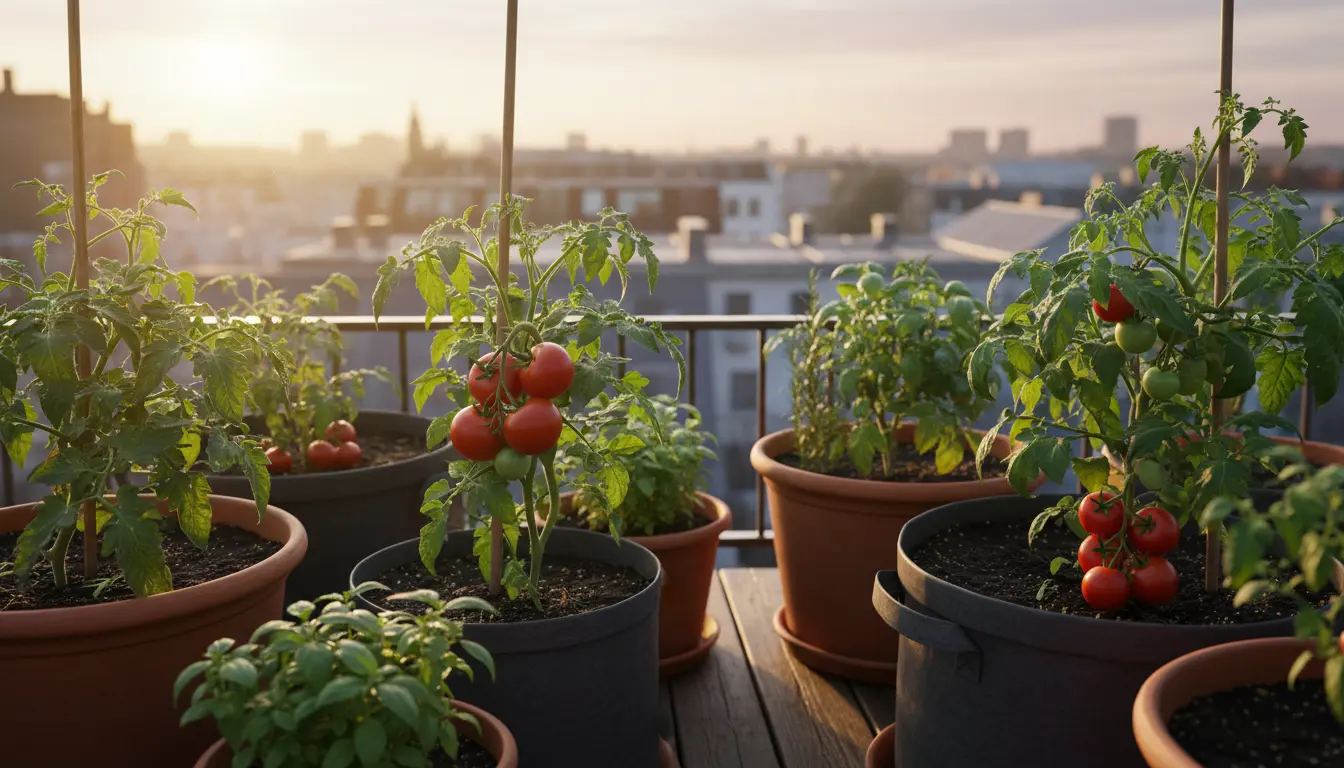
Why Choose a Container Vegetable Garden?
A container vegetable garden is a simple way to grow food when space is limited. It works on balconies, patios, rooftops, and small yards.
Containers let you control soil, drainage, and location. That reduces some common problems found in ground beds.
Planning Your Container Vegetable Garden
Start by listing vegetables you want to eat and checking how much sun your space gets. Most vegetables need 6-8 hours of direct sun each day.
Consider these questions before you buy containers:
- How much space and weight capacity do you have?
- Will containers be moved during hot weather or storms?
- Do you prefer year-round herbs or seasonal tomatoes and peppers?
Choosing the Best Vegetables for a Container Vegetable Garden
Pick crops that do well in containers and match your sunlight. Good choices include:
- Tomatoes (determinate varieties)
- Peppers and eggplants
- Leafy greens: lettuce, spinach, arugula
- Herbs: basil, parsley, chives
- Compact root crops: radishes, baby carrots
Container Selection for a Container Vegetable Garden
Use containers with good drainage and enough volume for the plant roots. Larger containers hold moisture longer and reduce the need for daily watering.
Guideline sizes:
- Herbs and greens: 6–10 inch pots
- Tomatoes and peppers: 12–20 inch pots or larger
- Small upright crops: 8–12 inch deep containers
Soil and Fertilizer for Your Container Vegetable Garden
Use a high-quality potting mix labeled for containers, not garden soil. Potting mixes are lighter and drain better.
Feed plants with a balanced liquid fertilizer or slow-release granules. Containers have limited nutrients and need regular feeding.
- Start with a base potting mix
- Add slow-release fertilizer at planting
- Supplement with liquid feed every 2–4 weeks during the growing season
Watering Tips for a Container Vegetable Garden
Containers dry out faster than ground soil. Check moisture daily by feeling the top inch of soil. Water when the soil feels dry to the touch.
Use deep watering: soak until water runs from drainage holes. Avoid frequent shallow watering that encourages weak roots.
Watering Schedule Example for a Container Vegetable Garden
- Morning watering in hot weather
- Every 1–3 days in summer, depending on sun and wind
- Less often in cool or cloudy periods
Light and Placement for a Container Vegetable Garden
Position containers to get the maximum available sun. If only partial sun is available, choose leafy greens and herbs that tolerate less light.
Rotate containers every few weeks if light hits from one side. This keeps plants growing evenly and prevents leggy growth.
Pest and Disease Management in a Container Vegetable Garden
Containers reduce some pests but do not eliminate them. Inspect leaves weekly and remove damaged foliage early.
Common tactics:
- Handpick larger pests like caterpillars
- Use insecticidal soap for aphids
- Ensure good air flow to reduce fungal issues
Harvesting and Crop Rotation in a Container Vegetable Garden
Harvest leafy greens regularly to encourage more growth. Pick tomatoes and peppers when fully colored for best flavor.
Rotate crops or refresh potting mix each season to avoid buildup of soil-borne issues. Replace half the potting mix or repot into fresh mix annually.
Case Study: Maria’s Balcony Container Vegetable Garden
Maria had a small south-facing balcony and wanted fresh salad greens and herbs. She used four 12-inch pots and two 20-inch pots for tomatoes.
After selecting compact tomato varieties and a mix of lettuce and basil, she followed a watering routine: deep water every other day and liquid feed every three weeks.
In her first season she harvested weekly salads and two harvests of small tomatoes. Her keys to success were container size, consistent watering, and regular feeding.
Using larger containers can reduce watering needs by up to 50 percent compared with small pots. More soil volume retains moisture and buffers temperature swings.
Quick Start Checklist for a Container Vegetable Garden
- Select a sunny spot and measure available space
- Choose appropriate container sizes
- Buy quality potting mix and basic fertilizer
- Pick plants suited to your light and time availability
- Set a watering and feeding schedule
Final Tips for a Successful Container Vegetable Garden
Start small and learn as you go. One or two pots are enough to build confidence and identify what works in your microclimate.
Keep records of what you plant, how often you water, and yields. Small notes help you improve in the next season and avoid repeated mistakes.
With basic planning and regular care, a container vegetable garden can deliver fresh produce and a satisfying gardening experience—even in the smallest spaces.