
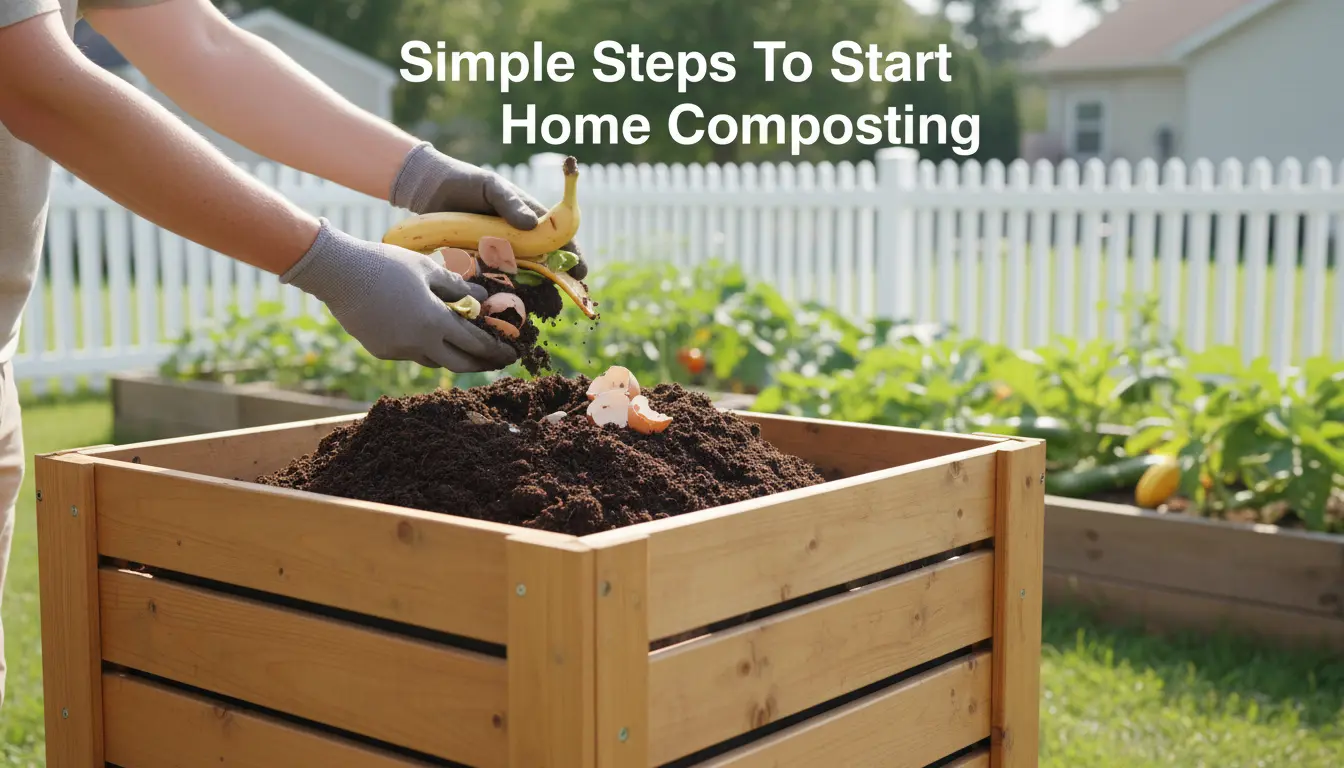
Composting at home turns kitchen scraps and yard trimmings into a valuable soil amendment. This guide gives clear steps to start composting, maintain a healthy pile, and avoid common problems.
Why start composting at home
Composting reduces landfill waste, lowers household odors from trash, and creates nutrient-rich compost for gardens and potted plants. It is an easy, low-cost way to recycle organic material.
Even small apartments or balconies can produce useful compost with the right method and containers.
Basic principles of composting at home
A successful compost pile balances three elements: carbon, nitrogen, and moisture. Carbon-rich materials are called browns and nitrogen-rich materials are called greens.
- Carbon (browns): dry leaves, shredded paper, cardboard, straw.
- Nitrogen (greens): fruit and vegetable scraps, coffee grounds, fresh grass clippings.
- Moisture and air: the pile should be damp like a wrung-out sponge and turned to add oxygen.
How to mix materials
Layer browns and greens in roughly a 3:1 ratio by volume. Too much green creates a slimy, smelly pile. Too much brown slows decomposition.
Chop larger items to speed breakdown. Mix the pile every 1–2 weeks to keep oxygen flowing.
Choosing a composting method
Pick a method that fits your space and schedule. Common options include open piles, bins, tumblers, and worm composting.
- Open pile or bin: Good for gardens with space. Low cost and simple to manage.
- Tumbler: Enclosed and fast; turn the drum every few days.
- Worm composting (vermicompost): Ideal for apartments. Uses worms to convert scraps into rich castings.
Setting up a basic bin
Place the bin on bare soil to allow organisms to enter. Add a layer of coarse material at the bottom for airflow. Alternate layers of greens and browns as you add material.
Keep the bin covered to maintain moisture and keep pests out.
Step-by-step: start composting at home today
- Choose a bin or method based on space and time.
- Collect kitchen scraps in a countertop container with a lid.
- Add a base layer of browns in the bin (wood chips, leaves).
- Deposit greens and cover them with browns each time.
- Maintain moisture—water if the pile gets too dry.
- Turn the pile every 1–2 weeks, or rotate a tumbler regularly.
- Harvest finished compost in 3–12 months depending on method and conditions.
Troubleshooting common problems when composting at home
Problems are usually easy to fix once you know the cause.
- Smell: Too much green or excess moisture. Add dry browns and turn the pile.
- Pests: Avoid adding meat, dairy, or oily foods. Use a closed bin and bury food scraps in the center.
- Slow decomposition: Pile too dry or too much brown material. Add water and some greens, then turn.
- Flies: Cover fresh food with a layer of browns or a finished compost lid.
What to compost and what to avoid
Good items: vegetable and fruit scraps, coffee grounds, eggshells, tea bags, shredded paper, yard trimmings.
Avoid meat, dairy, fats, diseased plants, and pet waste. These items can create odors, attract pests, or spread pathogens.
Composting can reduce household organic waste by up to 30 percent and return nutrients to soil, improving plant health and water retention.
Small case study: apartment worm bin that cut trash volume
Maria lives in a third-floor apartment with a small balcony. She started a worm bin using a plastic worm box and 1,000 red wigglers. Kitchen scraps were stored in a sealed counter pail and added every few days.
Within three months, organic waste destined for the building trash chute dropped by half. Maria used the worm castings for her balcony herbs, which grew more vigorously and required less fertilizer.
Tips to speed up composting at home
- Chop or shred materials to increase surface area.
- Keep the pile moist but not waterlogged.
- Monitor temperature—hot piles (131–160°F) break down faster; small home piles may not get that hot but still work.
- Use a balance of greens and browns and turn regularly for faster results.
Using finished compost
Finished compost is dark, crumbly, and has an earthy smell. Mix it into garden beds, use as a top dressing for lawns, or blend with potting soil for container plants.
Apply a thin layer to improve soil structure and add nutrients slowly over time.
Final checklist to start composting at home
- Choose a compost method: bin, tumbler, or worms.
- Collect scraps in a covered container.
- Balance browns and greens, keep moisture and air in check.
- Turn or rotate regularly and troubleshoot quickly.
- Harvest and use finished compost to enrich soil.
Composting at home is a practical way to reduce waste and support healthier plants. Start small, learn by doing, and adapt the system to your space and needs.