
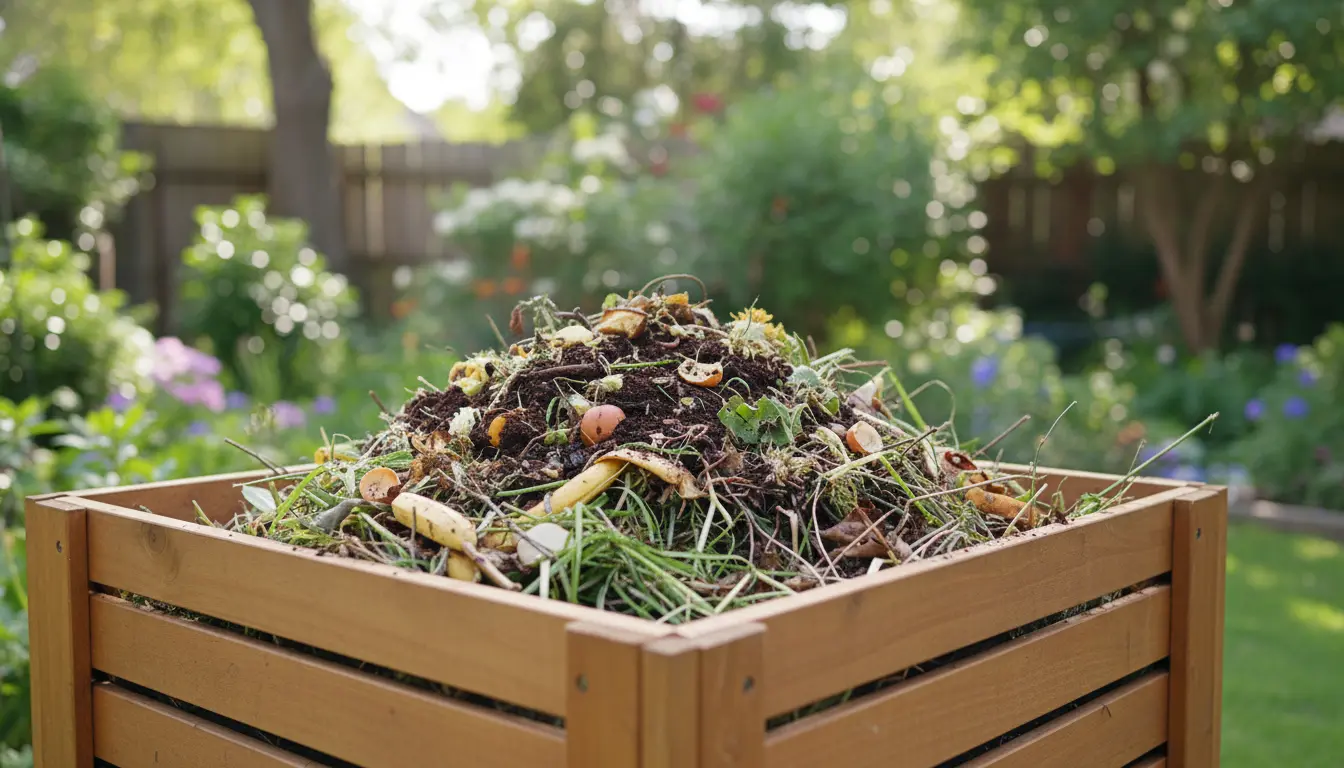
Composting at home turns kitchen scraps and yard waste into rich soil that improves plant health and reduces trash. This guide gives clear, practical steps so you can start composting at home today.
Why composting at home matters
Composting reduces landfill waste, lowers methane emissions, and returns nutrients to the soil. It is one of the simplest ways to make daily waste useful for your garden.
Whether you have a backyard, balcony, or community plot, composting at home cuts waste hauling and improves soil structure for healthier plants.
Key benefits of composting at home
- Reduces household waste and disposal costs
- Improves soil drainage and nutrient content
- Supports beneficial microbes and earthworms
- Decreases need for chemical fertilizers
How to choose a composting method for home
There are several methods for composting at home. Pick one that fits your space, effort level, and local climate.
Common composting methods
- Traditional pile or heap — good for backyards with space and easy to scale.
- Compost bin — tidy and contained, reduces pests and looks neater in small yards.
- Tumbler — speeds up turning and aeration, ideal for moderate volumes and faster results.
- Vermicomposting — uses worms, works well indoors or on balconies for kitchen scraps.
Where to set up composting at home
Location affects compost performance. Choose a spot with good drainage and partial shade. Avoid direct sun that dries the pile quickly.
Place bins on soil or grass so worms and microbes can move in. If you must use a patio or balcony, use a contained system to protect surfaces.
What to compost at home: the simple rules
Composting works best when you balance green materials (nitrogen) and brown materials (carbon). Aim for a mix rather than only one type.
Green materials
- Vegetable and fruit scraps
- Coffee grounds and tea bags (paper removed)
- Fresh grass clippings
Brown materials
- Dry leaves and shredded paper
- Straw, cardboard, and wood chips
- Small amounts of sawdust from untreated wood
Materials to avoid
- Meat, dairy, and oily foods (attract pests)
- Diseased plants or weeds with seeds
- Pet waste from carnivores
Step-by-step: Starting composting at home
Follow these practical steps to get a healthy compost going. Each step takes minimal time but gives better results.
1. Build or buy a container
Choose a bin or tumbler sized for how much waste you produce. A 3x3x3 foot pile or a 50–100 gallon bin works for many households.
2. Layer materials
Start with a layer of coarse browns (twigs or straw) to aid airflow. Alternate green and brown layers to keep balance and avoid odors.
3. Keep it moist and aerated
Compost should be as damp as a wrung-out sponge. Turn the pile every 1–2 weeks to add oxygen and speed decomposition.
4. Monitor temperature
A hot pile (120–160°F or 50–70°C) breaks down quickly and kills most weed seeds. Cool piles decompose slower but still work if you have patience.
5. Harvest finished compost
Compost is ready when it looks dark, crumbly, and earthy. Sift out large pieces and return them to the pile to finish decomposing.
Troubleshooting common problems when composting at home
Most issues are easy to fix with a quick adjustment to moisture, aeration, or materials.
Bad odors
- Cause: Too much green material or lack of oxygen.
- Fix: Add more browns and turn the pile to introduce air.
Slow breakdown
- Cause: Pile too dry, too small, or lacking nitrogen.
- Fix: Add water, mix in fresh greens, and increase pile size if possible.
Pests or rodents
- Cause: Meat, dairy, or exposed food scraps.
- Fix: Use a closed bin, bury food scraps, or switch to a tumbler or worm bin for small spaces.
Composting can divert up to 30% of household waste from landfills. Even small-scale composting at home reduces methane emissions and returns nutrients to local soil.
Small real-world case study
Case: A three-person family in a suburban home started composting at home using a 100-gallon bin. They separated food scraps into a countertop bucket and emptied it into the bin twice weekly.
Results after six months: their household waste to curb decreased by about 45%. Garden beds showed improved moisture retention and a noticeable increase in tomato yield.
Practical takeaway: Consistency and a simple bin can yield measurable waste reduction and garden benefits within one season.
Quick checklist to start composting at home
- Choose method: bin, tumbler, pile, or worm bin
- Find a partial-shade spot with good drainage
- Collect greens and browns separately
- Maintain moisture and turn regularly
- Harvest and use compost after it matures
Composting at home is a low-cost, high-impact habit that benefits your garden and the planet. Start small, follow the simple balance rules, and adjust as you learn what works best for your household.