
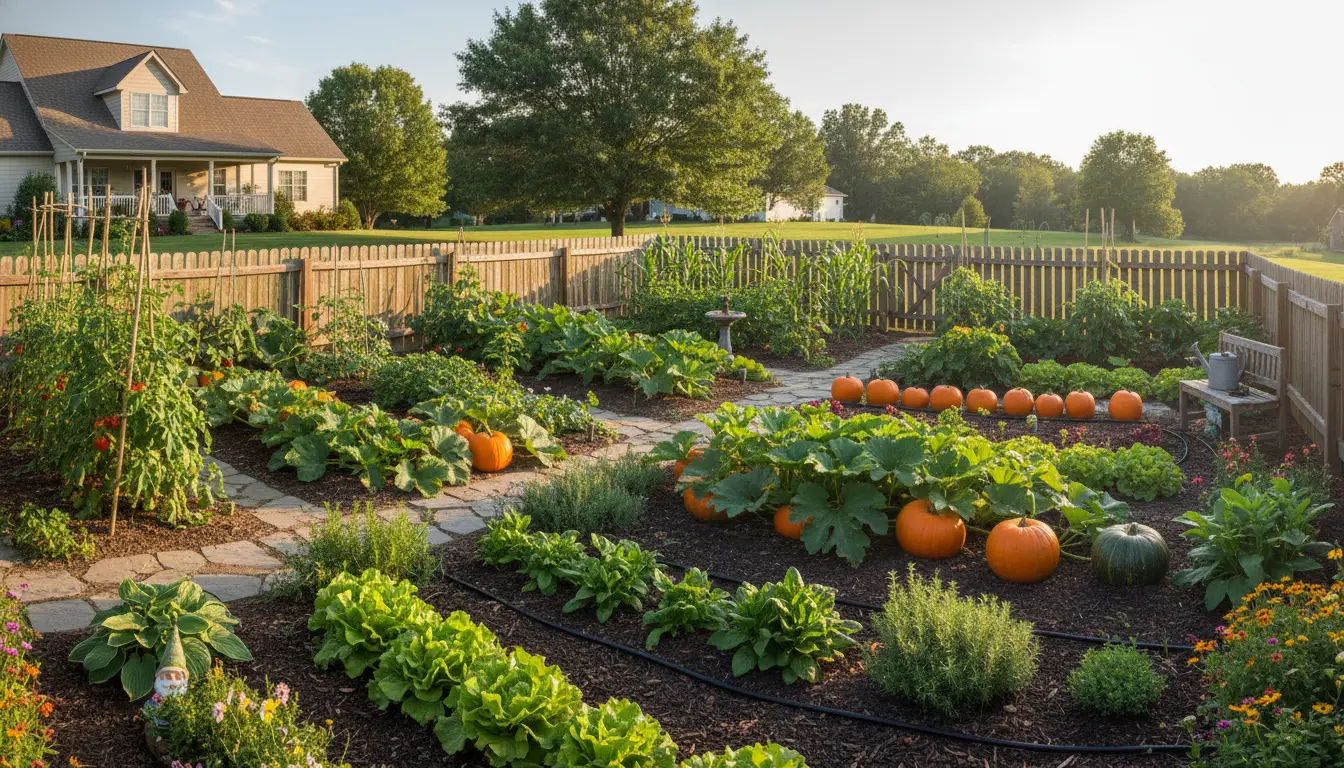
Start a Backyard Vegetable Garden: Quick Overview
Starting a backyard vegetable garden is a practical way to grow fresh produce, save money, and enjoy time outdoors. This guide walks through site selection, soil preparation, planting, maintenance, and problem solving in simple steps.
Choose the Right Location for a Backyard Vegetable Garden
Most vegetables need at least six hours of direct sunlight. Observe your yard for a few days to find the sunniest spot. Avoid low areas that collect cold air or stay wet after rain.
Consider access to water and proximity to a storage area or house. A compact garden near the kitchen makes harvesting and maintenance easier.
Sun, Soil, and Space Considerations for a Backyard Vegetable Garden
Sun: Aim for 6 to 8 hours of sun daily for tomatoes, peppers, and beans. Leafy greens tolerate less light.
Soil: Good soil drains well and holds moisture. Space: Decide between in-ground beds, raised beds, or containers based on soil quality and yard layout.
Prepare Soil and Raised Beds
Healthy soil is the backbone of a backyard vegetable garden. Test basic soil pH with a simple kit or send a sample to a local extension service. Most vegetables prefer pH 6.0 to 7.0.
If soil is compacted or clayey, build raised beds. Raised beds warm faster and give better drainage. Fill with a mix of topsoil, compost, and a small amount of balanced garden soil for structure.
Soil Improvement Steps for a Backyard Vegetable Garden
- Add 2 to 4 inches of compost across beds each season to feed plants and improve texture.
- Work organic matter into the top 6 to 8 inches of soil for in-ground planting.
- Mulch with straw or shredded leaves to retain moisture and suppress weeds.
Pick Vegetables and Plan Planting
Start with easy crops that match your climate and season. Good beginner choices are lettuce, spinach, radishes, cherry tomatoes, bush beans, and herbs. Choose compact or patio varieties if space is limited.
Use succession planting to get continuous harvests. For example, sow lettuce every two weeks in spring and fall for steady greens.
Planting Tips for a Backyard Vegetable Garden
- Follow spacing recommendations on seed packets or plant labels to reduce disease and competition.
- Plant faster crops like radishes between slower ones like tomatoes to maximize space.
- Start seeds indoors for long-season plants, or buy healthy seedlings from local nurseries.
Watering and Feeding Your Backyard Vegetable Garden
Consistent moisture is vital. Water deeply and less frequently to encourage strong roots. Aim for about one inch of water per week, adjusting for heat and rainfall.
Use a soaker hose or drip irrigation to reduce evaporation and keep foliage dry. Fertilize lightly with balanced organic fertilizer or side-dress with compost during the growing season.
Simple Fertilizing Routine
- Apply compost at planting and again midseason.
- Use a low-dose organic fertilizer every 4 to 6 weeks for heavy feeders like tomatoes and squash.
- Observe plant health and adjust feedings rather than relying on a fixed schedule.
Pest and Disease Management in a Backyard Vegetable Garden
Prevent problems with good hygiene and crop rotation. Remove diseased plants and avoid overhead watering to reduce leaf diseases. Encourage beneficial insects by planting flowers like marigolds and nasturtiums.
Use row covers early in the season to protect seedlings from pests. For persistent pests, pick by hand, use organic soaps, or apply targeted biological controls.
Seasonal Care and Harvesting
Regularly weed, thin, and harvest to keep plants productive. Harvest leafy greens when young for best flavor. Pick small fruits like cherry tomatoes frequently to encourage more production.
At season end, clear spent plants and add them to the compost pile. Plant cover crops in winter to protect and rebuild soil if you plan to rest the bed.
Planting a variety of flower types near vegetables can increase pollination and attract helpful insects that reduce pest populations naturally.
Case Study: Small Urban Backyard Vegetable Garden
Maria, a city homeowner, converted a 10 by 6 foot sunny strip beside her patio into three raised beds. She started with lettuce, bush beans, cherry tomatoes, and basil.
By using compost, drip irrigation, and succession planting, she harvested fresh greens and tomatoes from May through October.
Maria spent about two hours per week on maintenance and saved over 30 percent on grocery produce in summer months. Her key wins were raised beds for drainage and weekly harvesting to keep plants producing.
Checklist to Start Your Backyard Vegetable Garden
- Choose the sunniest spot and measure space required.
- Test and improve soil with compost or build raised beds.
- Select beginner-friendly crops suited to your season.
- Plan watering, mulching, and a simple fertilizing routine.
- Monitor pests and use preventive methods first.
Final Tips for a Successful Backyard Vegetable Garden
Start small and expand as you gain experience. Keep a simple garden journal to track what works and what does not. Be flexible; adapt planting dates and varieties to your local climate.
With regular care and small adjustments each season, a backyard vegetable garden can become a reliable source of fresh food and a satisfying hobby.