
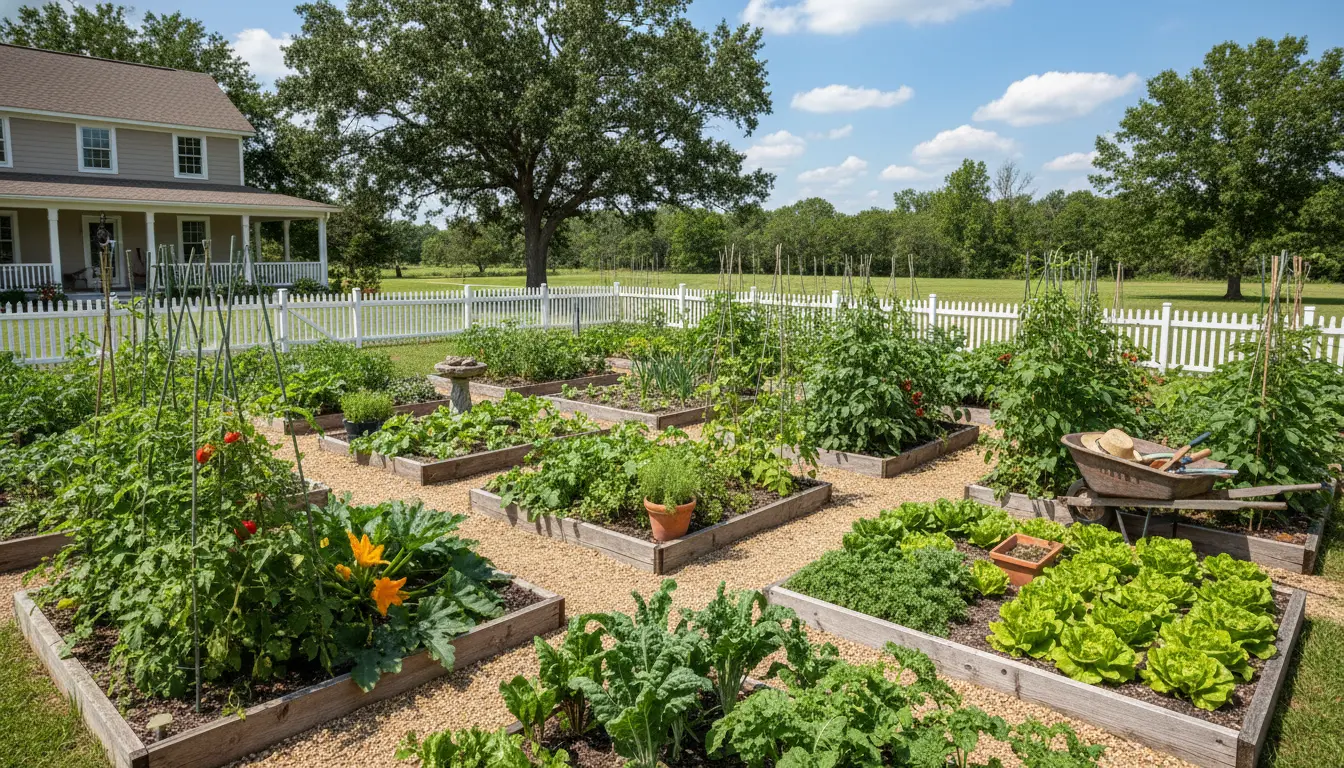
Why Start a Backyard Vegetable Garden
Growing vegetables at home saves money and gives you fresher produce. A backyard vegetable garden also increases outdoor activity and can improve your local ecology.
This guide covers practical steps to plan, prepare, plant, and maintain a backyard vegetable garden with easy, actionable tips.
Plan Your Backyard Vegetable Garden
Begin by evaluating space, sunlight, and soil. Most vegetable crops need at least six hours of direct sun each day.
Choose a garden layout that fits your time and physical ability: raised beds, in-ground rows, or containers are common options.
Site Selection and Sunlight
Pick a location with the most sunlight and good drainage. Avoid low spots that collect water after rain.
Consider access to water and proximity to your kitchen for easy harvesting.
Soil Assessment
Test your soil with a simple home kit or send a sample to a local extension service. Soil pH and nutrient levels affect plant health.
Most vegetables prefer loamy, well-drained soil with a pH between 6.0 and 7.0.
Prepare Soil for a Backyard Vegetable Garden
Improve soil quality with organic matter such as compost or well-rotted manure. Spread 2–4 inches of compost over the soil and mix it in.
If using raised beds, fill them with a balanced mix of topsoil, compost, and a light amendment like coconut coir or peat-replacement for moisture retention.
Simple Soil Improvement Steps
- Remove weeds and grass from the bed area.
- Add compost and mix to a depth of 6–8 inches.
- Adjust pH if needed using lime (to raise) or sulfur (to lower).
Choose Plants for a Backyard Vegetable Garden
Select vegetables that match your climate, space, and skill level. Beginners should start with forgiving crops like tomatoes, lettuce, beans, and herbs.
Consider varieties labeled as disease-resistant and suited to your USDA zone or local climate.
Planting Calendar and Succession Planting
Create a simple planting calendar based on your last frost date. Plant cool-season crops early and warm-season crops after frost danger passes.
Practice succession planting by sowing small amounts every few weeks to extend harvests.
Planting and Early Care
Follow seed packet or plant tag directions for spacing and depth. Crowding reduces airflow and increases disease risk.
Water deeply at the base of plants in the morning to encourage strong roots and reduce leaf diseases.
Mulching and Weed Control
Apply a 2–3 inch layer of organic mulch to retain moisture, moderate soil temperature, and suppress weeds. Leave a small gap around stems to prevent rot.
Hand-pull weeds when small or use shallow cultivation to avoid disturbing plant roots.
Watering and Fertilizing Your Backyard Vegetable Garden
Water consistently: most vegetable gardens need about 1–1.5 inches of water per week. Adjust for rainfall and heat.
Fertilize based on soil test results. Use a balanced organic fertilizer or side-dress with compost mid-season for heavy feeders like tomatoes and corn.
Practical Watering Tips
- Use drip irrigation or soaker hoses to minimize evaporation and wet foliage.
- Water in the morning to allow plants to dry during the day.
- Check soil moisture with a finger: if the top 1–2 inches are dry, water deeply.
Pest and Disease Management for Backyard Vegetable Garden
Start with prevention: good spacing, clean tools, crop rotation, and healthy soil reduce many problems. Inspect plants weekly for signs of pests or disease.
Use integrated pest management (IPM): identify the pest, consider physical controls, and use organic treatments only when necessary.
Low-Impact Pest Controls
- Hand-pick larger pests like caterpillars and beetles.
- Use row covers to protect young plants from insects and birds.
- Introduce beneficial insects like ladybugs for aphid control.
Companion planting can reduce pests and improve yields. For example, planting marigolds near tomatoes may help deter nematodes and certain insects.
Harvesting and Storage
Harvest vegetables at peak ripeness for best flavor and nutrition. Frequent harvesting encourages more production in many crops like beans and zucchini.
Store root vegetables in cool, humid conditions and leafy greens in the refrigerator wrapped in a damp cloth or container.
Small Real-World Case Study
Example: A neighborhood family converted a 10-by-10 foot corner of lawn into a raised-bed backyard vegetable garden. They added two 4×8-foot beds filled with a mix of topsoil and compost.
First season results: tomatoes, peppers, and basil produced enough for summer meals. Lettuce and radishes were harvested in succession, extending fresh salad availability into fall.
Lessons learned: start small, improve soil each season, and schedule weekly 30-minute maintenance sessions to manage weeds and pests.
Simple Maintenance Checklist
- Weekly: Check moisture, remove weeds, inspect for pests.
- Monthly: Side-dress with compost or balanced organic fertilizer as needed.
- Seasonal: Rotate crops and refresh soil with organic amendments.
Final Tips for a Successful Backyard Vegetable Garden
Start with easy crops and expand as you gain confidence. Keep records of planting dates, varieties, and harvests to improve each year.
Use local resources like extension services or community garden groups for region-specific advice and troubleshooting.
With planning, simple soil care, and regular attention, a backyard vegetable garden can provide consistent, healthy produce and a rewarding outdoor hobby.