
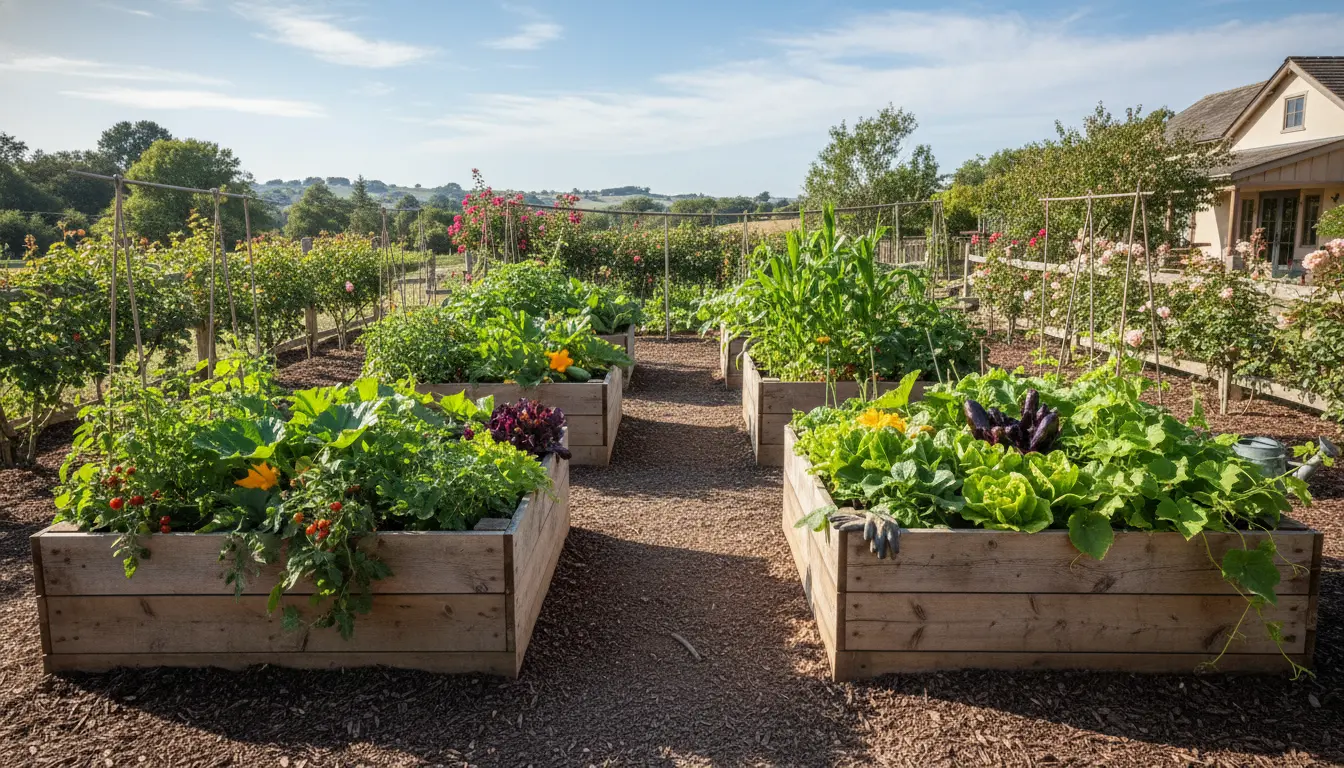
Small Vegetable Garden Planning: Start With Goals
Begin small and clear about what you want from a garden. Decide whether your aim is fresh salad greens, herbs, or a variety of vegetables for preserving.
Set realistic goals based on time, space, and climate. A clear purpose makes every planning step easier.
Small Vegetable Garden Planning: Choose the Right Site
Sunlight is the most important factor. Most vegetables need at least six hours of direct sun daily.
Consider access to water and proximity to your home for frequent checks. Avoid places with strong winds or heavy shade.
Site Factors to Evaluate
- Sun exposure through the day
- Soil drainage and slope
- Access to a water source
- Microclimates like heat sinks or shaded corners
Small Vegetable Garden Planning: Soil and Containers
Soil quality determines plant health. For in-ground beds, aim for rich, loamy soil amended with compost.
Containers and raised beds are ideal for small spaces. They allow control over soil mix and drainage.
Soil Mix and Amendments
- Basic container mix: 40% compost, 40% topsoil, 20% coconut coir or peat alternative.
- Test pH if possible; most vegetables prefer pH 6.0 to 7.0.
- Add slow release organic fertilizer at planting and side dress with compost midseason.
Small Vegetable Garden Planning: Select Plants Wisely
Choose crops that match your space and schedule. Compact or bush varieties suit small gardens best.
Prioritize high-yield, fast-growing plants if you want quick results.
Good Choices for Small Gardens
- Leafy greens: lettuce, spinach, arugula
- Compact tomatoes: patio or determinate varieties
- Herbs: basil, parsley, cilantro
- Root crops: radishes, baby carrots
- Climbing crops on trellises: pole beans, cucumbers
Small Vegetable Garden Planning: Layout and Spacing
Plan paths and bed sizes to maximize access and planting area. A common small-garden layout uses 4×4 or 4×8 raised beds.
Use square foot gardening principles to increase yield and control spacing precisely.
Example Layout Tips
- 4×4 bed: divide into 16 one-foot squares for quick planning
- Use vertical space with trellises to grow vining plants
- Keep 18 to 24 inch access paths to reach all plants
Small Vegetable Garden Planning: Watering and Irrigation
Consistent moisture is crucial. Drip irrigation or soaker hoses conserve water and reduce disease risk.
Water early in the day and mulch beds to retain moisture and suppress weeds.
Watering Best Practices
- Check soil moisture daily at planting season
- Mulch with straw or wood chips 2 to 3 inches deep
- Use simple timers on drip systems for regular schedules
Small Vegetable Garden Planning: Pest and Disease Management
Prevent problems with good hygiene and crop rotation. Inspect plants regularly and remove affected leaves or plants promptly.
Companion planting and beneficial insects can reduce pest pressure without harsh chemicals.
Simple Preventative Steps
- Rotate crop families each season to reduce soil-borne pests
- Encourage pollinators with a small patch of flowers
- Use row covers for young seedlings to protect from insects
Small Vegetable Garden Planning: Planting Calendar Example
Below is a basic schedule for a temperate climate with distinct spring and fall seasons.
- Early spring: sow peas, spinach, radishes directly
- Mid spring (after last frost): transplant tomatoes, peppers, basil
- Summer: succession sow quick greens every 2-3 weeks
- Late summer: start kale and Brussels sprouts for fall harvest
Case Study: Balcony Garden That Fed a Family Salad
In one small city apartment, a gardener used three 2×2 raised beds and a narrow railing box to grow salad greens, herbs, and two determinate tomato plants.
With weekly compost top-ups and a drip line on a timer, the balcony produced enough greens for a family of three all summer, reducing grocery salad purchases by 60 percent.
Small Vegetable Garden Planning: Quick Checklist
- Map sun exposure and choose the sunniest spot
- Decide between in-ground, raised beds, or containers
- Choose compact, high-yield varieties for small spaces
- Prepare nutrient-rich soil and mulch to conserve moisture
- Install simple drip irrigation and set a watering schedule
- Rotate crops and practice regular pest checks
Small vegetable garden planning is a step-by-step process that rewards careful choices. Start with one or two beds, learn from each season, and expand as your confidence grows.