
Why Remote Work Productivity Matters
Remote work productivity affects output, client satisfaction, and team morale. Improving productivity helps you finish tasks faster while maintaining quality.
Set Up Your Workspace for Remote Work Productivity
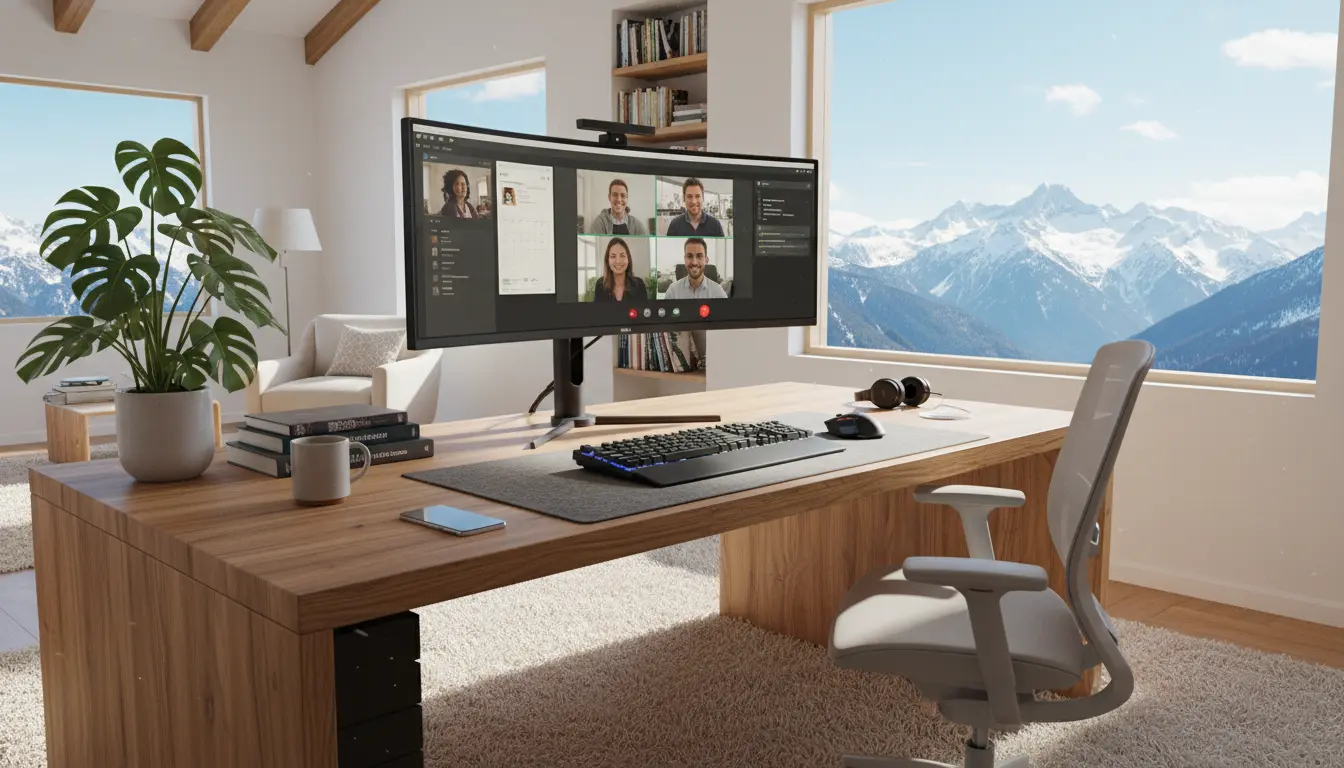
A consistent workspace reduces friction and mental switching costs. Choose a quiet corner, invest in ergonomic seating, and keep necessary tools within reach.
Essentials for a productive home office
- Comfortable chair and desk at the right height
- Good lighting and a neutral background for video calls
- Reliable internet and a backup plan (hotspot or second network)
- Minimal clutter: keep only daily items on your desk
Create a Routine to Improve Remote Work Productivity
Routines build momentum and reduce decision fatigue. Define start and end times, and choose ritual actions to signal the workday’s beginning.
Sample daily routine
- 08:30 – Prepare workspace and review top three priorities
- 09:00 – Deep work block (90 minutes)
- 10:30 – Short break and quick emails
- 11:00 – Meeting or collaborative work
- 12:30 – Lunch and walk
- 13:30 – Second deep work block
- 16:30 – Wrap up and plan next day
Use Tools That Support Remote Work Productivity
Select tools that reduce context switching and centralize work. Avoid piling on apps that duplicate functions and create noise.
Recommended tool categories
- Task manager: create clear, prioritized to-do lists
- Calendar: block deep work and schedule meetings only when necessary
- Communication: use one main chat for quick messages and reserve email for formal items
- Time tracking or focus apps: measure where your time goes and protect focus blocks
Communication Habits That Boost Remote Work Productivity
Clear communication prevents repeated work and confusion. Make expectations explicit for deadlines, deliverables, and response times.
Practical communication rules
- Set core hours when team members are expected to respond
- Use short, action-oriented messages with clear owner and due date
- Prefer asynchronous updates for status whenever possible
- Reserve real-time calls for complex decisions or brainstorming
Protect Focus Time and Manage Interruptions
Interruptions break flow and cost time to recover. Plan uninterrupted deep work blocks and communicate them to colleagues.
Techniques to preserve focus
- Use calendar blocks labeled “Do Not Disturb” or “Focus”
- Turn off nonessential notifications during deep work
- Use a visible signal (status, sign) when you cannot be interrupted
- Batch similar tasks to reduce context switching
Remote workers often report fewer workplace interruptions, which can support longer focused work sessions and higher output.
Time Management Methods to Increase Remote Work Productivity
Simple methods help you spend time intentionally. Choose a method that fits your work type and commit to it for a few weeks.
Effective methods
- Pomodoro: 25 minutes focused, 5 minutes break; good for task-based work
- Time blocking: allocate large blocks for deep work and administrative tasks
- Eat the Frog: start the day with the most important or hardest task
Measure and Improve Remote Work Productivity
Track outcomes rather than hours. Use metrics like task completion rate, quality feedback, and cycle time for repeated tasks.
Simple tracking approach
- List top 3 goals each day and mark which were completed
- Review weekly: what took longer than expected and why
- Adjust one small habit each week and measure the effect
Real-World Example: Freelance Designer Case Study
Maria is a freelance UX designer who struggled with scattered focus and late nights. She designed a simple system to improve productivity.
She implemented a dedicated workspace, blocked two daily deep work periods, and began using a task manager to prioritize three daily deliverables. Within six weeks she reduced overtime by 30% and delivered projects earlier, increasing client satisfaction.
Common Mistakes That Harm Remote Work Productivity
Awareness of pitfalls helps you avoid them. Common errors include over-scheduling, mixing personal tasks with work time, and not taking breaks.
How to avoid them
- Say no or negotiate deadlines when your schedule is full
- Keep a clear end-of-day ritual to separate work and personal life
- Schedule short breaks and a meaningful lunch break each day
Quick Checklist to Boost Remote Work Productivity Today
- Set up a dedicated workspace
- Create a simple daily routine with deep work blocks
- Centralize tools and limit notifications
- Communicate core hours and response expectations
- Track outcomes and refine one habit weekly
Use these practical steps to build a sustainable, productive remote work routine. Small, consistent changes deliver measurable improvements over time.