
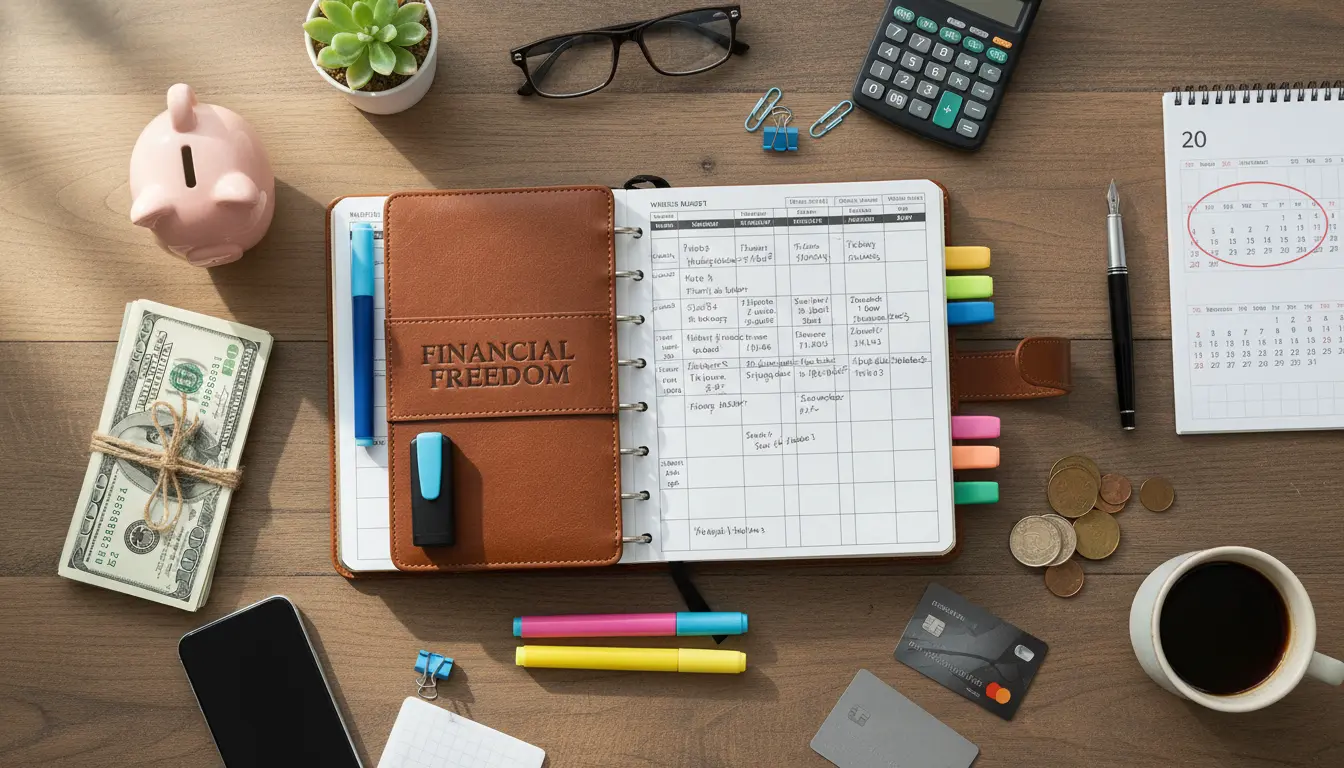
Personal Budgeting for Beginners: Start Here
Personal budgeting for beginners means building a simple plan to control income and expenses. A clear budget helps you meet short-term needs and long-term goals without stress.
This guide gives step-by-step instructions you can apply today, with examples and a short case study to show results.
Step 1: Define Your Money Goals
Before you track numbers, decide what you want your money to do for you. Goals give your budget direction and make choices easier.
- Short-term (0–12 months): emergency cushion, a small trip, or a paid bill.
- Medium-term (1–5 years): paying off debt, a car down payment, or a wedding.
- Long-term (5+ years): retirement, a home purchase, or education.
Step 2: Track Income and Expenses
Accurate tracking is the foundation of personal budgeting for beginners. Use one month of real data to start.
Track all income sources and categorize expenses into essentials, variable spending, and savings or debt payments.
How to track
- Use a spreadsheet or a budgeting app for automated categorization.
- Keep receipts or log transactions daily for one month.
- Review bank and credit card statements to catch missed items.
Step 3: Build a Simple Budget
Choose a method that fits your habits. Simplicity increases the chance you will stick with the plan.
Common budgeting methods
- Zero-based budgeting: assign every dollar a job until income minus expenses equals zero.
- 50/30/20 rule: 50% needs, 30% wants, 20% savings/debt repayment.
- Envelope or category budgeting: allocate fixed amounts to categories each month.
For beginners, a modified 50/30/20 or a basic zero-based template is often easiest to implement.
Step 4: Cut Costs Without Stress
Reducing expenses does not require drastic lifestyle changes. Small, consistent cuts add up over time.
- Compare subscriptions and cancel unused services.
- Shop with a list to avoid impulse purchases.
- Negotiate bills like internet, phone, or insurance annually.
Step 5: Automate Savings and Bills
Automation makes budgeting almost effortless. Set up automatic transfers for savings and automatic bill payments when possible.
Automate in this order: emergency fund contributions, required debt payments, and routine bills.
Step 6: Monitor and Adjust Each Month
Your first budget will not be perfect. Review results monthly and adjust categories and amounts.
Focus on trends: are essentials stable, or are variable costs rising? Use that insight to refine the plan.
Practical Tools for Personal Budgeting for Beginners
Choose one or two tools and use them consistently. Overloading with apps creates confusion.
- Spreadsheet templates: low cost, flexible, and transparent.
- Budgeting apps (YNAB, Mint, EveryDollar): useful for automation and tracking.
- Calendar and reminders: schedule monthly budget reviews and bill pay dates.
Saving just $100 a month at 5% interest grows to over $15,000 in 10 years. Small regular savings make a big difference.
Small Real-World Example
Anna earns $3,000 per month after taxes. She sets a 50/30/20 budget: $1,500 for needs, $900 for wants, and $600 for savings and debt.
After tracking three months, Anna finds $150 monthly spent on unused streaming services and takes $100 from wants to boost an emergency fund. Within six months she builds a $1,200 cushion and reduces stress about unexpected car repairs.
Case Study: Javier Cuts Debt and Builds Savings
Javier started budgeting after high credit card interest caused financial strain. He listed monthly income of $4,000 and expenses of $3,700, with $700 in credit card minimums.
Using a zero-based approach, Javier redirected $300 of dining out into an accelerated debt payment plan. He paid off a $4,000 balance in 10 months and then shifted that $400 monthly freed cash into a savings account.
Results after 18 months: no credit card debt, an emergency fund equal to three months of expenses, and improved credit score. Small, sustained choices made the difference.
Common Mistakes and How to Avoid Them
- Setting unrealistic categories: start conservative and adjust upward.
- Not tracking variable spending: track daily for a month to reveal patterns.
- Ignoring irregular expenses: plan for annual costs like car insurance by dividing by 12.
Final Tips for Personal Budgeting for Beginners
- Keep the budget simple and review it monthly.
- Prioritize building a small emergency fund before large investments.
- Celebrate milestones, such as paying off a card or reaching a savings goal.
Personal budgeting for beginners is about creating a repeatable system. With clear goals, consistent tracking, and small adjustments, you can build financial stability and reach your targets.