
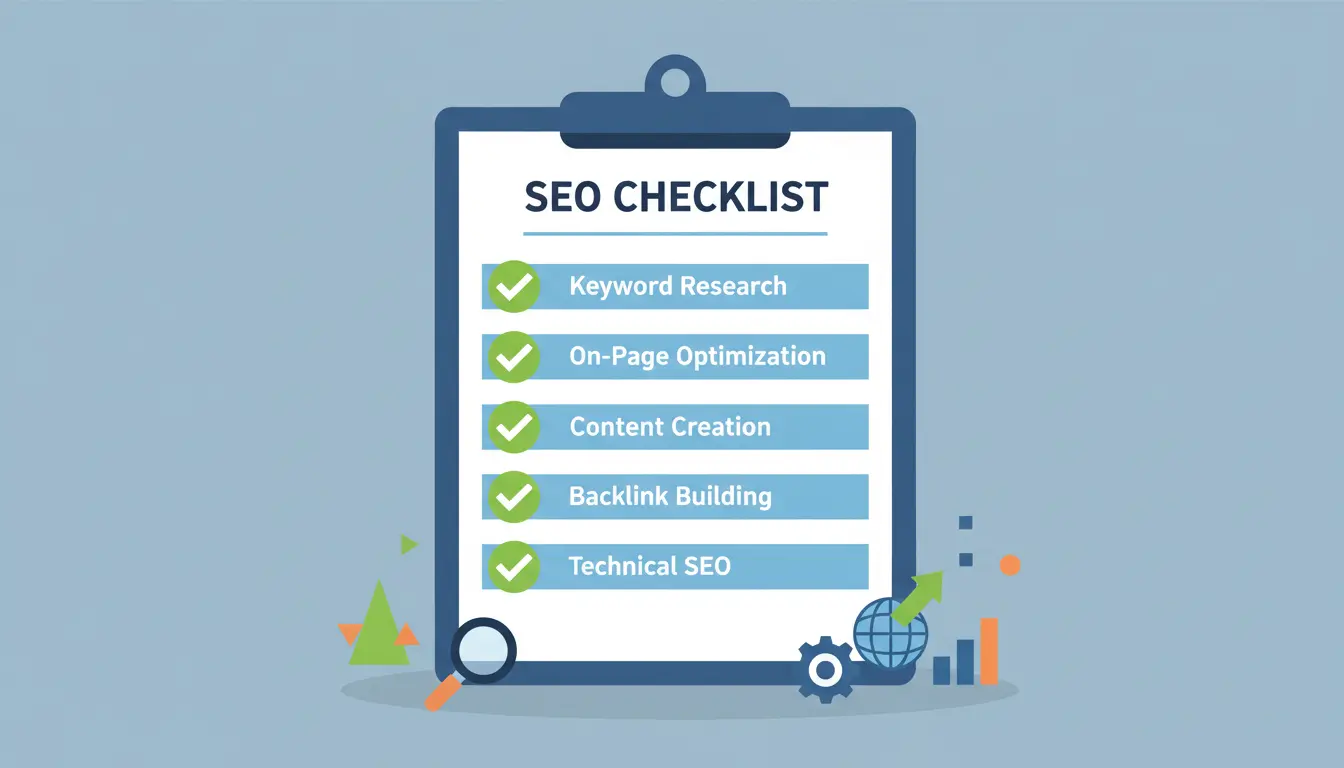
On-Page SEO Checklist Overview
This On-Page SEO Checklist gives a step-by-step approach to optimize individual pages for search and users. Follow these practical checks to improve relevance, click-throughs, and rankings.
Work through each section and document changes so you can measure impact over time. Prioritize pages that drive traffic, conversions, or strategic value.
Key On-Page SEO Elements
On-page SEO combines visible content and behind-the-scenes HTML that tells search engines what a page is about. Focus on high-impact elements first.
On-Page SEO Checklist for Title Tags and Meta Descriptions
Title tags and meta descriptions are essential for relevance and CTR. Write clear, concise titles that include the main keyword near the front.
- Keep title tags under 60 characters and include the target keyword.
- Write meta descriptions that summarize the page and include a call to action; aim for 120–155 characters.
- Ensure each page has a unique title and meta description.
On-Page SEO Checklist for Headings and Content Structure
Use headings (H1, H2, H3) to structure content logically. Place your primary keyword in the H1 or an H2 where it fits naturally.
- One H1 per page that reflects the page topic.
- Use H2/H3 sections for subtopics and keyword variations.
- Keep paragraphs short for readability and scan-ability.
Content Optimization Checklist
High-quality content answers user intent and includes relevant keyword usage without stuffing. Aim for usefulness and clarity.
On-Page SEO Checklist for Keywords and Relevance
Map one primary keyword per page and 3–5 related secondary keywords. Use them naturally in the first 100 words and in headings when appropriate.
- Match content to search intent: informational, transactional, or navigational.
- Include internal links to related pages and external links to authoritative sources.
- Use LSI and semantic variations to cover related topics.
Multimedia and Content Readability
Add images, video, and lists to make content more engaging. Use descriptive file names and alt text for images to improve accessibility and SEO.
- Compress images for faster load times.
- Use bullet lists and short sentences to improve scanning.
- Include clear CTAs aligned with page goals.
Technical On-Page SEO Checklist
Technical optimizations ensure search engines can crawl and index your pages correctly. These tasks often require coordination with developers.
On-Page SEO Checklist for URLs and Canonicals
Create short, descriptive URLs that include the keyword and use hyphens to separate words. Implement canonical tags to prevent duplicate content issues.
- Use lowercase letters and avoid query strings when possible.
- Set rel=canonical to the preferred version of the page.
- Redirect outdated URLs with 301 redirects.
Page Speed, Mobile, and Structured Data
Fast, mobile-friendly pages improve both user experience and rankings. Add structured data where it helps (articles, products, events).
- Run a page speed test and fix major bottlenecks like render-blocking JavaScript.
- Ensure responsive design and touch-friendly elements.
- Add schema markup for rich results where relevant.
Internal Linking and Navigation
Internal links distribute authority and help users find related content. Use descriptive anchor text and link to key pages from high-traffic content.
- Create a logical silo structure by topic.
- Link deep pages from category pages to surface them in the site hierarchy.
- Audit broken links and fix or remove them regularly.
Measuring Results and Iteration
Track the impact of on-page changes using tools like Google Search Console, Google Analytics, and rank trackers. Look for changes in impressions, clicks, and average position.
- Note baseline metrics before major changes.
- Test one variable at a time (title, meta, content) to isolate effects.
- Review user behavior metrics like time on page and bounce rate.
Small Real-World Case Study
Example: A small e-commerce store selling ergonomic chairs used this On-Page SEO Checklist on its top category pages. They optimized titles, reworked meta descriptions, added schema for products, and improved internal linking.
Results: Over three months the pages saw a 35% increase in organic impressions and a 28% rise in organic clicks. Conversion rate on those pages improved by 12% after adding clearer CTAs and product schema.
Simple On-Page SEO Action Plan
Follow this quick plan to apply the checklist across priority pages.
- Identify top 10 pages by traffic or conversions.
- Apply title, meta, and heading optimizations first.
- Fix technical issues: speed, mobile, schema, canonicalization.
- Add internal links and improve content readability.
- Measure and iterate every 4–8 weeks.
Final Tips
Keep changes user-focused and data-driven. Avoid keyword stuffing and aim for clarity in titles and content.
Document experiments and learnings so your team can scale effective tactics across the site.