
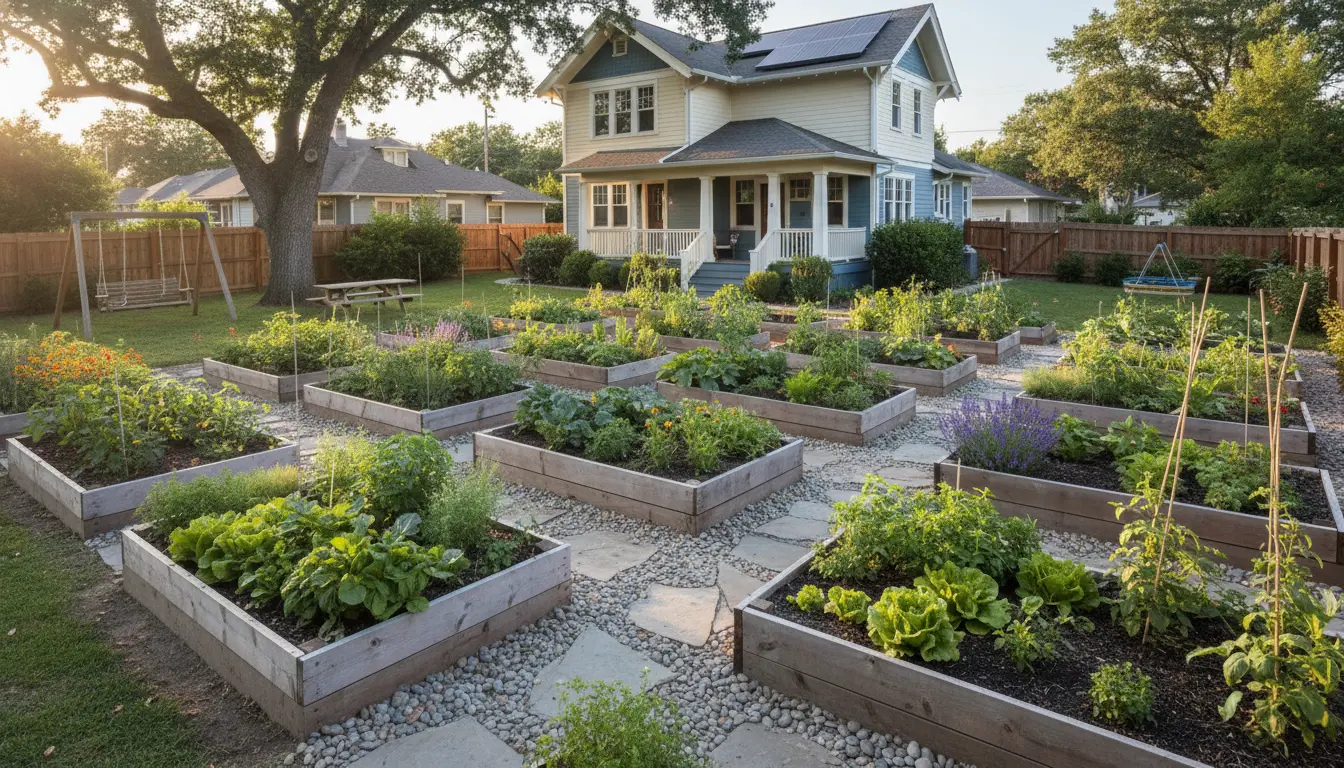
Plan Your Low-Maintenance Vegetable Garden
Start with a clear plan that matches the time you can commit. Pick a small area—200 to 400 square feet is enough for a family of four to grow basic vegetables.
Choose a sunny spot with at least six hours of direct sun. Good sunlight reduces pest and disease pressure and speeds plant growth.
Choose Easy Crops for a Low-Maintenance Vegetable Garden
Select crops that require little care and give high yields. Examples include tomatoes, zucchini, bush beans, lettuce mixes, and chard.
Focus on varieties labeled “disease-resistant” or “hybrid” to reduce the need for intervention.
Design Layout for a Low-Maintenance Vegetable Garden
Design beds to minimize walking on soil and to make watering and harvesting easier. Use 3–4 foot-wide beds with paths between them.
Group plants by water needs to avoid overwatering or underwatering. Place heavy feeders like tomatoes together and low-water crops like herbs in another zone.
Raised Beds and Containers
Raised beds warm faster and drain better than in-ground rows. They reduce weeding and improve access for planting and harvesting.
Containers work well on patios or balconies and cut down on soil preparation time. Use high-quality potting mix and a slow-release fertilizer for steady growth.
Soil and Mulch Tips for Low-Maintenance Vegetable Garden Care
Healthy soil is the single best way to cut maintenance. Aim for rich, crumbly soil with good organic matter.
Work in compost each season—one to two inches on top is usually enough for raised beds and in-ground beds alike.
Use Mulch to Save Time
Apply 2–3 inches of organic mulch such as straw, shredded leaves, or wood chips around plants. Mulch suppresses weeds, retains moisture, and moderates soil temperature.
Mulch also reduces the need for frequent watering and cuts back on weeding sessions.
Watering Strategies for a Low-Maintenance Vegetable Garden
Water deeply and less often rather than giving light daily showers. Deep watering encourages stronger root systems and reduces surface evaporation.
Install a simple drip irrigation system or soaker hoses on a timer. These systems deliver water directly to the root zone and save time.
When to Water
- Check soil moisture by pushing your finger 2 inches into the soil. If dry, water deeply.
- Early morning watering reduces disease risk and evaporation.
- Reduce watering frequency in cool or rainy weather.
Pest and Disease Management in a Low-Maintenance Vegetable Garden
Preventive steps are more effective than reactive treatments. Keep beds clean, rotate crops yearly, and remove diseased plant material promptly.
Use row covers to protect seedlings from insects without pesticides. Encourage beneficial insects by adding a few flowering herbs like dill or calendula.
Simple Organic Controls
- Handpick larger pests such as slugs and caterpillars in the morning.
- Use insecticidal soap or neem oil for soft-bodied pests if infestations grow.
- Apply proper spacing to improve air circulation and reduce fungal disease.
Seasonal Maintenance Checklist for a Low-Maintenance Vegetable Garden
Follow a short seasonal checklist to keep tasks manageable and predictable. Spend 15–30 minutes a day or one longer session per week to maintain momentum.
- Spring: Amend soil with compost, start seedlings, set up drip lines.
- Summer: Mulch, water deeply, harvest regularly to encourage production.
- Fall: Remove spent plants, add compost or cover crop, tidy beds for winter.
- Winter: Plan next year, order seeds, repair beds and irrigation if needed.
Case Study: A Small City Garden That Stayed Low-Maintenance
María converted a 200 sq ft backyard into three 4×8 foot raised beds and two containers. She used compost, straw mulch, and a timer-controlled drip system.
Her main crops were cherry tomatoes, bush beans, salad greens, and basil. By choosing disease-resistant varieties and mulching heavily, she reduced weeding to one 30-minute session per week.
Yield: Enough salad greens and tomatoes to share with neighbors while spending roughly 2–3 hours per week on maintenance during peak season.
Tools and Supplies for a Low-Maintenance Vegetable Garden
Keep a short tool list to stay efficient. Essentials include a hand trowel, a hoe for light weeding, pruning shears, a watering timer, and a soil thermometer.
Store supplies in a small shed or box near the garden to save time and keep tasks organized.
Quick Cost-Saving Tips
- Start seeds indoors to save on plant costs.
- Trade seedlings with neighbors to test new varieties.
- Use homemade compost from kitchen scraps to reduce fertilizer needs.
Final Steps to Keep Your Garden Low-Maintenance
Start small, be consistent, and choose plants suited to your climate. Small early wins build habits and reduce the temptation for high-maintenance features.
Follow the plans above and adjust based on results. A low-maintenance vegetable garden is about smart design, not skipping care.
Ready to start? Make a simple plan for bed size, choose three easy crops, and set a watering schedule. You’ll be surprised how much you can grow with limited time.