
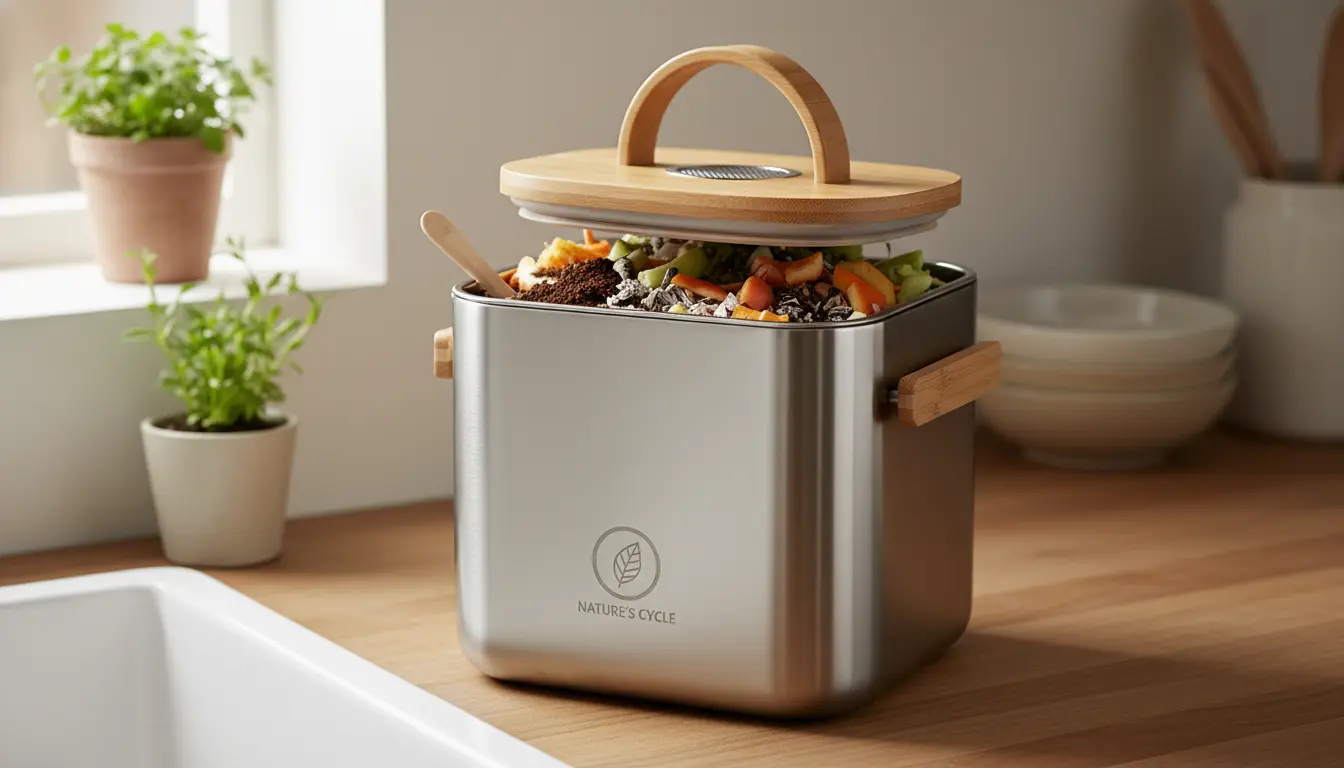
Kitchen Composting: How to Start
Kitchen composting turns food scraps into valuable material for gardens and reduces household waste. This guide gives practical, step-by-step advice to help beginners set up and maintain a simple system.
Why Choose Kitchen Composting
Composting at home cuts garbage volume and keeps nutrients in the soil cycle. It also reduces methane emissions from landfills when organic waste is disposed of properly.
For apartment dwellers and homeowners, kitchen composting can be adapted to small spaces and limited outdoor access using the right methods and bins.
Kitchen Composting: Essential Tools
You do not need fancy equipment. Start with a few affordable items that make composting practical indoors:
- Seal-close kitchen compost bin or counter caddy
- Compostable liners or a scoop for cleaning
- One of these systems: backyard pile, tumbler, worm bin, or Bokashi bucket
- A small outdoor bin or municipal green waste bag for finished transfers
Choosing a Kitchen Compost Bin
When choosing a bin, prioritize odor control, lid seal, and size. A 1–3 gallon counter caddy is ideal for daily scrapes, while a 5–10 gallon bin works for larger households.
Materials: stainless steel resists smells and stains; plastic is lightweight and cheaper. Ensure the lid seals to reduce flies and odors.
What to Compost in the Kitchen
Understanding what to put in your kitchen compost helps avoid problems later. Separate items into safe and avoid lists.
Safe Kitchen Compost Items
- Fruit and vegetable scraps (peels, cores, wilted leaves)
- Coffee grounds and paper filters
- Tea bags (check for staples or synthetic bags)
- Eggshells (crushed)
- Small amounts of shredded napkins and paper towels
Items to Avoid in Kitchen Compost
- Meat, fish, and bones (unless using a closed-system like Bokashi)
- Dairy products and oils (attract pests and cause odors)
- Greasy papers and compostable plastics that do not break down
- Diseased plants or chemically treated yard waste
Kitchen Composting Methods
Choose a method that fits your space and schedule. Each method has trade-offs for smell control, processing time, and effort.
Counter Caddy + Outdoor Bin
Store scraps in a small counter caddy. Empty into a backyard pile or community composter weekly. Pros: simple and low cost. Cons: requires outdoor space.
Vermicomposting (Worm Bin)
Worms break down kitchen scraps quickly and produce nutrient-rich castings. Pros: fast processing and compact. Cons: requires basic care and stable temperature.
Bokashi Buckets
Bokashi ferments all food waste, including meat and dairy, using a bran inoculated with beneficial microbes. After fermentation, bury or add to a compost pile. Pros: indoor friendly and accepts more waste types. Cons: requires two-step process and occasional draining of liquid.
Keeping Your Kitchen Compost Healthy
Maintain balance and minimize issues by following simple habits that promote decomposition and prevent pests.
- Layer green (nitrogen) and brown (carbon) materials when transferring to larger systems.
- Chop scraps into small pieces to speed breakdown.
- Keep the bin covered and store it in a cool, shaded spot.
- Empty indoor caddies regularly to avoid odors.
Troubleshooting Common Problems
- Bad odors: Add more dry browns like shredded paper and ensure airflow.
- Fruit flies: Freeze scraps for 24 hours before adding or use tightly sealed containers.
- Slow breakdown: Increase surface area of scraps and maintain moisture balance.
Kitchen compost can reduce household food waste by up to 30 percent when used consistently. Even small households can divert dozens of pounds of waste per year.
Small Real-World Case Study
Case: A two-person apartment household used a 2-gallon stainless steel counter caddy and a Bokashi bucket for six months. They collected all food scraps in the caddy, emptied into the Bokashi bucket weekly, and buried the fermented residue in a community garden compost pit.
Results after six months: household waste to landfill reduced by 28 percent and weekly trash volume dropped from two bags to one medium bag. The community garden reported improved soil structure after adding the Bokashi-processed material.
Simple Weekly Routine for Kitchen Composting
- Scrape plates and collect scraps in a counter caddy daily.
- Chop larger scraps and add coffee grounds or shredded paper as needed.
- Empty the caddy into your chosen system (worm bin, Bokashi, or outdoor pile) once per week.
- Monitor moisture and odor; adjust brown material and airflow.
Final Tips for Beginners
Start small and stay consistent. Learn what your chosen system prefers and adjust materials over time.
Ask neighbors or local compost programs for tips and places to deposit finished compost if you lack outdoor space.
Kitchen composting is a practical, low-cost way to reduce waste and support soil health. With the right bin and a simple routine, anyone can get started this week.