
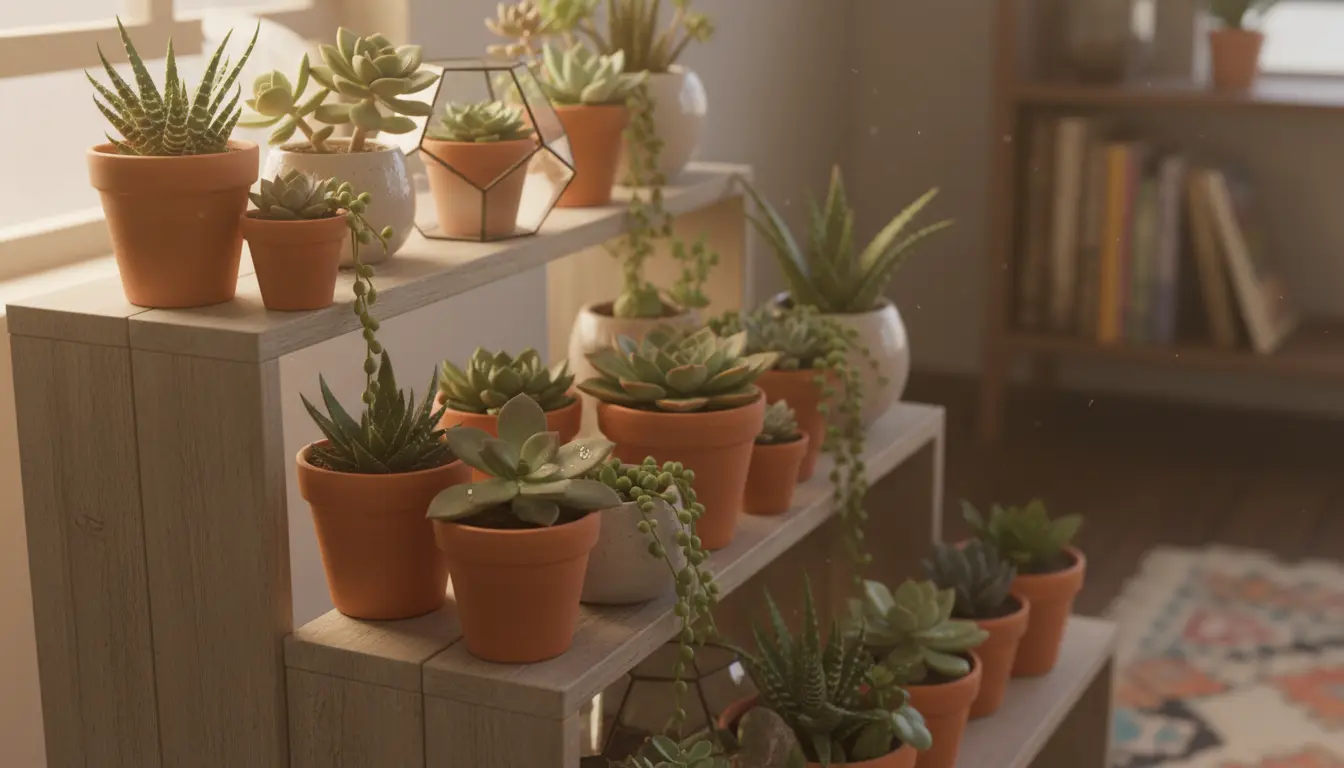
Indoor Succulent Care Basics
Indoor succulents are popular because they are low maintenance and add living decor to homes and offices. Proper care depends on light, water, soil, and pot choice.
This guide explains straightforward steps to keep succulents healthy indoors and includes practical examples you can apply today.
Some succulents store water in stems and leaves and can survive weeks without watering, but regular light and proper soil are essential for long term health.
Light for Indoor Succulent Care
Light is the most important factor for most succulents. Most species need bright, indirect light for 6 to 8 hours daily.
Place succulents on a south or east facing windowsill when possible. Rotate plants weekly to keep growth even.
Signs of Incorrect Light
- Too little light: pale, stretched stems and sparse leaves.
- Too much direct afternoon sun: brown or white sunburn spots on leaves.
- Adjust by moving the plant closer or further from the window or using a sheer curtain.
Watering for Indoor Succulent Care
Watering succulents correctly prevents rot and stress. Use the soak and dry method: water thoroughly, then allow soil to dry completely before watering again.
Frequency varies by season and conditions. In bright warm months, water every 1 to 2 weeks. In cooler months, water every 3 to 4 weeks.
Practical Watering Tips
- Use a pot with drainage holes to allow excess water to escape.
- Water at the soil level, not over the leaves, to reduce rot and pest issues.
- Check soil moisture by inserting a finger 1 to 2 inches deep or using a moisture meter.
Soil and Potting for Indoor Succulent Care
Succulents need well draining soil. Use a commercial cactus mix or make your own by mixing potting soil, coarse sand, and perlite in equal parts.
Choose pots slightly larger than the plant root ball. Oversized pots retain too much moisture and can cause root rot.
Potting Steps
- Fill the pot with a layer of drainage material if desired, then add prepared succulent soil.
- Place the succulent and backfill, pressing lightly to remove air pockets.
- Wait 3 to 7 days before the first watering for any cut roots to callus if repotted.
Temperature and Humidity
Most succulents prefer daytime temperatures between 65 and 80F and cooler nights near 50 to 60F. They tolerate typical indoor humidity levels well.
Avoid placing succulents near heating vents or drafty windows in winter. Stable conditions reduce stress and pest problems.
Pest and Problem Management for Indoor Succulent Care
Common pests include mealybugs, spider mites, and scale. Inspect plants regularly, especially under leaves and in leaf axils.
Remove pests with a cotton swab dipped in isopropyl alcohol for small infestations. For larger problems, use an insecticidal soap or horticultural oil following product directions.
Signs of Disease
- Soft, black or brown spots on leaves often indicate rot from overwatering.
- Yellowing and wilting can result from root damage or poor drainage.
- Treat by trimming damaged tissue and repotting into fresh, dry soil if needed.
Fertilizing and Seasonal Care
Fertilize sparingly. Use a balanced diluted fertilizer during the active growing season (spring and summer) about once a month.
Avoid feeding during dormancy in fall and winter. Excess fertilizer can cause leggy growth and salt buildup.
Small Real World Case Study
Case study: Emma had a windowsill of mixed succulents that developed stretching and pale leaves. She moved the shelf to a brighter east window, switched to a fast draining soil, and began watering only when the top 2 inches of soil were dry.
Within six weeks the succulents firmed up, regained color, and new compact growth appeared. The change in light and soil improved the plants noticeably.
Quick Indoor Succulent Care Checklist
- Light: Bright, indirect light 6 to 8 hours daily.
- Water: Soak and dry method, adjust frequency seasonally.
- Soil: Fast draining cactus or DIY mix with sand and perlite.
- Pots: Use containers with drainage holes; avoid oversized pots.
- Pests: Inspect regularly; treat early with alcohol swabs or insecticidal soap.
- Fertilizer: Light feeding in spring and summer only.
Final Notes on Indoor Succulent Care
Consistency and observation are the best tools for success. Small adjustments in light and watering can yield big improvements.
Start with one or two varieties, learn their signals, and expand your collection as you gain confidence. Healthy succulents add low maintenance beauty to any indoor space.