
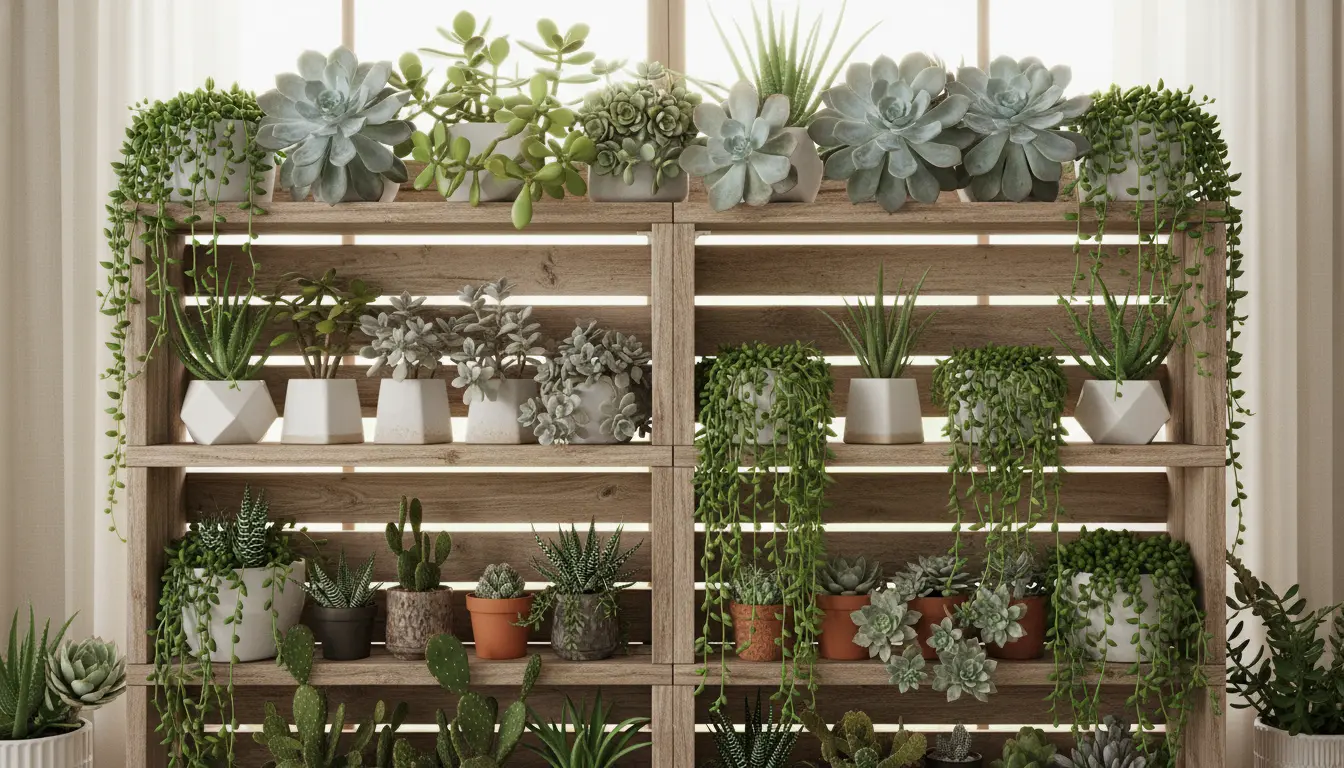
Indoor succulent care basics
Succulents are popular houseplants because they store water and tolerate dry indoor air. With basic attention to light, water, and soil, most varieties thrive for years.
What this guide covers about indoor succulent care
This article gives practical, step-by-step instructions on watering, lighting, potting, and pest prevention. Use the checklists and case study to apply these tips at home.
Light and positioning for indoor succulent care
Light is the single most important factor for indoor succulents. Most species prefer bright, indirect light for 6 to 8 hours daily.
Place succulents near south- or west-facing windows if available. Rotate pots weekly to keep growth even and prevent leaning.
Signs of light stress in indoor succulent care
Watch for stretched, leggy growth as a sign of low light. Brown, scorched patches on leaves suggest too much direct sun.
Watering succulents indoors
Succulents need less water than most houseplants. The goal is to mimic dry spells followed by thorough soaking.
Use the soak and dry method: water thoroughly until it drains, then wait until the soil is completely dry before watering again.
- Check soil with a finger or moisture meter to confirm dryness down to 1 inch.
- Water frequency varies by season: roughly every 2 to 4 weeks in winter, more often in warm months.
- Avoid misting leaves as a main watering method; focus water on the soil.
Soil, potting, and drainage
Good drainage is essential for indoor succulent care. Use a fast-draining soil mix designed for cacti and succulents.
Choose pots with drainage holes and consider a layer of coarse grit or perlite mixed into the soil to improve flow.
Potting steps for healthy succulents
When repotting, gently remove old soil, inspect roots for rot, and trim any damaged sections. Place the plant in fresh mix and water lightly after a few days.
Fertilizing and seasonal care
Fertilize sparingly during active growth months, typically spring and early summer. Use a balanced, diluted fertilizer at half strength once a month.
Reduce or stop feeding in late fall and winter when growth slows, and adjust watering to cooler, dryer conditions.
Common problems and how to fix them
Root rot, pests, and etiolation (stretching) are common issues for indoor succulents. Early identification makes treatment simpler.
- Root rot: Remove plant, trim mushy roots, repot in dry fresh soil, and cut back watering schedule.
- Pests: Treat mealybugs and scale with alcohol swabs or insecticidal soap, and isolate affected plants.
- Etiolation: Move the plant to brighter light and prune leggy growth to encourage compact form.
When to seek advanced care
If a plant shows persistent decline despite corrective steps, consider consulting a local nursery or extension service. Some species need specific attention.
Practical checklist for indoor succulent care
- Light: 6 to 8 hours bright, indirect light daily when possible.
- Soil: Use well-draining cactus or succulent mix.
- Water: Soak and dry method; let top inch of soil dry between waterings.
- Pot: Use containers with drainage holes.
- Fertilizer: Diluted balanced feed in spring and early summer only.
Simple case study: A jade plant revived indoors
Background: A homeowner had a potted jade plant that developed soft, yellow leaves and a stretched appearance after months near a dim window. The plant was at risk of decline.
Action taken: The plant was moved to a bright east-facing window, repotted into fast-draining soil, and watered only when the top 1 to 2 inches were dry. Pests were checked and none were found.
Outcome: Within six weeks the plant produced firmer, darker leaves and new compact growth. The owner now rotates the pot weekly and waters about every three weeks in winter.
Quick examples of easy indoor succulent varieties
- Haworthia: Tolerant of lower light and forgiving for beginners.
- Echeveria: Needs brighter light and forms rosettes.
- Jade plant: Slow-growing and sturdy with bright indirect light.
Final tips for consistent indoor succulent care
Observe plants regularly and adjust care to your home environment. Light, not water, is often the limiting factor indoors.
Keep notes on watering dates and growth changes to refine a routine that suits your space and the specific succulents you keep.