
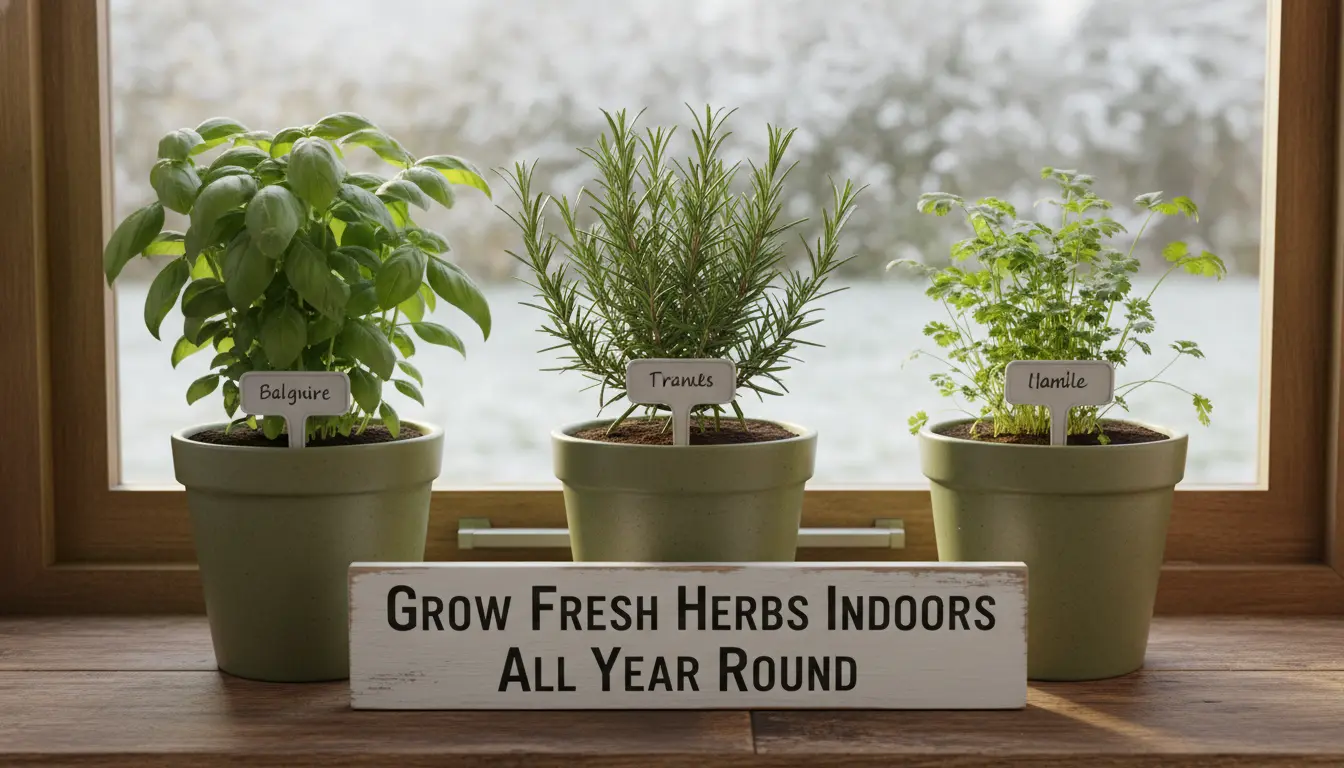
Growing an indoor herb garden is a simple way to add fresh flavor to meals and brighten your home. This guide explains the key steps: choosing herbs, containers, light, soil, watering, and basic maintenance. Follow practical tips to get consistent results even in small spaces.
Why an Indoor Herb Garden Works
An indoor herb garden gives quick access to fresh leaves, reduces waste, and saves money. Herbs are generally compact and adapt well to containers and windowsills.
You do not need special skills. With the right light, soil, and routine, most people can keep herbs healthy year-round.
Choose the Right Herbs for an Indoor Herb Garden
Start with herbs that tolerate indoor conditions and regular harvesting. Some reliable choices include:
- Basil — loves light and warmth.
- Parsley — slower growing but hardy.
- Chives — compact and forgiving.
- Mint — vigorous; use a separate pot to avoid spreading.
- Thyme and rosemary — need good light and drier soil between waterings.
For beginners, basil, chives, and mint are often the easiest to start.
Pick Containers and Potting Mix
Containers should have drainage holes to prevent root rot. Choose pots sized to allow root growth but not so big that soil stays wet too long.
Use a well-draining potting mix labeled for containers. Avoid garden soil which can compact and carry pests.
Container Tips for an Indoor Herb Garden
- Use 4–8 inch pots for single herbs; larger pots for mixed plantings.
- Group pots on a tray to simplify watering and protect surfaces.
- Consider self-watering containers if you travel often.
Light Requirements for an Indoor Herb Garden
Light is the most important factor for healthy herbs. Most herbs need 6–8 hours of bright light daily.
Place your herbs on a south or west-facing windowsill if possible. If natural light is limited, use a full-spectrum LED grow light for 8–12 hours per day.
Signs of Too Little Light
- Leggy stems and small leaves.
- Pale or slow growth.
Watering and Feeding an Indoor Herb Garden
Watering frequency depends on pot size, mix, and light. Check soil with your finger: water when the top 1 inch feels dry.
Overwatering causes yellow leaves and root rot. Allow some drying between waterings for Mediterranean herbs like rosemary and thyme.
Feeding Schedule
Feed herbs with a balanced liquid fertilizer at half strength every 3–4 weeks during active growth. Reduce feeding in winter when plants grow more slowly.
Pruning, Harvesting, and Pest Control
Regular pruning keeps herbs bushy and productive. Harvest from the top, cutting stems back by one-third to encourage branching.
Inspect plants weekly for pests like aphids, spider mites, or whiteflies. Wipe leaves with water or use insecticidal soap if needed.
Pruning Tips for an Indoor Herb Garden
- Pinch back basil tips to prevent flowering and extend leaf production.
- Trim mint frequently to control vigor.
- Remove flower stalks from parsley and basil to favor leaf growth.
Harvesting herbs regularly increases leaf production. For many herbs, cutting stems encourages new shoots within days, so light weekly harvesting keeps plants vigorous.
Common Problems and Quick Fixes
Most issues stem from light, water, or ventilation problems. Here are quick diagnostics and solutions:
- Yellow leaves: check for overwatering and poor drainage.
- Leggy growth: move plants to brighter light or add grow lights.
- Slow growth in winter: reduce watering and accept slower production, or use supplemental lighting.
- Foul smell or mushy stems: remove dead material and repot if roots are rotten.
Case Study: Sarah’s Windowsill Basil
Sarah, a busy teacher in Seattle, started three basil plants on a south-facing windowsill in April. She used 6-inch pots, store-bought potting mix, and rotated the pots weekly.
She watered when the top inch of soil dried, fed a half-strength liquid fertilizer every three weeks, and pinched tops twice a week. Within six weeks she had continuous harvests for salads and pesto and replaced any stems that began to flower.
Her simple, consistent routine produced a steady supply of leaves and helped her avoid waste from store-bought herbs.
Seasonal Tips for an Indoor Herb Garden
Adjust care with the seasons. In winter, give less water and consider a small LED light to compensate for shorter days.
In summer, rotate pots outdoors for extra sun if temperatures stay mild. Bring plants back inside before cold nights.
Final Checklist to Start Your Indoor Herb Garden
- Choose 2–5 easy herbs to begin with (basil, chives, mint).
- Use containers with drainage and a well-draining potting mix.
- Provide 6–8 hours of bright light or use a grow light.
- Water when the top inch of soil is dry; avoid overwatering.
- Prune and harvest regularly to encourage growth.
With a small initial investment and a simple routine, you can enjoy fresh herbs year-round. Start small, observe your plants, and adjust light and water as needed.