
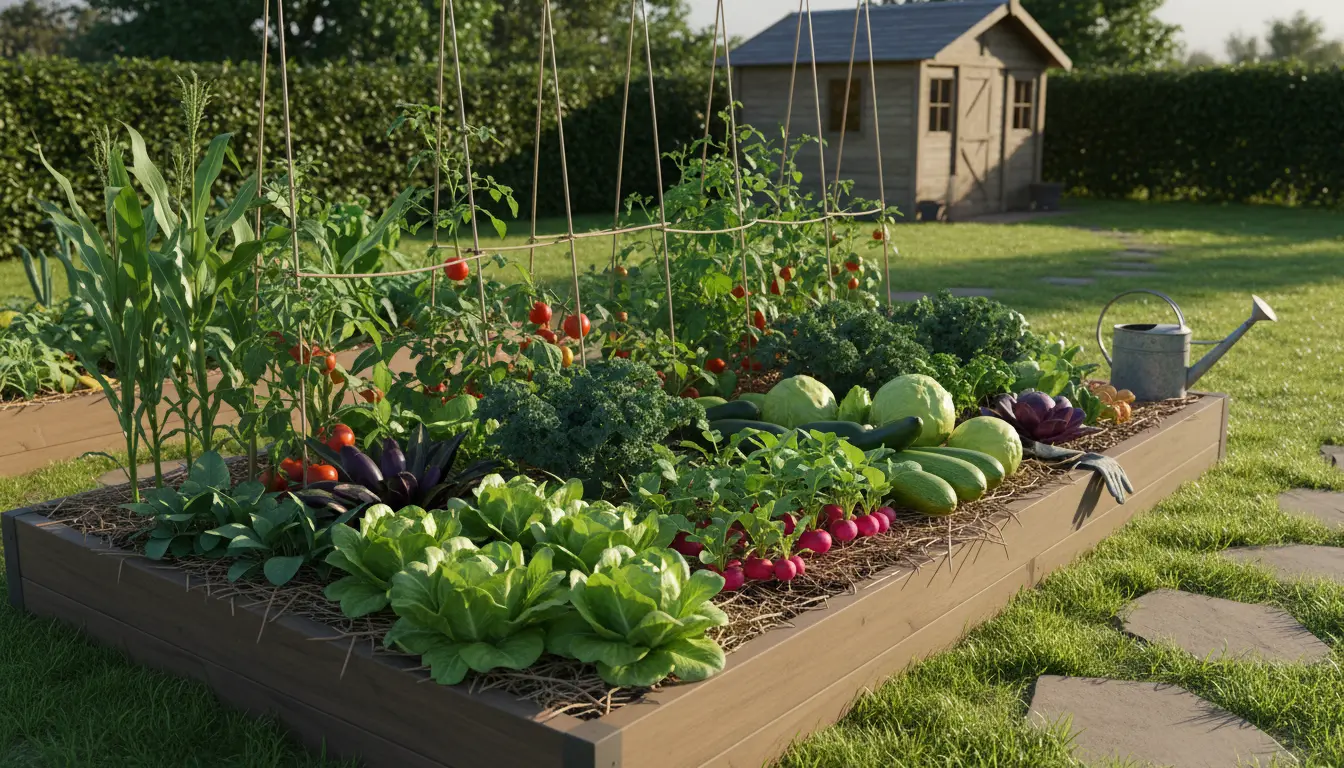
Why Start a Vegetable Garden
Growing your own vegetables saves money and improves food quality. A vegetable garden also gives you fresh produce on demand and reduces shopping trips.
Use this guide to plan a simple, productive garden even if you have limited time or space.
Choose the Right Spot for Your Vegetable Garden
Light matters most. Most vegetables need 6 to 8 hours of direct sun daily. Observe possible sites across a full day to pick the sunniest area.
Consider access to water and soil drainage. Avoid low spots that collect water and places far from a hose.
Small Space Options: Vegetable Garden in Containers
If you lack yard space, use containers or a balcony. Choose containers with drainage and at least 12 inches deep for most vegetables.
Tomatoes, peppers, lettuce, and herbs all grow well in pots. Use a quality potting mix to ensure good drainage and nutrients.
Prepare Soil for a Healthy Vegetable Garden
Good soil is the foundation of a productive vegetable garden. Aim for loose, well-draining soil rich in organic matter.
Test soil pH when possible. Most vegetables prefer a pH between 6.0 and 7.0. Adjust soil with lime or sulfur only after testing.
Simple Soil Preparation Steps
- Clear weeds and debris from the selected area.
- Loosen soil to 8–12 inches using a fork or tiller.
- Mix in 2–4 inches of compost to boost nutrients and structure.
- Rake the area smooth and form planting rows or beds.
Pick Vegetables for Your Climate and Skill Level
Choose crops suited to your zone and season. Beginners should start with forgiving, fast-growing plants.
Good starter vegetables include lettuce, radishes, bush beans, zucchini, and cherry tomatoes.
Plan a Simple Planting Schedule
Use seed packet dates or local extension resources to determine last frost and ideal planting windows. Stagger plantings (succession sowing) for continuous harvests.
Planting and Spacing for a Compact Vegetable Garden
Follow seed packet or plant tag spacing recommendations. Crowded plants compete for light and nutrients and can reduce yields.
Consider intensive planting methods like square foot gardening to maximize yields in small beds.
Watering and Mulching Your Vegetable Garden
Water deeply and less often to encourage strong roots. Most vegetables need about 1 inch of water per week, more in hot weather.
Mulch with straw, leaves, or wood chips to retain moisture, reduce weeds, and regulate soil temperature.
Watering Tips
- Water at the base of plants, not overhead, to reduce disease risk.
- Use a soaker hose or drip irrigation for efficient watering.
- Check soil moisture with a finger: if the top 2 inches are dry, water deeply.
Pest and Disease Basics for Vegetable Garden Care
Inspect plants weekly for pests and disease signs. Early detection makes control easier and less chemical-dependent.
Use these basic controls: hand-pick large pests, introduce beneficial insects, and use row covers for young plants.
Simple Organic Controls
- Remove and destroy severely infested leaves.
- Encourage pollinators with flowering herbs and native plants.
- Rotate crops yearly to reduce soil-borne diseases.
Companion planting can reduce pests and improve yields. For example, planting marigolds near tomatoes may deter some harmful nematodes.
Harvesting and Extending the Season in Your Vegetable Garden
Harvest vegetables at peak ripeness for best flavor and to encourage more production. Frequent harvesting can extend the productive period.
Use row covers, cold frames, or a simple greenhouse to extend the season into cooler months.
Small Real-World Case Study: A Neighborhood Raised Bed Vegetable Garden
Case: Emma, a new gardener, built a 4×8 raised bed on a sunny patio. She filled it with a 50/50 mix of compost and garden soil and planted tomatoes, lettuce, and bush beans.
Results: In the first season she harvested six tomato plants producing 40–60 tomatoes, continuous lettuce for three months, and three pickings of beans. Her initial cost was $120, and she saved on groceries while learning fast.
Quick Checklist to Start Your Vegetable Garden
- Choose a sunny spot with water access.
- Test and improve soil; add compost.
- Select easy crops for your season and space.
- Plant with correct spacing and water deeply.
- Mulch, monitor pests, and harvest often.
Final Tips for a Successful Vegetable Garden
Start small and expand as you gain confidence. Keep a garden journal to note what worked and what did not.
Be patient: gardens improve with experience. Regular attention—watering, weeding, and observation—gives the best results.