
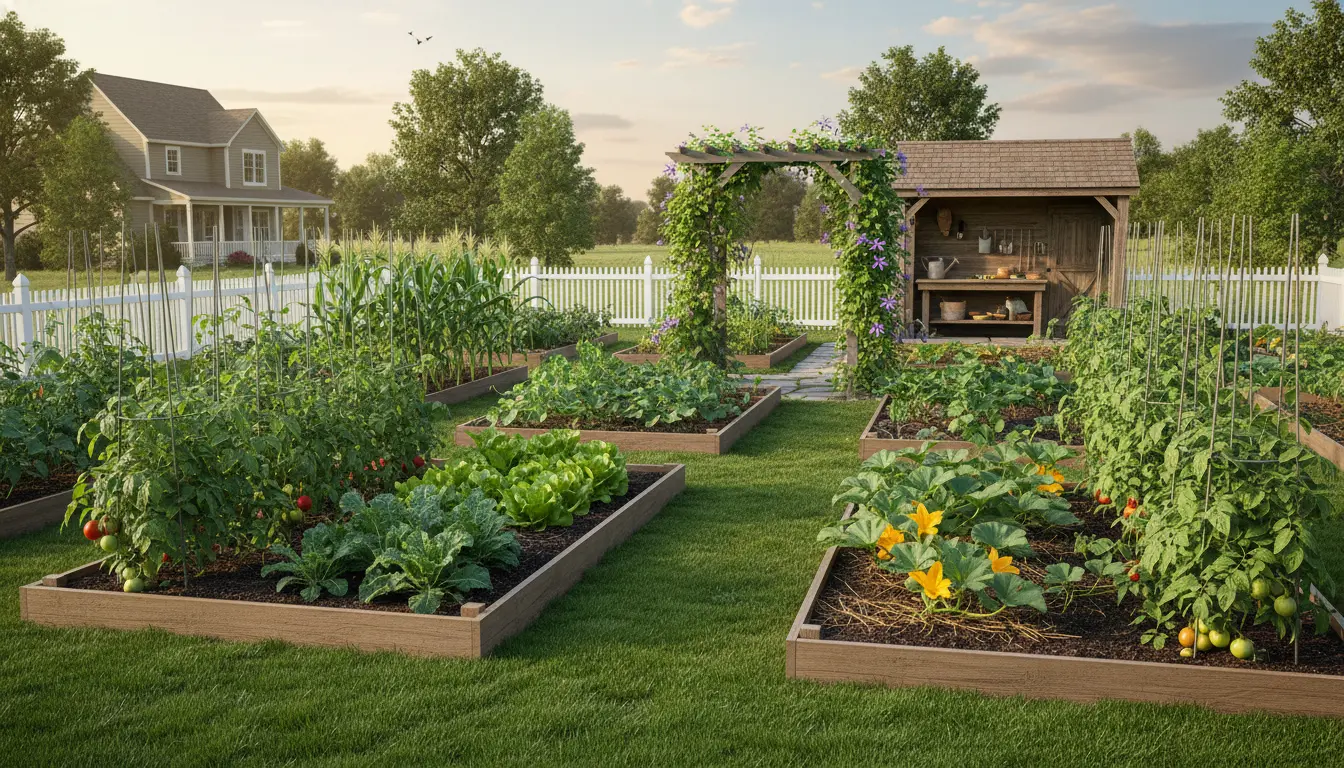
Starting a vegetable garden is a hands-on way to grow fresh produce, save money, and enjoy time outdoors. With basic planning and the right steps, even a small yard or balcony can produce flavorful vegetables.
Plan Your Vegetable Garden
Good planning reduces work later. Start by choosing a location, deciding the garden type, and sketching a simple layout. A clear plan helps you pick the right plants and schedule.
Choose the Right Location for Your Vegetable Garden
Vegetables need sun. Most edible plants require at least 6 to 8 hours of direct sunlight per day. Observe your yard for a few days to find the sunniest spot.
Also consider access to water, wind protection, and proximity to your kitchen. The closer the garden, the more likely you will tend it regularly.
Decide Garden Type: Beds, Containers, or Rows
Choose a format that matches your space and time. Raised beds give better drainage and soil control. Containers work well on patios and balconies. Traditional rows suit larger plots and mechanical tools.
Advantages at a glance:
- Raised beds: improved soil, easier weeding
- Containers: portable, space-saving
- Rows: low-cost, easy to expand
Prepare Soil for a Healthy Vegetable Garden
Soil is the foundation of a productive vegetable garden. Spend time improving soil quality before planting to reduce problems later.
Test and Improve Soil
Begin with a basic soil test to check pH and nutrient levels. Many extension offices offer low-cost tests. Most vegetables prefer pH 6.0 to 7.0.
Amend heavy clay with compost and coarse sand for drainage. Add gypsum sparingly if drainage remains poor.
Add Compost and Organic Matter
Mix 2–4 inches of compost into the top 6–8 inches of soil. Organic matter improves water retention for sandy soils and drainage for clay soils.
Frequent additions of compost — every season — maintain fertility without relying on synthetic fertilizer.
Choose Vegetables to Grow
Pick crops suited to your climate, season, and skill level. Start with a few reliable varieties and expand as you gain experience.
Beginner-friendly vegetables:
- Leafy greens: lettuce, spinach, Swiss chard
- Root crops: radishes, carrots, beets
- Nightshades: tomatoes, peppers (staking required)
- Beans and peas: easy, fix nitrogen in soil
Planting and Maintenance Tips for a Vegetable Garden
Regular care keeps plants productive. Focus on correct planting depth, watering, and routine checks for pests and disease.
Planting Schedule and Spacing
Follow seed packet dates for your hardiness zone. Overcrowding reduces airflow and increases disease risk. Use recommended spacing and thin seedlings early if needed.
Succession planting yields continuous harvests: plant a new row of lettuce every 2–3 weeks instead of all at once.
Watering, Mulching, and Pest Control
Water deeply and less frequently to encourage strong roots. Early morning watering reduces leaf wetness at night and lowers disease risk.
Mulch with straw or wood chips to retain moisture and suppress weeds. Use physical barriers, row covers, or companion planting to reduce pests before using chemicals.
Small Case Study: 10×10 Raised Bed Success
Case study: A homeowner built a 10 x 10 raised bed and filled it with a mix of 50% compost and 50% topsoil. They planted tomatoes, basil, lettuce, and bush beans.
Results after one season: consistent harvests of tomatoes and beans, weekly salads from lettuce, and healthier soil structure. Time spent: about 2 hours per week for watering and minimal weeding.
Key takeaways: raised beds simplified soil management, and close placement by the kitchen increased harvesting frequency and reduced waste.
Common Mistakes When Starting a Vegetable Garden
- Planting in low-light areas — reduces yields.
- Overwatering or constant shallow watering — leads to weak roots.
- Ignoring soil improvement — causes recurring nutrient problems.
- Trying too many crops at once — creates maintenance overload.
Quick Checklist to Start a Vegetable Garden
- Choose a sunny site and decide garden type (bed, container, row).
- Test soil and add compost; adjust pH if needed.
- Select 4–6 beginner-friendly crops suited to your season.
- Plan spacing and succession planting dates.
- Set up easy watering: drip irrigation or soaker hoses where possible.
- Mulch and monitor for pests weekly.
Starting a vegetable garden is a repeatable process. Begin small, learn from each season, and expand as your confidence grows. The combination of planning, simple soil care, and consistent maintenance will deliver steady rewards.
If you follow the checklist and focus on soil, sunlight, and sensible plant choices, you can harvest fresh vegetables even in a compact space. Put a simple plan in place this weekend and take the first step—prepare one bed or container and sow your first seeds.