
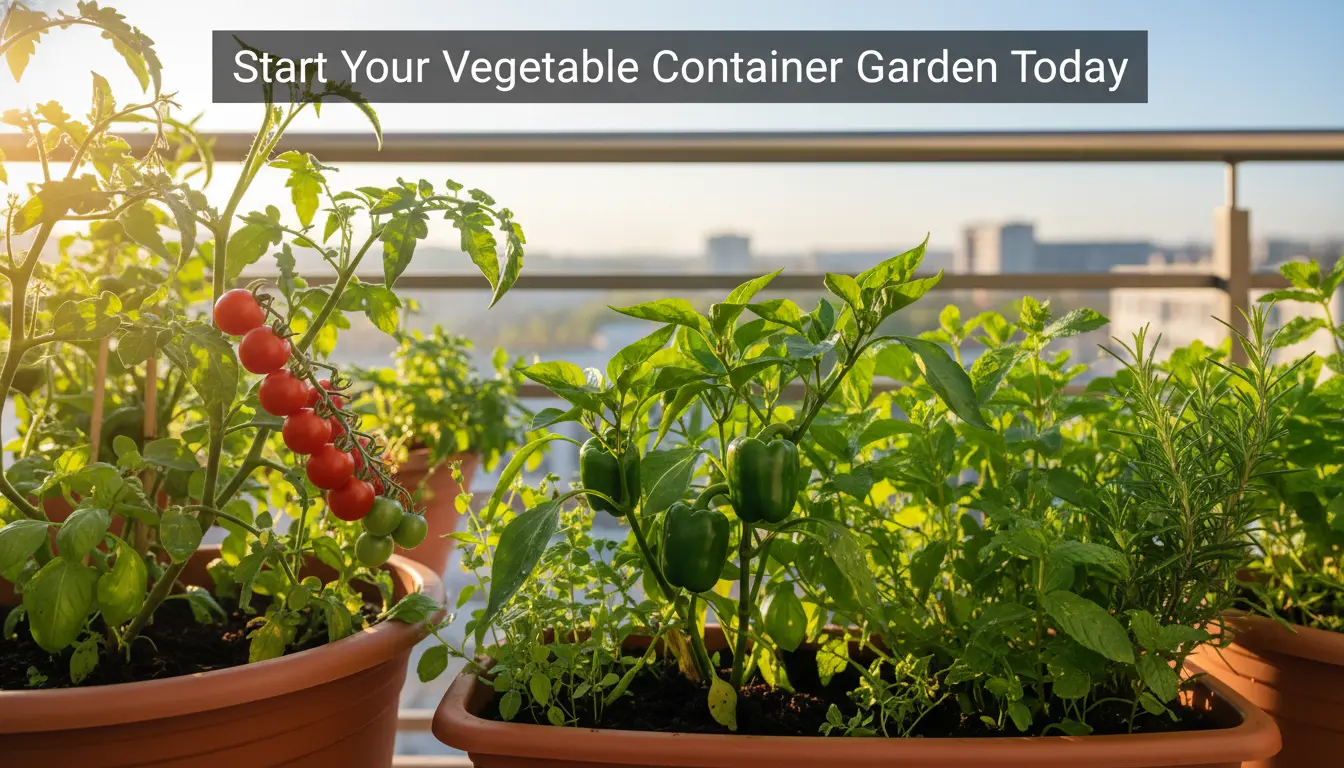
Why choose a vegetable container garden
Vegetable container gardens let you grow fresh food in small or nontraditional spaces. They are ideal for balconies, patios, and small yards where in-ground beds are not possible.
Containers control soil, drainage, and pests more easily than a traditional garden. You can move pots to follow sun or shelter plants during heat and frost.
Planning your vegetable container garden
Start by assessing available light, space, and how much time you can commit to care. Most edible plants need 6–8 hours of direct sun per day.
Decide on the scale. Beginners often start with 3–6 containers to learn basic needs without being overwhelmed.
Pick the right spot for a vegetable container garden
Observe sunlight across the day. A south-facing balcony typically provides the most consistent light.
Consider access to water and protection from strong winds. Heavy rain, strong gusts, or reflected heat from walls can stress plants.
Choosing containers and soil for your vegetable container garden
Select containers with drainage holes. Good drainage prevents root rot and salt buildup.
Choose containers sized for the plants: shallow for herbs, medium for lettuce, and deep (12–18 inches) for tomatoes or peppers.
Best soil mix for a vegetable container garden
Use a high-quality potting mix labeled for containers, not garden soil. Potting mixes are lighter and drain better.
Mix in slow-release organic fertilizer or compost at planting to supply nutrients for the first 4–8 weeks.
Selecting plants for a vegetable container garden
Choose compact, determinate, or dwarf varieties bred for containers. Look for words like “patio,” “bush,” or “compact” on seed or plant labels.
Easy starter plants include lettuce, radishes, cherry tomatoes, herbs (basil, parsley), and peppers.
Companion planting tips
- Group plants with similar water and light needs in the same container.
- Avoid planting heavy feeders (like corn) with low-nutrient crops in the same pot.
- Use herbs to deter pests and attract pollinators.
Planting and care routine for a vegetable container garden
Fill containers to within an inch of the rim with potting mix. Gently firm the soil and water before planting to settle it.
Plant seedlings at the same depth they were in their nursery pots. For seeds, follow spacing recommendations on the packet.
Watering schedule
Containers dry out faster than beds. Check soil daily by sticking a finger 1–2 inches into the mix. Water when the top inch feels dry.
Use a saucer to catch excess runoff on balconies, but empty it to avoid mosquitoes and root rot.
Fertilizing for consistent growth
Apply a balanced liquid fertilizer every 2–3 weeks or a slow-release granular fertilizer as directed. Container plants deplete nutrients faster than those in-ground.
Watch for yellowing leaves or slow growth as signs of nutrient deficiency and adjust feeding accordingly.
Pest and disease management in a vegetable container garden
Inspect plants weekly for pests like aphids, whiteflies, and caterpillars. Handpick pests or use insecticidal soap when needed.
Rotate crops across seasons and clean containers between uses to break disease cycles.
Common problems and quick fixes
- Wilting: Check soil moisture and root health. Repot if roots are potbound.
- Yellow leaves: Test for overwatering or nutrient deficiency.
- Pest outbreaks: Isolate the container and treat early to limit spread.
Harvesting and winter care for your vegetable container garden
Harvest vegetables as they ripen to encourage continued production. Regular harvesting extends the productive season.
In colder climates, move containers to a protected spot, reduce watering, and mulch to insulate roots.
Shallow-rooted vegetables like lettuce and radishes can produce a full harvest from a container only 6–8 inches deep, making them perfect for small spaces.
Case study: Small balcony, big results
Maria, an apartment resident, started a vegetable container garden with five pots on her north-east balcony. She selected two 12-inch pots for cherry tomatoes, two 8-inch pots for herbs and lettuce, and one deep pot for a pepper plant.
By following a simple watering schedule and weekly liquid feeding, she harvested cherry tomatoes for four months and had continuous salad greens. Moving pots into afternoon sun during July improved yields.
Quick checklist to start your vegetable container garden
- Assess light and choose a suitable spot.
- Select containers with drainage and the right depth for plants.
- Use quality potting mix and add compost or slow-release fertilizer.
- Plant compact or patio varieties suited for containers.
- Set a daily or every-other-day soil check and a fertilizing schedule.
- Monitor pests and rotate crops seasonally.
Final tips for a successful vegetable container garden
Start small and expand as you gain confidence. Small failures are learning steps and easy to correct in containers.
Keep a simple garden journal: record what you planted, dates, and harvests. This helps improve choices the next season and increases success over time.