
Why Home Composting for Beginners Matters
Home composting for beginners converts kitchen and yard waste into a rich soil amendment. It reduces landfill waste and improves garden health with minimal cost.
Learning basic techniques prevents bad smells, pests, and slow decomposition. This guide gives step-by-step instructions you can follow today.
Getting Started with Home Composting for Beginners
Start with the right location and container. Choose somewhere with good drainage and partial shade to keep material from drying out or getting waterlogged.
Pick a compost bin type based on space and effort. For small yards, a simple tumbling bin or a closed plastic container works well.
Choosing a Compost Bin for Home Composting for Beginners
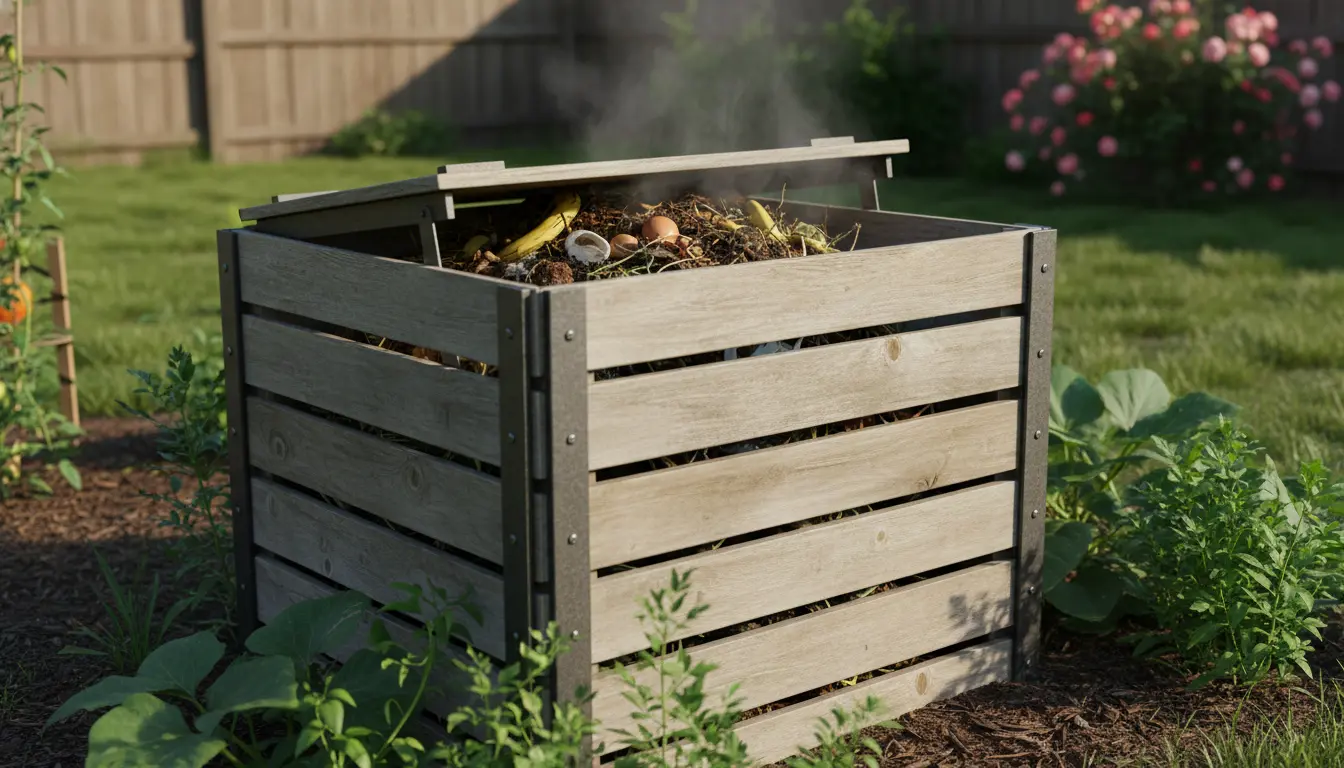
Options include open piles, tumblers, and stationary bins. Tumblers speed up mixing and reduce manual turning, while open piles are cheapest.
- Tumbler: faster mixing, less manual effort.
- Stationary bin: good for steady inputs and larger volumes.
- Open pile: lowest cost, requires more turning and care.
What to Compost: Greens and Browns
Balance nitrogen-rich “greens” with carbon-rich “browns” for efficient decomposition. Aim for roughly a 1:3 ratio by volume (greens:browns).
- Greens: fruit and vegetable scraps, coffee grounds, fresh grass clippings.
- Browns: dry leaves, shredded paper, straw, small wood chips.
Avoid meat, dairy, diseased plants, and pet waste to prevent pests and odors.
Process Steps for Home Composting for Beginners
Follow these simple steps to keep your compost active and healthy. Consistency matters more than perfection.
- Layer materials: start with coarse browns for airflow, then add greens and cover with browns.
- Moisten: keep the pile as damp as a wrung-out sponge.
- Turn: aerate every 1–2 weeks by mixing to speed decomposition.
- Monitor temperature: a properly working pile will feel warm in the center.
Maintaining Moisture and Temperature
Too dry and microbes slow down; too wet and the pile goes anaerobic. Add water when dry and more browns when soggy.
Ideal temperatures for active composting are 104–140°F (40–60°C), but backyard piles often work slowly at lower temperatures and still produce good compost.
Troubleshooting Common Problems in Home Composting for Beginners
Recognizing and fixing issues early keeps the process simple and effective. Most problems have straightforward solutions.
- Bad smells: add more browns and turn the pile to add air.
- Pests: remove food scraps and use a closed bin or secure lid.
- Slow decomposition: chop materials smaller, increase greens, and turn more often.
Compost can contain millions of beneficial microbes and nutrients like nitrogen, phosphorus, and potassium, improving soil structure and plant growth.
How Long Until Compost Is Ready?
Finished compost typically takes 3–12 months depending on bin type, size of materials, turning frequency, and climate. A dark, crumbly texture and earthy smell indicate readiness.
Using Finished Compost from Home Composting for Beginners
Apply finished compost as a top dressing, soil amendment, or mix into potting blends. It improves water retention, nutrient content, and soil life.
Use a thin layer around plants, work it into vegetable garden beds, or blend 1:3 with native soil for planting holes.
Small Real-World Example
Case study: A two-person household started a 50-gallon tumbler and added kitchen scraps and yard clippings. They turned the tumbler twice weekly and kept a 1:3 green-to-brown balance.
After four months they harvested dark, crumbly compost and applied a 1-inch layer to their raised vegetable beds, resulting in healthier tomato growth and reduced watering needs the next season.
Quick Checklist for Home Composting for Beginners
- Choose bin type and location with drainage and shade.
- Keep a balance of greens and browns (about 1:3 by volume).
- Maintain moisture like a wrung-out sponge.
- Turn regularly to add oxygen and speed up decomposition.
- Harvest when dark and crumbly; use in garden beds and pots.
Home composting for beginners is a low-cost, effective way to reduce waste and build healthier soil. Start small, learn by doing, and adjust based on what works in your yard.