
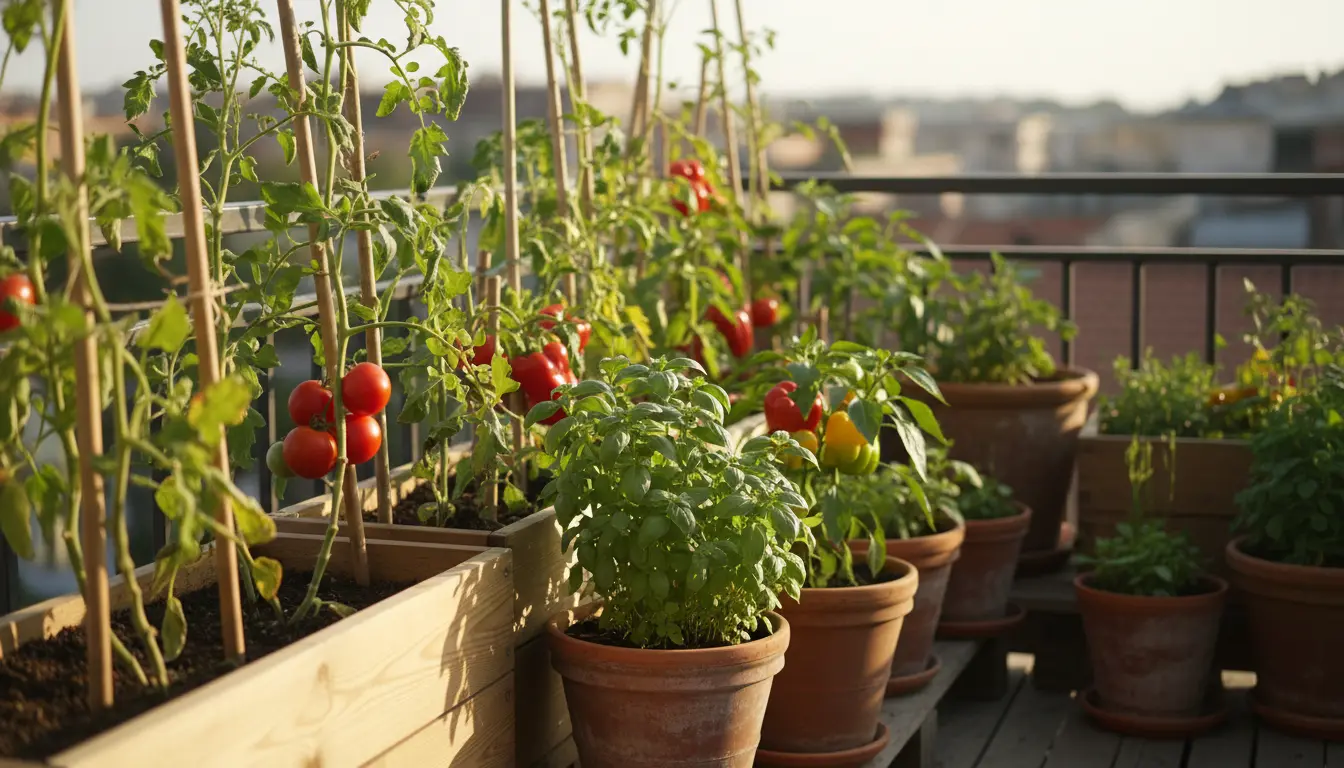
Container vegetable gardening is a practical way to grow food in small spaces like balconies, patios, or narrow yards. This guide explains step-by-step how to choose containers, soil, crops, and care routines so you get reliable harvests without complicated methods.
Planning Your Container Vegetable Garden
Start by evaluating available space and sunlight. Most vegetables need at least 6 hours of direct sunlight, so map sun patterns across a day to choose placement.
Decide what you want to grow based on space and skill level. Leafy greens, herbs, and compact tomatoes are easier for beginners, while vining crops need more room or supports.
Light and Space for Your Container Vegetable Garden
Measure the area and note how many hours of sun each spot gets. South-facing spaces are ideal, but east or west exposures can work for many crops.
Consider vertical space with trellises or wall planters to increase yields without enlarging your footprint.
Choosing Containers and Drainage for a Container Vegetable Garden
Select containers that are large enough for the root systems of your chosen plants. Bigger pots hold more moisture and reduce frequent watering.
Ensure good drainage by using pots with drainage holes and a well-draining potting mix. Elevate containers slightly with feet or bricks to allow excess water to escape.
Container Types and Sizes
- Herbs and small greens: 6–8 inch pots
- Leafy vegetables: 10–12 inch pots
- Tomatoes, peppers, small eggplants: 5–10 gallon containers
- Vining crops (cucumbers, pole beans): 15+ gallon containers with trellis
Soil, Mixes, and Fertilizer for a Container Vegetable Garden
Use a high-quality potting mix designed for containers, not garden soil. Potting mixes retain air and moisture and reduce compaction.
Mix in slow-release fertilizer at planting and supplement with a balanced liquid feed every 2–3 weeks during the growing season.
DIY Potting Mix Recipe
- 50% peat-free compost or coir
- 30% coarse perlite or grit for drainage
- 20% well-rotted compost or composted bark for nutrients
Plant Selection and Spacing in a Container Vegetable Garden
Choose compact or patio varieties when possible; they’re bred for container growth. Read seed packets or plant tags for mature size and spacing guidelines.
Avoid overcrowding: give each plant enough air circulation to reduce disease risk and encourage fruiting.
Watering and Feeding Tips for a Container Vegetable Garden
Containers dry faster than ground beds, so check moisture daily in hot weather. Water deeply until water runs from the drainage holes to ensure roots reach the full pot depth.
Use a balanced liquid fertilizer or water-soluble feed on a schedule, and reduce feeding toward the end of the season to allow plants to mature naturally.
Pest and Disease Management in a Container Vegetable Garden
Inspect plants regularly for common pests like aphids, whiteflies, and slugs. Early action prevents heavy infestations.
Use physical controls first: hand-pick pests, use sticky traps, or spray with soapy water. Introduce beneficial insects if space allows or apply organic controls when needed.
Seasonal Care and Wintering a Container Vegetable Garden
Rotate crops in containers annually where possible and refresh potting mix every 1–2 years to restore nutrients. Mulch topsoil with straw or compost to retain moisture.
In colder climates, move containers to protected spots or wrap pots with insulating material to protect roots from freezing.
Many container-grown tomatoes produce fruit earlier than those in-ground because pots warm faster in spring, speeding up root growth and flowering.
Harvesting and Maximizing Yield from a Container Vegetable Garden
Harvest regularly to encourage continued production. For leafy greens, pick outer leaves and let the center continue to grow for multiple harvests.
For fruiting crops, harvest when ripe and use varieties labeled determinate for compact, predictable yields if you have limited space.
Simple Maintenance Checklist for a Container Vegetable Garden
- Daily: Check soil moisture and remove damaged leaves
- Weekly: Feed with liquid fertilizer and inspect for pests
- Monthly: Prune as needed and top-dress with compost
- Seasonally: Refresh potting mix and rotate crops
Case Study: Small Balcony Success With a Container Vegetable Garden
Sarah used a 6-square-meter balcony to grow vegetables in containers and vertical planters. She focused on cherry tomatoes, basil, lettuce, and peppers.
Using 5-gallon pots for tomatoes and hanging planters for basil, she harvested consistent weekly salads and 12–15 pounds of cherry tomatoes over one season. Key changes included switching to a lighter potting mix and installing a drip water timer.
Quick Troubleshooting for a Container Vegetable Garden
- Yellow leaves: Check for overwatering or nutrient deficiency
- Poor fruit set: Increase sunlight, reduce nitrogen, or check pollination
- Stunted growth: Ensure root space is adequate and refresh potting mix
Starting a container vegetable garden is straightforward with planning and the right supplies. Focus on sunlight, suitable containers, good soil, and steady care to get productive, low-maintenance plantings even in small urban spaces.