
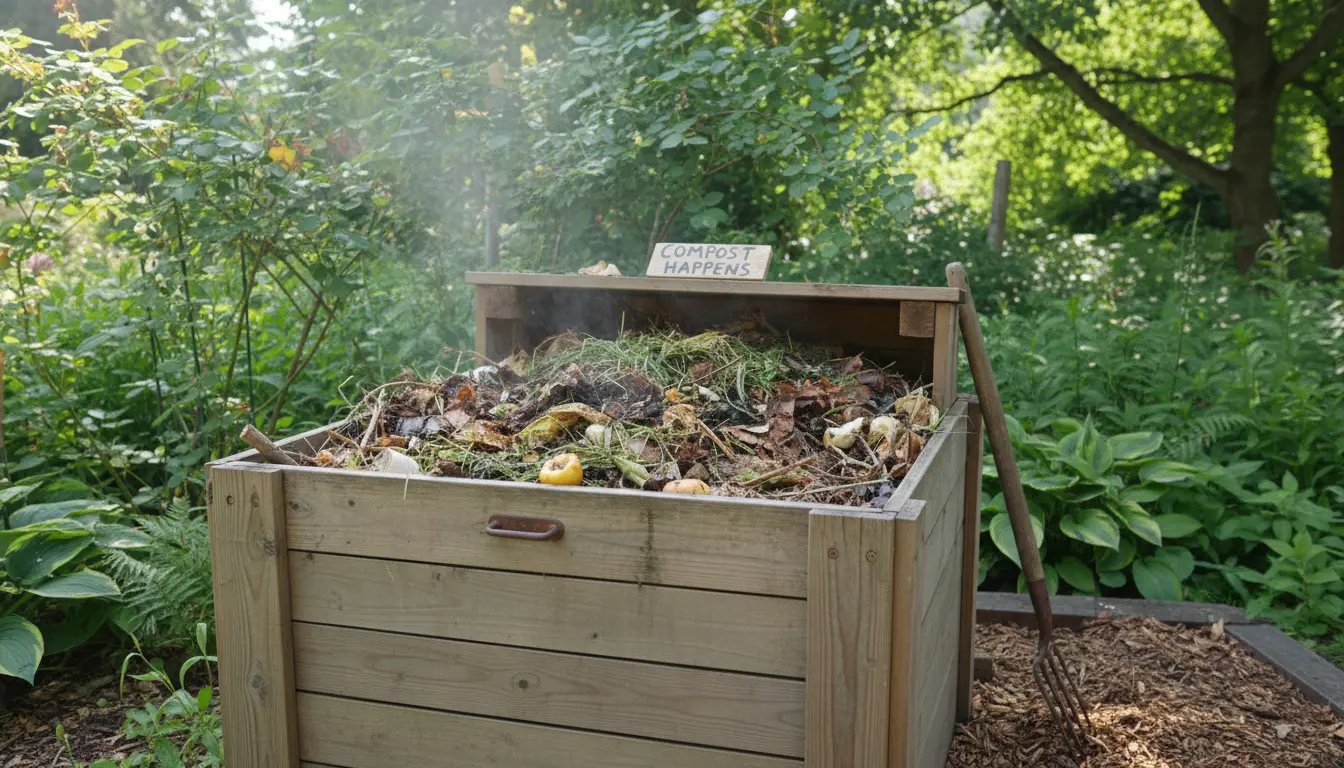
Composting at home reduces kitchen waste and creates nutrient-rich soil for gardens and houseplants. This practical guide covers steps, materials, common problems, and a small real-world example to get you started.
Why choose composting at home
Composting at home diverts organic waste from landfills, lowers household odors from trash, and produces soil amendment for plants. It also cuts your need for store-bought fertilizers and improves soil structure.
Getting started with composting at home
Start by choosing a method that fits your space and routine. Options include an outdoor tumbling bin, a stationary bin, a compost pile, or a worm composting setup for apartments.
Composting at home: Choosing a bin
Select a bin size that matches your waste output and available space. Small households often do well with a 30–60 liter bin or a worm bin, while larger families may prefer a 200+ liter tumbler or stationary bin.
Consider these factors when choosing a bin:
- Location: shaded, level spot with some drainage.
- Access: easy to turn or mix the contents.
- Pest control: enclosed bins reduce rats and flies.
Composting at home: Materials to use
Successful composting balances ‘greens’ and ‘browns’. Greens are moist, nitrogen-rich items; browns are dry, carbon-rich materials. Aim for a rough ratio of 1 part greens to 2–3 parts browns by volume.
- Greens: fruit and vegetable scraps, coffee grounds, fresh grass clippings.
- Browns: dry leaves, shredded cardboard, paper, small wood chips.
- Materials to avoid: meat, dairy, oils, diseased plants, and pet waste.
Managing your compost pile at home
Managing composting at home is mostly about moisture, aeration, and particle size. Chop larger items so they break down faster, keep the pile damp like a wrung-out sponge, and aerate every 1–2 weeks.
Composting at home: Aeration and turning
Turning speeds decomposition and reduces odors. For a bin, use a garden fork to mix the center into the outer layers. Tumblers make turning simpler—rotate every few days if the pile is active.
If using worms, avoid frequent turning; they prefer a stable, moist environment with small, shredded material.
Composting at home: Troubleshooting common problems
Problems are usually easy to fix. Use these checks and actions to keep composting at home on track:
- Smelly/anaerobic pile: Add more browns and turn to introduce oxygen.
- Slow decomposition: Chop material finer, increase moisture slightly, and add nitrogen-rich greens.
- Pests like rodents: Use sealed bins, bury food scraps under browns, and avoid meat or high-fat foods.
Composting can reduce household waste weight by up to 30% and return valuable nutrients to soil, such as nitrogen, phosphorus, and potassium.
When is compost ready and how to use it
Compost is ready when it is dark, crumbly, and smells earthy. Depending on method and conditions, this can take 2 months to a year. Sift out large pieces and return them to the bin for further decomposition.
Use finished compost as a soil top-dressing, potting mix ingredient, or garden bed amendment. Apply a 1–3 cm layer around plants, or mix 10–20% compost into potting soil for seedlings.
Small case study: A practical example of composting at home
Emma lives in a small house with a backyard garden. She started using a 200 liter tumbling bin and separated kitchen scraps into a countertop pail. After six months of consistent feeding and weekly turning, Emma produced about 120 liters of finished compost.
Results from her first year:
- Food waste diverted: approximately 150 kg.
- Finished compost produced: about 120 liters, enough to top-dress vegetable beds.
- Garden benefit: improved moisture retention and healthier tomato plants with less need for commercial fertilizer.
Tips for success with composting at home
- Keep a small counter bin lined with paper to collect scraps—empty it into the main bin every 1–2 days.
- Shred or chop large items to increase surface area for microbes.
- Maintain a balanced mix of greens and browns to avoid odors and speed up decomposition.
- Record additions and turning schedule to learn what works in your climate.
Composting at home is a practical, low-cost way to manage organic waste and enrich soil. Start small, learn by doing, and adjust ratios and methods to fit your space and routine.