
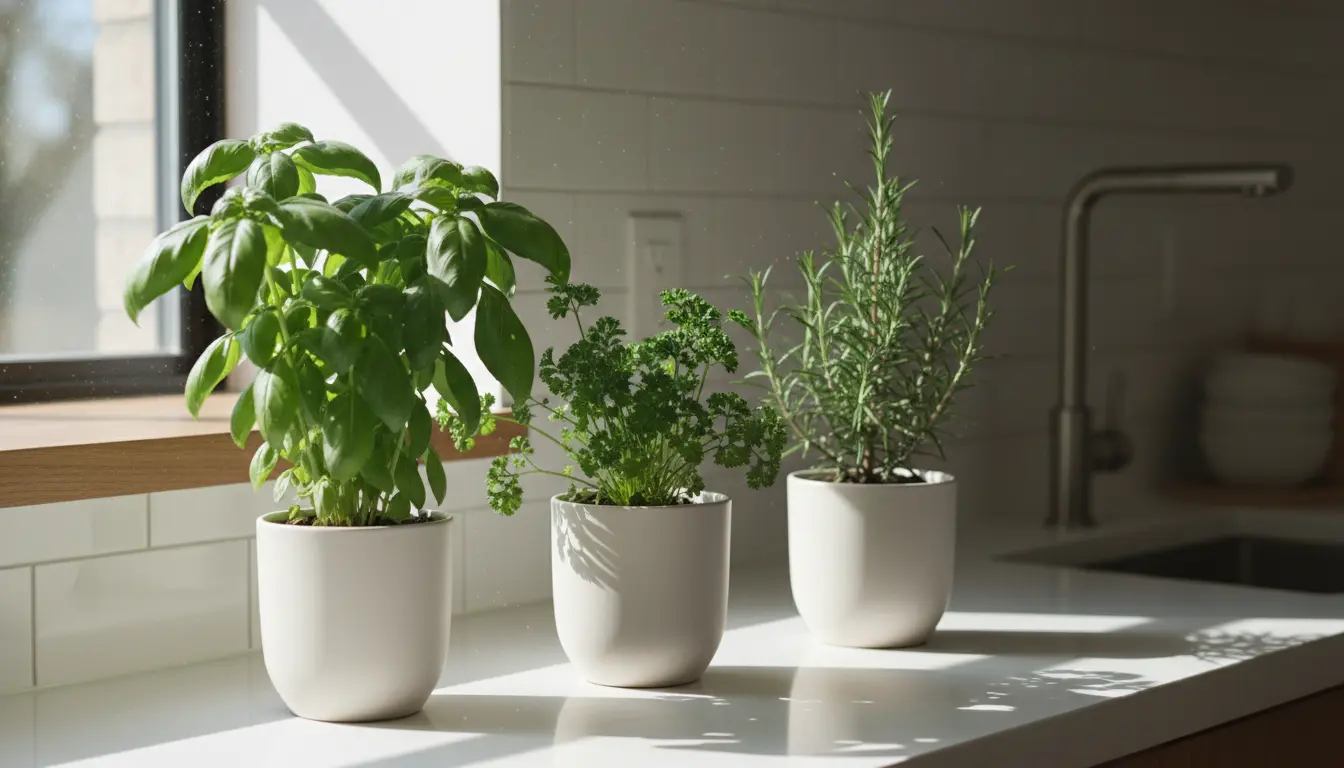
Growing an indoor herb garden is a practical way to get fresh flavors year-round. This guide covers planning, choosing herbs, light and soil needs, watering, and simple pest control. Read on for step-by-step advice you can apply in a small apartment or a larger home.
Planning Your Indoor Herb Garden
Start by deciding where you will place the indoor herb garden. Common locations include a sunny windowsill, a kitchen counter, or a bright shelf under grow lights.
Consider these planning points before you buy seeds or plants:
- Available light and hours of direct sun each day
- Space and container sizes you can accommodate
- How often you can water and check plants
- Which herbs you use the most in cooking
Choose Herbs for Your Indoor Herb Garden
Select herbs that adapt well to indoor conditions. Start with easy, low-maintenance varieties to increase early success.
- Basil – needs strong light and even moisture
- Parsley – tolerates moderate light and prefers consistent soil moisture
- Mint – forgiving and good for beginners, but keep it contained
- Chives – tolerant of lower light and trims well
- Rosemary – requires bright light and well-draining soil
Buying vs. Growing from Seed for Your Indoor Herb Garden
Buying small potted herbs gives quick results and is easier for beginners. Seeds are cheaper but need more time and attention. Choose seeds if you want a wider variety or have patience for germination and early care.
Light Requirements for an Indoor Herb Garden
Light is the most important factor for healthy herbs. Many herbs need 6–8 hours of bright light a day. If natural light is limited, use a full-spectrum LED grow light for 10–12 hours daily.
Signs of insufficient light include leggy stems, pale leaves, and slow growth. Move herbs closer to the light source or rotate them weekly to keep growth even.
Soil and Containers for an Indoor Herb Garden
Use a light, well-draining potting mix formulated for containers. Avoid garden soil, which can compact and hold too much water indoors.
Container tips:
- Choose pots with drainage holes to prevent root rot
- Use wide pots for shallow-rooted herbs like basil and chives
- Consider grouping small pots on a tray for easier watering
Watering and Fertilizing Your Indoor Herb Garden
Water deeply but infrequently to encourage healthy roots. Let the top 1 inch of soil dry before watering again for most herbs. Mint and parsley prefer slightly more consistent moisture.
Fertilize lightly every 4–6 weeks with a balanced, water-soluble fertilizer at half the recommended strength. Over-fertilizing produces weak, leggy growth and can reduce flavor.
Practical Watering Routine
Check soil moisture with your finger or a moisture meter. Water in the morning when possible, so leaves dry before evening. Use room-temperature water to avoid shocking plant roots.
Pest Management and Common Problems in an Indoor Herb Garden
Indoor herbs are less susceptible to pests than outdoor plants, but issues can still occur. Watch for aphids, spider mites, and fungus gnats.
- Remove pests by spraying plants with water or wiping leaves with a damp cloth
- Use insecticidal soap for persistent infestations
- Reduce overwatering to prevent fungus gnats and root rot
Many herbs like basil and mint release stronger flavors after a light stress such as slightly reduced watering or regular harvesting. This can concentrate essential oils and improve taste.
Harvesting and Pruning Your Indoor Herb Garden
Harvest regularly to encourage bushy growth. Pinch or snip leaves above a leaf node to promote branching. Avoid removing more than one-third of the plant at a time.
For herbs like basil, remove flower stalks as they appear to keep the plant focused on leaf production and flavor.
Simple Case Study: A Small Apartment Indoor Herb Garden
Emily, a city renter, set up three 4-inch pots on a sunny kitchen sill with basil, parsley, and chives. She watered twice weekly and used a small clip-on LED grow light in winter.
Within six weeks Emily had regular harvests of basil for pesto and parsley for weekly meals. Her total cost was under $40 for pots, soil, and plants, and she reduced grocery herb purchases by half.
Quick Start Checklist for Your Indoor Herb Garden
- Pick a sunny spot or get a full-spectrum grow light
- Choose 2–4 easy herbs to start, like basil, mint, and chives
- Use well-draining potting mix and pots with drainage holes
- Water when the top 1 inch of soil is dry; fertilize lightly monthly
- Harvest regularly and check plants weekly for pests
Starting an indoor herb garden is low-cost and rewarding. With the right light, soil, and simple maintenance, you can enjoy fresh herbs year-round. Follow the checklist and adapt care to your space for steady success.