
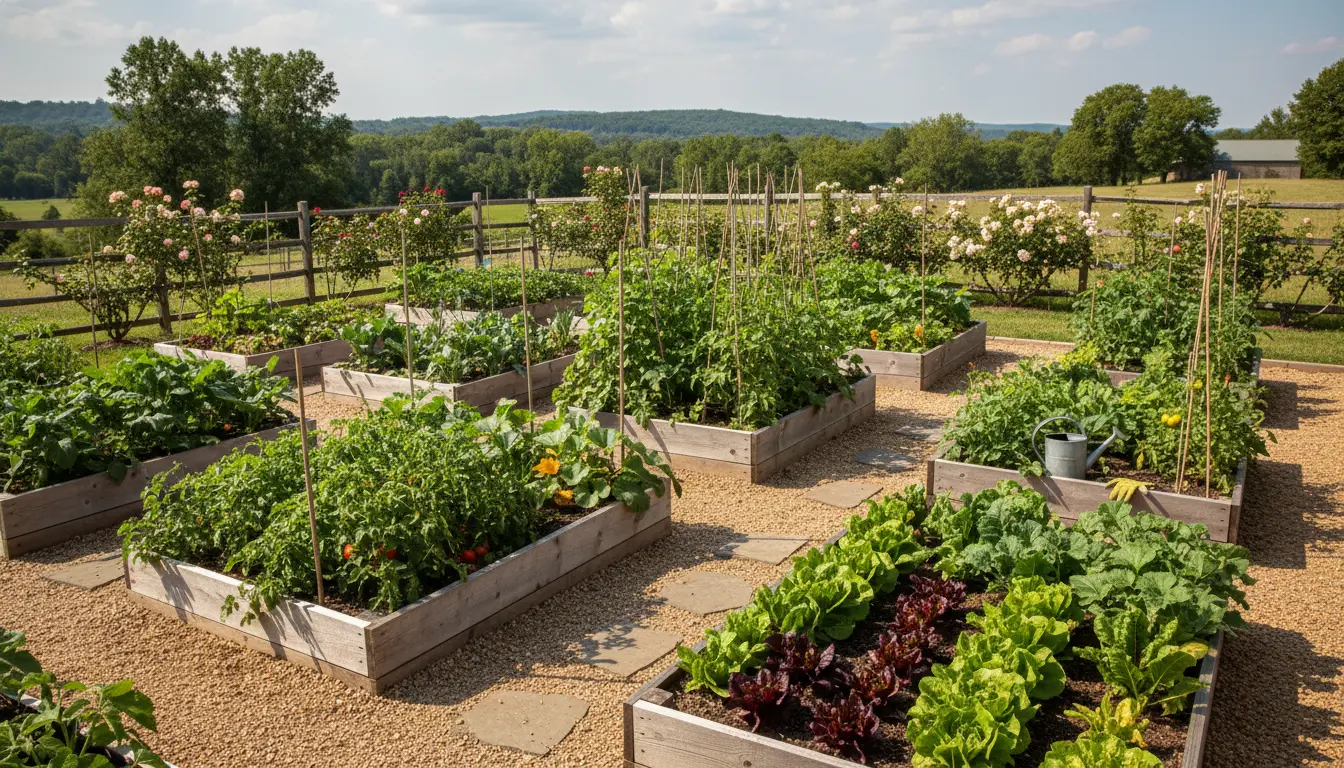
Starting a vegetable garden is rewarding and practical. This guide explains clear steps so you can plan, prepare, and grow vegetables at home.
How to Start a Vegetable Garden: Plan Your Space
Begin by picking a location with 6–8 hours of sunlight. Good sunlight is essential for most vegetables.
Consider proximity to water and convenience for daily care. If yard space is tight, use containers or raised beds.
Choose the Right Size to Start a Vegetable Garden
For beginners, a 4×8 foot raised bed or four to six medium containers is a manageable size. This gives enough space for a variety without overwhelming maintenance.
List the vegetables you eat most and plan bed space around those choices.
How to Start a Vegetable Garden: Prepare Soil and Beds
Soil quality determines plant health. Test soil pH with a simple kit or send a sample to a local extension service.
Most vegetables prefer slightly acidic to neutral soil (pH 6.0–7.0). Amend heavy clay with compost and sand to improve drainage.
Make Good Soil Mixes
Use a mix of garden soil, compost, and coarse material for raised beds. For containers, a high-quality potting mix with added compost works best.
- Add 2–4 inches of compost each season.
- Use slow-release organic fertilizer at planting time.
- Mulch with straw or shredded leaves to retain moisture and suppress weeds.
How to Start a Vegetable Garden: Planting Tips
Plant at the recommended depth and spacing shown on seed packets. Overcrowding reduces airflow and invites disease.
Start with easy crops: lettuce, radishes, tomatoes, herbs, and beans. They establish quickly and teach basic care.
Timing and Succession Planting
Check local frost dates to plan spring and fall crops. Use succession planting—sowing a fast crop after harvest—to maximize yield.
- Early spring: peas, spinach, radishes.
- Late spring to summer: tomatoes, peppers, beans.
- Late summer to fall: kale, carrots, beets.
How to Start a Vegetable Garden: Watering and Maintenance
Water deeply and less frequently to encourage strong root systems. Aim for 1–1.5 inches of water per week, adjusting for rain.
Install a soaker hose or drip irrigation to conserve water and reduce foliar disease from overhead watering.
Routine Care Tasks
Regular tasks include weeding, monitoring for pests, pruning when needed, and harvesting on time. Spend 10–15 minutes each day in the garden for the best results.
Rotate crops annually to reduce soil-borne diseases and pests. Avoid planting the same family in the same spot year after year.
How to Start a Vegetable Garden: Pest and Disease Management
Start with prevention: healthy soil, proper spacing, and clean tools. Inspect plants weekly and remove affected leaves early.
Use organic controls first: hand-picking, insecticidal soap, and biologicals like Bacillus thuringiensis for caterpillars.
Common Problems and Solutions
- Aphids: spray with water or use insecticidal soap.
- Fungal leaf spots: improve air flow, remove infected leaves.
- Slugs: use beer traps or iron phosphate baits.
How to Start a Vegetable Garden: Harvesting and Storage
Harvest vegetables at peak ripeness for the best flavor and nutrition. Many crops produce over weeks, rewarding continuous harvesting.
Store root crops in a cool, dark place and refrigerate leafy greens or preserve them by blanching and freezing.
Small Real-World Example
Case study: A neighborhood beginner converted a 4×8 raised bed into a mixed vegetable plot. They planted tomatoes, lettuce, bush beans, and herbs. By following a watering schedule and adding compost monthly, they harvested tomatoes for three months and used succession planting to always have salad greens.
The total setup cost was modest: lumber for the bed, soil mix, and seeds. The gardener saved on grocery bills and reported better-tasting vegetables.
Simple Checklist to Start a Vegetable Garden
- Choose a sunny location with nearby water access.
- Decide on bed type: ground, raised, or containers.
- Test and amend soil; add compost.
- Select beginner-friendly crops and check spacing.
- Set up watering: soaker hose or regular hand-watering schedule.
- Monitor pests and rotate crops annually.
Quick Example Planting Plan
For a 4×8 bed: plant 2-3 tomato plants, 6-8 lettuce heads in partial rows, one row of bush beans, and a few herbs at the edges. This mix covers different harvest times and keeps the bed productive.
Starting a vegetable garden takes planning but rewards patience and consistency. Follow these steps, adjust to local conditions, and learn by doing. A small, well-tended garden can provide fresh produce and satisfaction year after year.