
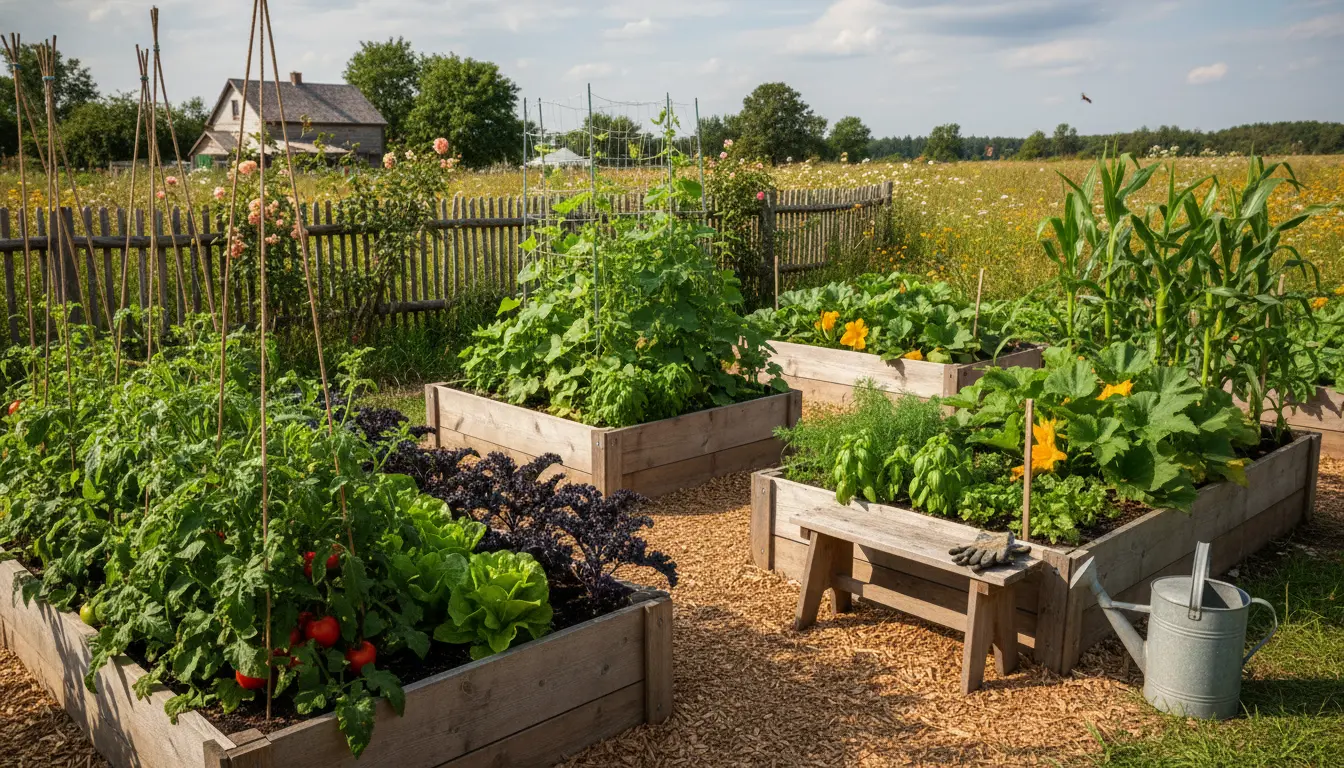
Starting a vegetable garden can be simple and rewarding. This guide gives practical steps you can use to plan, plant, and maintain a productive garden using common tools and affordable supplies.
Plan Your Vegetable Garden
Good planning reduces wasted time and increases yields. Begin by deciding how much space you can dedicate and what vegetables you want to grow.
Choose a Location for Your Vegetable Garden
Pick a site with at least 6 hours of direct sunlight for most vegetables. Look for flat or gently sloped ground to avoid erosion and standing water.
Consider proximity to water, visibility for monitoring pests, and access for maintenance.
Decide on Garden Type
Common options include in-ground rows, raised beds, and container gardens. Match the type to your space and soil quality.
- Raised beds: Good for poor soil and easier weeding.
- In-ground: Best when soil is healthy and deep.
- Containers: Ideal for patios and small spaces.
Prepare Soil and Choose Plants
Soil quality determines plant health. Test soil where possible or use a simple DIY test for texture and drainage.
Improve Soil for a Vegetable Garden
Add organic matter like compost or well-rotted manure to improve structure and nutrients. Aim for a loose, crumbly topsoil layer of at least 6–8 inches in raised beds.
Use a balanced slow-release fertilizer if a soil test shows nutrient deficiencies.
Pick Easy Vegetables for Beginners
Start with reliable, low-maintenance crops that mature quickly. This builds confidence and provides early harvests.
- Leafy greens: lettuce, spinach, chard
- Roots: radishes, carrots
- Nightshades: tomatoes (starter varieties), peppers
- Legumes: bush beans, peas
Planting and Spacing for a Vegetable Garden
Follow seed packet or plant label spacing recommendations. Crowding increases disease risk and reduces airflow.
Succession Planting
To maximize harvest, use succession planting. After a quick crop (like radishes) finishes, replace it with another crop (like bush beans) to keep beds productive.
Companion Planting Basics
Certain plants benefit each other when planted nearby. For example, basil can improve tomato flavor and repel some pests.
- Tomatoes + basil
- Beans + corn (traditional companion)
- Marigolds near roots to deter nematodes
Watering and Maintenance
Proper watering encourages deep roots and reduces disease. Water at the base of plants and avoid wetting foliage when possible.
Watering Schedule for a Vegetable Garden
Most vegetables need 1–1.5 inches of water per week. Adjust for rainfall and soil type. Sandy soils need more frequent, lighter watering; clay soils need less frequent, deeper watering.
Pest and Disease Management
Inspect plants weekly. Hand-pick large pests, use row covers for early protection, and choose disease-resistant varieties when available.
If you need to use pesticides, prefer targeted or organic options and follow label directions closely.
Harvesting and Crop Rotation
Harvest crops at peak ripeness for best flavor and to encourage further production. Regular harvesting of leafy greens and legumes prolongs yields.
Rotate Crops in Your Vegetable Garden
Change plant families year to year to reduce soil-borne disease and pest buildup. A simple rotation is: legumes → brassicas → roots → nightshades.
Small Real-World Example
Case study: A suburban gardener converted a 10 x 10 ft patch into a raised bed system. Year 1: planted lettuces, radishes, bush beans, and two determinate tomatoes. They added 6 inches of compost and used mulch to conserve moisture.
Results: First season produced weekly salad harvests and a 12-lb total tomato harvest. They reported spending 30 minutes twice a week on maintenance and saved roughly $150 on store-bought produce.
Quick Checklist to Start Your Vegetable Garden
- Choose a sunny location (6–8 hours/day).
- Decide on garden type: raised bed, in-ground, or containers.
- Improve soil with compost and check pH if possible.
- Select easy crops for beginners and follow spacing guidelines.
- Set a watering routine and monitor pests weekly.
- Harvest regularly and plan simple crop rotation for next season.
Starting a vegetable garden is about small, consistent steps. With a modest investment in soil improvement and basic planning, most people can grow meaningful amounts of fresh produce in their first season.