
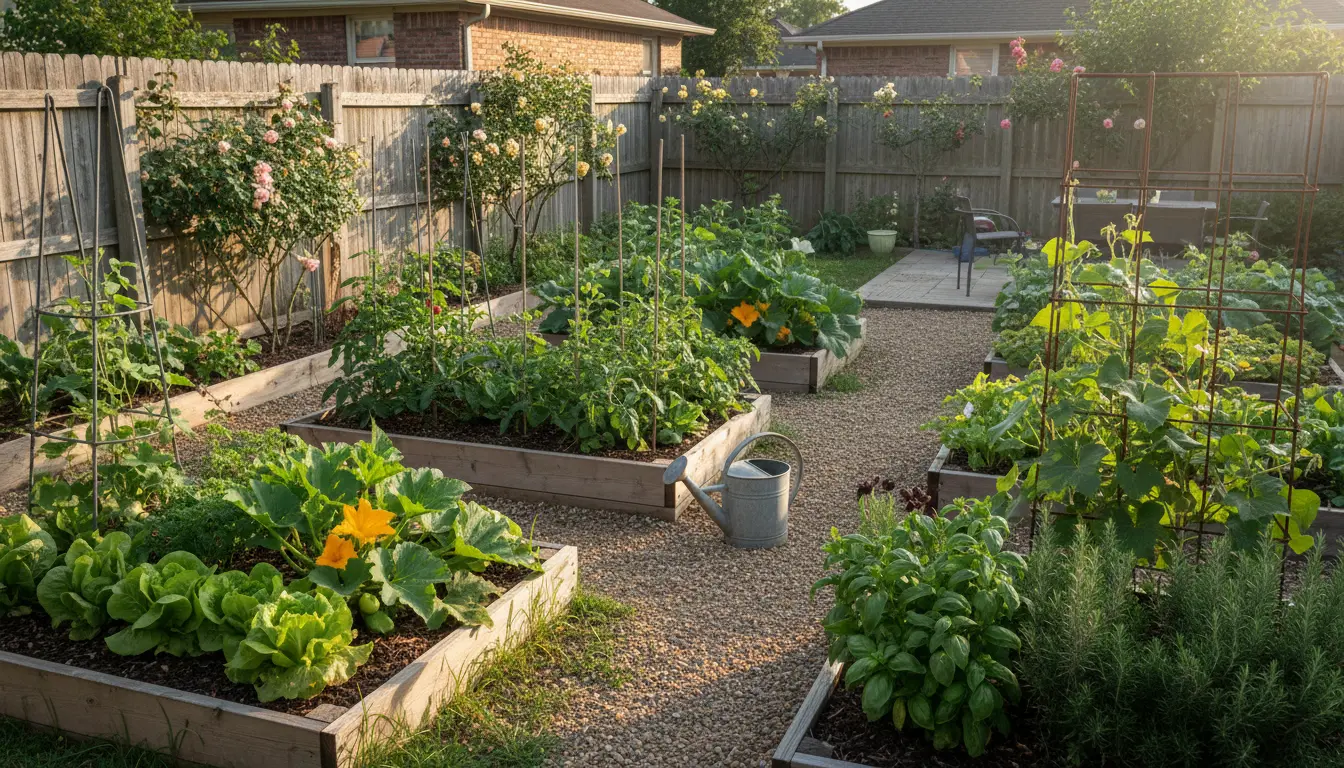
Starting a vegetable garden can be straightforward when you focus on a few key steps: planning, soil, plant selection, and maintenance. This guide breaks those steps into practical actions you can take this season.
Start a Vegetable Garden: Plan Your Space and Goals
Decide what you want to grow and why. Are you after fresh salad greens, preserving tomatoes, or saving money on staples?
Consider available space, sunlight, and how much time you can realistically commit. A small, concentrated area yields more than a spread-out plan that’s hard to maintain.
- Assess sunlight: 6–8 hours of direct sun is ideal for most vegetables.
- Measure space: start with one or two 4×4 or 4×8 raised beds or a few containers.
- Set realistic goals: aim for enough produce for your household, not the whole neighborhood.
Start a Vegetable Garden: Choose the Right Location
Location affects plant health and harvests. Pick a spot with good drainage and maximum sun exposure.
Avoid areas near large trees that compete for water and nutrients. Close proximity to a water source reduces daily effort.
Start a Vegetable Garden: Raised Beds vs. In-Ground vs. Containers
Raised beds warm earlier and drain better, making them ideal for beginners. In-ground beds work if you have good soil and space.
Containers are flexible for balconies and patios. Use large pots for root crops and ensure adequate drainage.
Start a Vegetable Garden: Prepare Soil and Amendments
Soil quality is the single most important factor. Test your soil or assume you need to improve it with organic matter.
Mix compost into the top 6–8 inches of soil. For raised beds, use a mix of topsoil, compost, and a light amendment like coconut coir or aged manure.
- Perform a simple soil test kit for pH and basic nutrients.
- Add 2–3 inches of compost annually to maintain fertility.
- Use mulch to conserve moisture and suppress weeds.
Start a Vegetable Garden: Select Vegetables for Success
Choose varieties suited to your climate and season length. Consult seed packets for days to maturity and frost tolerance.
Begin with forgiving crops: lettuce, kale, radishes, bush beans, and cherry tomatoes are rewarding for beginners.
Starter Plant List for Beginners
- Lettuce and mixed salad greens — quick harvests and space efficient.
- Radishes — harvest in 3–4 weeks and help build confidence.
- Cherry tomatoes — productive and easy to trellis.
- Bush beans — simple to sow directly into soil.
- Herbs like basil and parsley — fast and useful in the kitchen.
Start a Vegetable Garden: Planting and Timing
Sow cool-season crops (lettuce, peas, kale) in early spring or fall. Warm-season crops (tomatoes, peppers, cucumbers) go in after danger of frost.
Stagger plantings every 2–3 weeks for a continuous harvest. Succession planting increases yield from a small area.
Start a Vegetable Garden: Watering and Maintenance
Consistent watering is crucial. Aim for deep, infrequent watering rather than daily shallow watering to encourage strong roots.
Mulch, drip irrigation, or soaker hoses reduce evaporation and keep leaves dry to minimize disease.
- Water early in the morning when possible.
- Check soil moisture by feeling 2 inches below the surface.
- Remove weeds promptly to reduce competition.
Start a Vegetable Garden: Pest and Disease Management
Use prevention first: crop rotation, healthy soil, and proper spacing reduce pest pressure. Encourage beneficial insects with flowers and diversity.
Use row covers for young plants, hand-pick pests when practical, and use organic controls as a last resort.
Common Troubleshooting Examples
- Yellowing lower leaves — check for overwatering or nutrient deficiency.
- Stunted growth — test soil pH and nutrient levels.
- Holes in leaves — look for caterpillars or slugs and remove them.
Many vegetables like lettuce and radishes can be harvested within 30 days, making them excellent choices for quick success.
Start a Vegetable Garden: Harvesting and Storage Tips
Harvest in the morning when flavors and crispness are highest. Pick regularly to encourage continued production.
Store produce correctly: leafy greens in airtight containers with a paper towel, tomatoes at room temperature, and root crops in cool, dark places.
Small Case Study: A Backyard 4×4 Raised Bed
One novice gardener, Sarah, converted a sunny patch into a single 4×4 raised bed. She filled it with a 50/50 mix of compost and topsoil and planted lettuce, radishes, bush beans, and two cherry tomatoes.
By staggering lettuce sowings every two weeks and using mulch, Sarah harvested fresh salad greens for her family for most of the summer. Her investment was one weekend of work and modest seed costs.
This example shows a small, well-managed space can supply regular fresh vegetables and build growing skills quickly.
Start a Vegetable Garden: Final Checklist
- Choose a sunny, well-drained site.
- Start with good soil and add compost.
- Select easy, climate-appropriate crops.
- Plant at the right time and water consistently.
- Watch for pests and practice preventive care.
Starting a vegetable garden is an iterative process. Begin small, learn from each season, and expand as your skills and confidence grow. With basic planning and consistent care, you’ll be harvesting fresh, homegrown vegetables soon.