
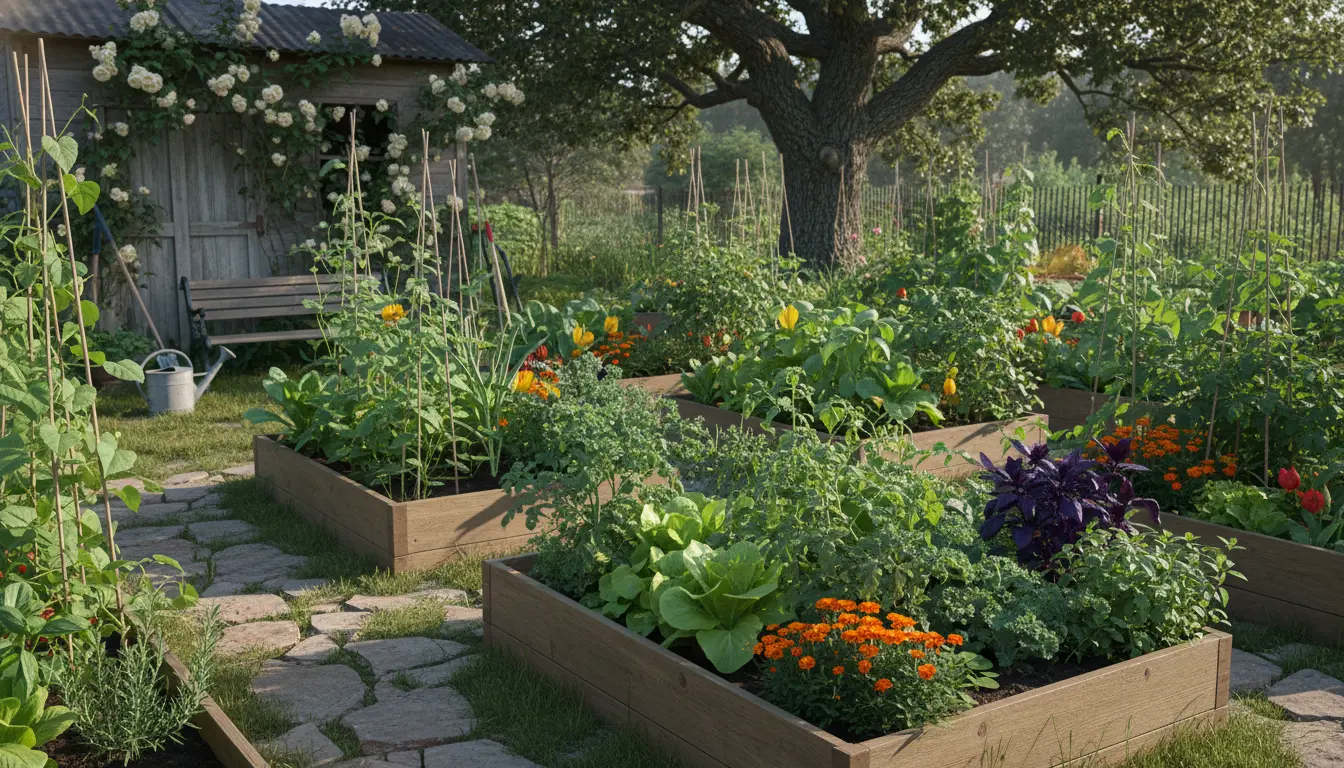
Why start a vegetable garden
Growing vegetables at home saves money and gives fresher produce. It also helps you control what goes into your food and reduces trips to the store.
This guide explains how to start a vegetable garden with clear, practical steps you can follow in a weekend or across a season. The focus is on simple choices for reliable results.
How to start a vegetable garden: Choose a site
Pick a spot that gets at least six hours of direct sun per day for most vegetables. Observe the area for a few days to confirm light patterns and seasonal shade.
Also check access to water, flatness for easy planting, and proximity to pests like deer or neighborhood pets. Good drainage matters; avoid low depressions that collect water.
Site checklist
- 6+ hours of sun for tomatoes, peppers, cucumbers.
- Close to a water source for easy irrigation.
- Flat or gently sloped for good drainage.
- Protected from strong winds if possible.
How to start a vegetable garden: Soil and beds
Your soil is the foundation of a productive garden. Most beginners do best with raised beds or amended in-ground beds to gain control quickly.
Test your soil pH with a home kit or lab test; most vegetables prefer pH 6.0–7.0. Add organic matter such as compost to improve texture and fertility.
Raised beds vs in-ground
- Raised beds warm up faster and drain better; good for short seasons.
- In-ground beds cost less and can support deep-rooted crops if soil is healthy.
- Use 6–12 inches of quality soil mix for raised beds to start well.
How to start a vegetable garden: What to plant first
Choose a few easy crops to build confidence: lettuce, radishes, bush beans, and tomatoes are reliable. Start with varieties labeled “ready in 50–70 days.”
Consider your climate and first/last frost dates. Cool-season crops like spinach and peas go in early spring, warm-season crops after frost passes.
Starter planting list
- Cool season: lettuce, spinach, peas, radishes.
- Warm season: tomatoes, peppers, cucumbers, bush beans.
- Herbs: basil, parsley, chives—easy and useful near the kitchen.
How to start a vegetable garden: Watering and care
Consistent moisture is better than occasional deep watering for many vegetables. Aim for 1–1.5 inches of water per week, adjusted for heat and soil type.
Install a soaker hose or drip irrigation for efficient, even watering. Mulch around plants to reduce evaporation and suppress weeds.
Maintenance checklist
- Water early in the day to reduce disease risk.
- Mulch 2–3 inches around plants to retain moisture.
- Thin seedlings to avoid crowding and improve air flow.
- Monitor pests and use physical controls or targeted organic sprays when needed.
How to start a vegetable garden: Pest and disease basics
Start with prevention: healthy soil, good spacing, and crop rotation reduce many problems. Inspect plants weekly to catch issues early.
Use row covers to protect young plants from insects and hand-pick larger pests like caterpillars. Select disease-resistant varieties when possible.
How to start a vegetable garden: Harvesting and extending the season
Harvest frequently to encourage production—many vegetables produce more when picked regularly. Learn the appearance of ripe produce for each crop.
Extend your season with simple tools: clear plastic cloches, cold frames, or floating row covers keep plants producing earlier and later in the year.
Even a small 4×4 foot raised bed can grow enough salad greens for two people through most of the warm season.
Quick example: A simple first season case study
Maria, a beginner gardener, started three 4×8 raised beds in spring. She amended each bed with compost and planted lettuce, bush beans, cherry tomatoes, and basil.
By week six she was harvesting weekly salads and herbs. Tomatoes began producing in week ten and provided steady harvests through autumn. She spent 1–2 hours per week on watering and light maintenance.
Practical tips to avoid common mistakes
- Do not plant too many varieties in your first season; focus on 4–6 crops.
- Avoid overwatering; soggy soil causes root problems and disease.
- Keep records: planting dates, varieties, and outcomes help you improve next year.
Next steps after you start a vegetable garden
Evaluate what worked after the first season and adjust bed layout, plant choices, and soil amendments. Gradually increase variety and storage plans as confidence grows.
Join a local gardening group or consult extension service resources for region-specific advice. Small changes each season lead to better yields and less work over time.