
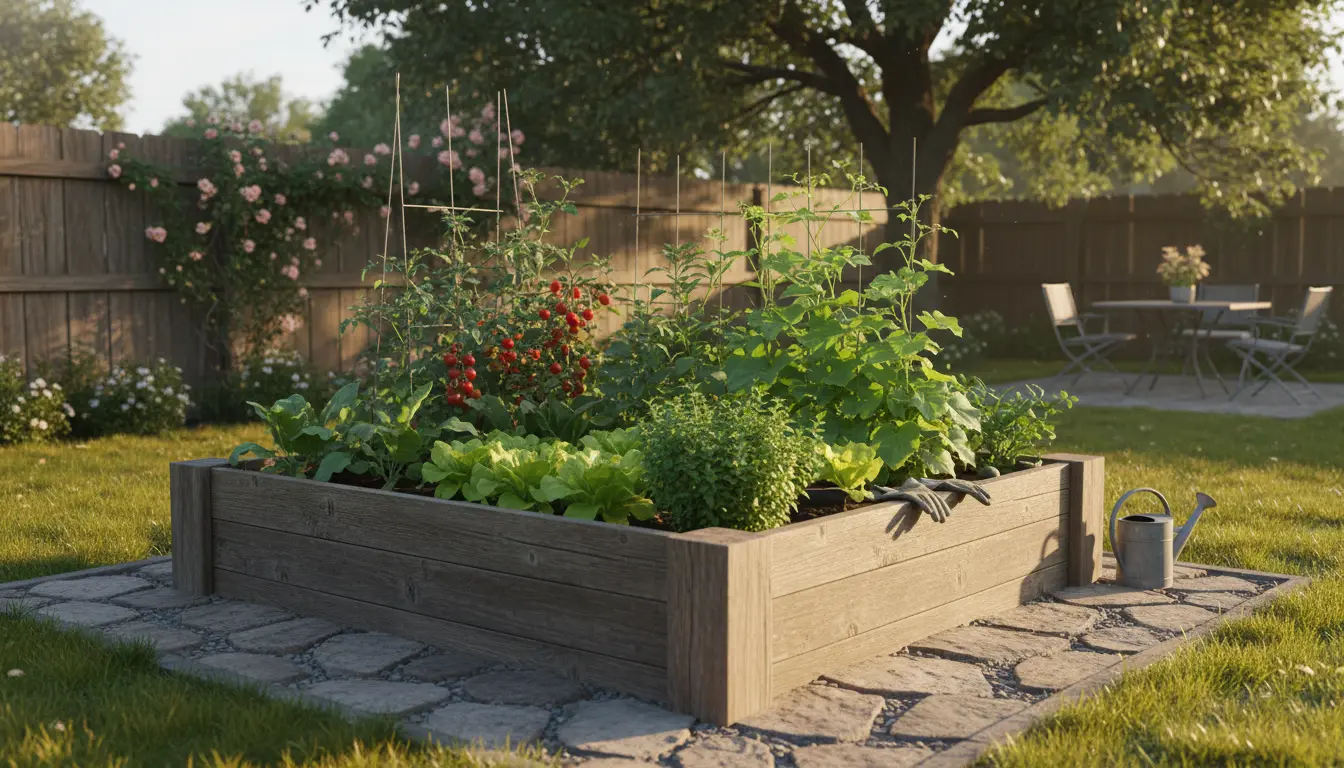
Why start a vegetable garden
Starting a vegetable garden gives you fresh produce, physical activity, and better control over what you eat. It can be simple and cost-effective when you follow a plan.
This guide explains how to start a vegetable garden step by step so beginners can get a productive first season.
Choose where to start a vegetable garden
Location is the first practical decision when you start a vegetable garden. Most vegetables need 6 to 8 hours of direct sun, so pick a sunny spot.
Consider access to water, soil slope, and proximity to your kitchen for easy harvesting. If ground space is limited, raised beds or containers work well.
Site checklist for your vegetable garden
- Sun exposure: at least 6 hours daily
- Water access: hose or rain barrel nearby
- Flat or gently sloped area for easy maintenance
- Good drainage to avoid waterlogged roots
Plan what to plant in your vegetable garden
Start with a short list of reliable, easy crops. Choose vegetables that you and your family will eat and that fit your season and climate.
Beginner-friendly options: tomatoes, lettuce, radishes, beans, and zucchini. Herbs like basil and parsley are also forgiving and boost flavor.
Planning tips
- Prioritize high-yield plants you use often
- Stagger planting dates for a continuous harvest
- Mix fast crops (radishes) with longer ones (tomatoes)
- Keep a simple crop rotation plan to reduce pests
Prepare soil before you start a vegetable garden
Healthy soil is the foundation of any vegetable garden. Test soil if possible, then amend with compost and organic matter to improve structure and nutrients.
For heavy clay, add coarse compost and mulch. For sandy soil, add compost and a slow-release organic fertilizer to retain moisture and nutrients.
Basic soil preparation steps
- Remove weeds and grass from the chosen area
- Loosen soil to 8–12 inches with a fork or tiller
- Mix in 2–4 inches of compost across the bed
- Rake smooth and water lightly before planting
Beans and peas add nitrogen to the soil, reducing the need for synthetic fertilizers when used in rotation.
Planting: seeds vs transplants in your vegetable garden
Decide whether to start from seed or buy transplants. Fast-growing crops like radishes and lettuce are easy from seed. Tomatoes and peppers often do better as transplants.
Follow seed packet or plant tag spacing and depth instructions to avoid overcrowding and ensure strong growth.
Example planting schedule
- Early spring: peas, spinach, radishes (seed)
- Late spring: tomatoes, peppers (transplant)
- Summer: beans, zucchini (seed)
- Fall: kale, turnips (seed)
Care and maintenance for a productive vegetable garden
Regular care keeps plants healthy and productive. Water consistently, usually 1–1.5 inches per week, more in hot weather. Deep watering encourages strong roots.
Mulch reduces weeds and conserves moisture. Pull weeds promptly and check plants for pests or disease weekly.
Simple maintenance checklist
- Water at the base early in the morning
- Mulch with straw or bark to 2–3 inches thick
- Stake or cage taller plants like tomatoes
- Harvest regularly to encourage more production
Common problems and practical solutions
Pests and diseases are common but manageable. Use row covers for early insect protection and hand-pick pests like caterpillars when practical.
For fungal diseases, improve air circulation with proper spacing and avoid overhead watering. Compost teas and organic sprays can help in mild cases.
Small real-world case study: First-season success
Case study: Jenna, a city homeowner, started a 4×8 raised bed in May. She chose cherry tomatoes, basil, lettuce, and bush beans. Jenna amended the bed with compost, used a drip hose, and mulched after planting.
Result: By mid-summer she harvested continuous lettuce and enough tomatoes for weekly salads. The beans produced well, and rotating beds the next year improved soil structure.
Simple budgeting and tools to start a vegetable garden
You don’t need expensive tools. Basic items include a spade, hand trowel, garden fork, hose or watering can, and quality compost. Raised bed kits cost more but save time and reduce bending.
Start small to keep costs and time manageable. A single raised bed or a few containers is enough for a beginner household.
Final checklist before you start a vegetable garden
- Pick a sunny, accessible site
- Plan what to plant this season
- Prepare and amend the soil
- Choose seeds or transplants and plant at the right time
- Water, mulch, and maintain weekly
Starting a vegetable garden is a practical project with predictable steps. By choosing the right site, preparing soil, and following simple care routines, beginners can enjoy fresh produce and grow confidence season by season.