
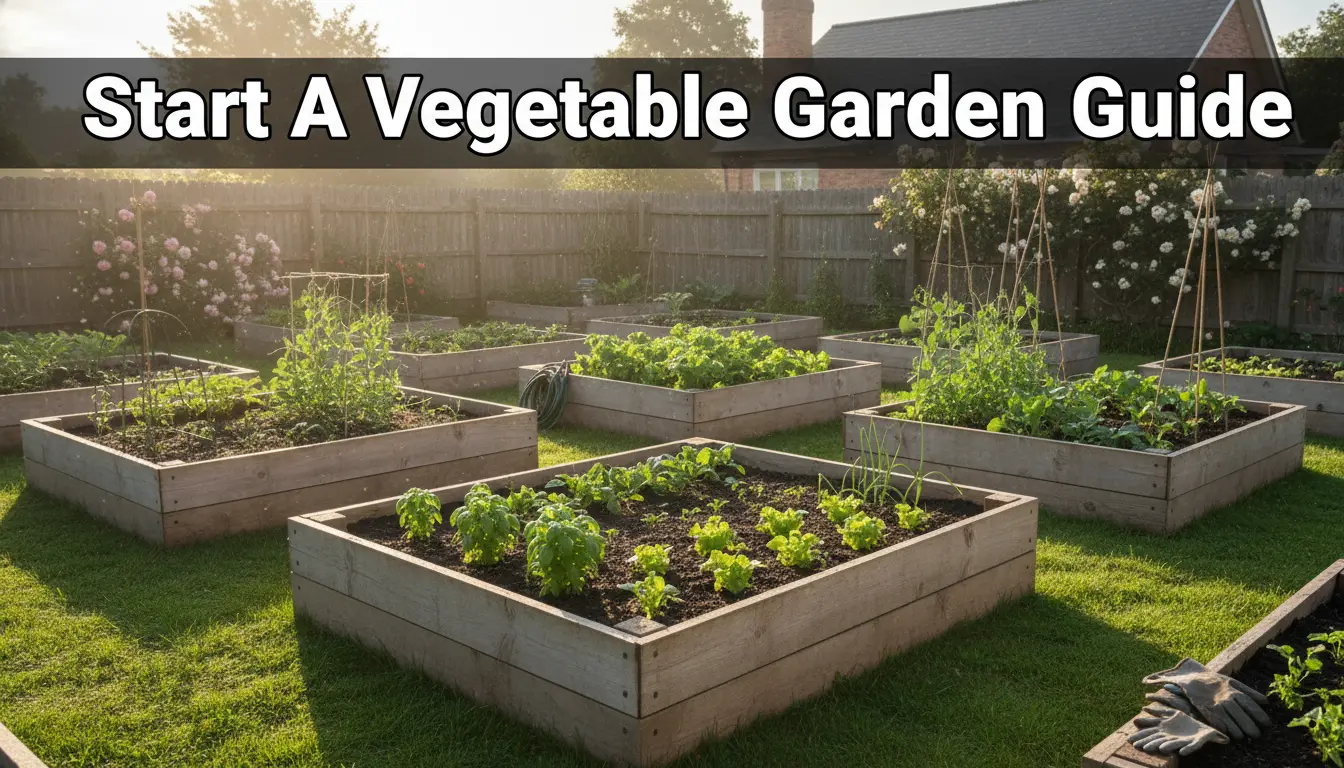
Starting a vegetable garden is a practical way to grow fresh food, save money, and enjoy time outdoors. This guide covers the key steps you need to know, with simple actions you can complete in a weekend.
What to Know Before You Start a Vegetable Garden
Plan what you want to grow and how much time you can commit. Some crops need daily attention while others are lower maintenance.
Consider climate, available space, and sunlight. These factors determine which vegetables will thrive and how to schedule planting.
Decide Your Garden Type to Start a Vegetable Garden
Choose from in-ground beds, raised beds, or containers. Each has pros and cons depending on soil quality, budget, and mobility.
- In-ground beds: Best for large spaces and deep-rooted crops.
- Raised beds: Improve drainage and soil control; good for small yards.
- Containers: Ideal for balconies or patios; good for herbs and tomatoes.
Choose Location to Start a Vegetable Garden
Pick a spot with at least 6 hours of direct sunlight per day for most vegetables. Morning sun is especially helpful for drying dew and reducing disease risk.
Ensure easy access to water and level ground for planting and maintenance. Avoid low spots where water pools after rain.
Microclimate and Access
Watch how sun and wind affect the site across a day. A sheltered sunny area near the house often makes watering and harvesting easier.
Prepare Soil to Start a Vegetable Garden
Soil quality is the most important factor for long-term success. Test your soil pH and texture or use a simple home test kit from a garden center.
Improve poor soil with organic matter. Compost and well-rotted manure add nutrients and improve structure.
- Work in 2–3 inches of compost each season.
- Add lime if soil is very acidic; add sulfur if very alkaline (based on test results).
- Use raised beds if in-ground soil is heavily compacted or contaminated.
Choose Vegetables and Planting Times
Start with easy, fast-growing vegetables like lettuce, radishes, beans, and cherry tomatoes. They give quick rewards and build confidence.
Check your local frost dates to schedule cool-season and warm-season crops. Plant cool-season crops early in spring and again in fall.
Seed vs. Transplants
Seeds are cheaper and offer more variety, while transplants give a head start for longer-season crops like peppers and tomatoes. Combine both approaches for best results.
Watering and Fertilizing After You Start a Vegetable Garden
Water regularly and deeply rather than shallow daily watering. Aim for 1–1.5 inches of water per week, adjusted by rainfall.
Mulch around plants to conserve moisture, suppress weeds, and moderate soil temperature. Organic mulches like straw or shredded leaves also add nutrients as they break down.
- Use drip irrigation or soaker hoses for efficient watering.
- Fertilize based on soil test recommendations; avoid over-fertilizing leafy growth at the expense of fruit production.
Pest and Disease Basics
Start with prevention: clean tools, crop rotation, good air circulation, and proper spacing reduce most problems. Inspect plants weekly to catch issues early.
Use physical controls first—row covers, hand-picking pests, and barriers. If needed, choose targeted organic treatments rather than broad-spectrum chemicals.
Common Problems and Quick Fixes
- Aphids: Blast off with water or use insecticidal soap.
- Fungal leaf spots: Improve air flow, remove affected leaves, and avoid overhead watering.
- Slugs: Set out beer traps or use iron phosphate baits in shaded areas.
Maintenance Tasks After You Start a Vegetable Garden
Regular tasks keep the garden productive: weeding, staking, pruning, and monitoring soil moisture. Spend 15–30 minutes several times a week during the busy season.
Harvest promptly. Many vegetables produce more when picked regularly—pick beans, zucchini, and herbs before they become oversized.
Planting taller crops on the north side of a bed prevents shading of shorter plants in the northern hemisphere.
Small Real-World Example
Case study: A beginner started a 10 x 4 foot raised bed and planted tomatoes, lettuce, beans, and basil. They amended the soil with compost, used drip irrigation, and added 2 inches of straw mulch.
In the first season they harvested continuous greens and 20 pounds of tomatoes. Simple regular care—weekly checks and timely harvesting—boosted yield and reduced pest issues.
Simple Weekly Checklist to Start a Vegetable Garden
- Water deeply 1–2 times per week (adjust for rain).
- Walk beds to inspect for pests and disease.
- Harvest ripe produce and deadhead or prune as needed.
- Top up mulch and add compost around heavy feeders mid-season.
Final Tips to Start a Vegetable Garden
Begin small and expand each season. A single productive bed teaches essential skills without overwhelming you.
Keep notes: planting dates, varieties, successes, and failures. This simple log improves decisions year to year and increases your garden’s success.
With planning, basic soil care, and a short weekly routine, you can successfully start a vegetable garden that provides fresh produce and satisfaction for years to come.