
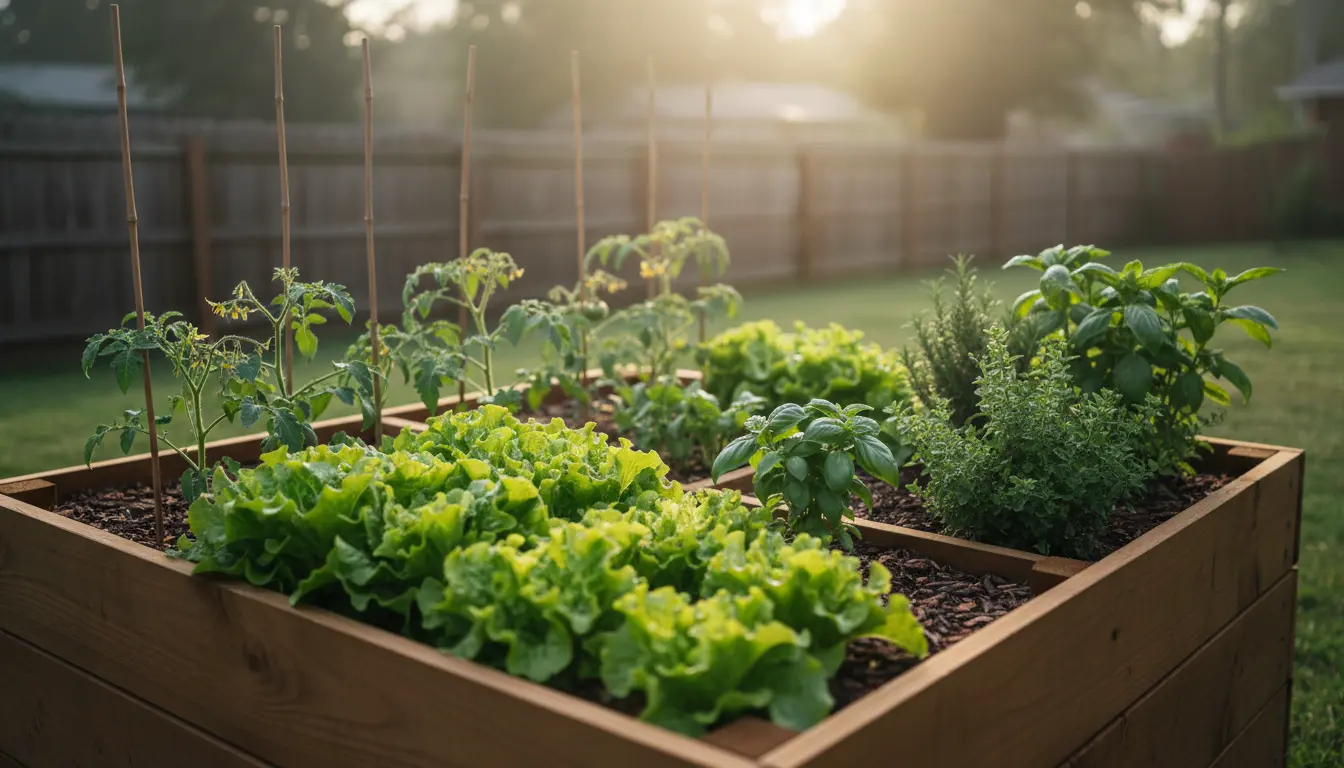
Starting a vegetable garden is a practical way to grow fresh food and learn basic horticulture. This guide breaks down steps you can follow in any backyard or balcony to begin a productive vegetable garden.
Choose Where to Start a Vegetable Garden
Pick a sunny spot that gets at least six hours of direct sunlight daily. Vegetables such as tomatoes, peppers, and cucumbers need full sun to produce well.
Consider access to water, convenience for maintenance, and protection from strong winds or pests. If you have limited space, container gardening on a patio or balcony works well.
Site checklist to start a vegetable garden
- Sun exposure: 6+ hours daily
- Flat or gently sloped area for good drainage
- Close to a water source and easy to reach
- Away from large tree roots or dense shade
Prepare Soil to Start a Vegetable Garden
Soil quality is the foundation of a productive vegetable garden. Test your soil pH with a simple kit or send a sample to a local extension service.
Most vegetables prefer a slightly acidic to neutral pH (6.0–7.0). Amend the soil with compost to improve texture, fertility, and water retention.
How to amend soil when you start a vegetable garden
- Add 2–4 inches of compost over the bed
- Work compost into the top 6–8 inches of soil
- For heavy clay, mix in coarse sand or aged wood chips sparingly
- For sandy soil, add compost and well-rotted manure to increase water retention
Decide What to Plant in a Vegetable Garden
Choose vegetables suited to your climate, season, and space. Start with easy, high-yield crops like lettuce, radishes, bush beans, and cherry tomatoes.
Plan a mix of quick-growing crops and longer-season plants so you get continuous harvests. Use succession planting to maximize small beds.
Beginner-friendly plant suggestions
- Leafy greens: lettuce, spinach, Swiss chard
- Root crops: radishes, carrots, beets
- Legumes: bush beans, peas
- Warm-season: cherry tomatoes, peppers, zucchini
Planting and Spacing Tips to Start a Vegetable Garden
Follow seed packet or plant tag instructions for spacing and planting depth. Crowded plants compete for light and nutrients, reducing yields.
Use raised beds or rows and leave walking paths. In small plots, try square-foot gardening to organize space efficiently.
Practical planting schedule
- Early spring: peas, spinach, radishes
- After frost: tomatoes, peppers, cucumbers
- Late summer: second sowing of lettuce and root crops
Watering and Maintenance for a Vegetable Garden
Water deeply and less frequently to encourage deep root growth. Aim for 1–1.5 inches of water per week, adjusted for rainfall and soil type.
Use mulch to conserve moisture, suppress weeds, and regulate soil temperature. Organic mulches include straw, shredded leaves, and grass clippings.
Routine tasks to maintain your garden
- Weed weekly to reduce competition
- Inspect plants for pests and diseases regularly
- Stake or cage vining plants like tomatoes
- Harvest promptly to encourage continued production
Simple Organic Pest Control When You Start a Vegetable Garden
Encourage beneficial insects by planting flowers like marigolds and alyssum near vegetable beds. Handpick larger pests such as caterpillars and slugs in the morning.
Use row covers for young plants and neem oil or insecticidal soap for soft-bodied insects when needed. Rotate crops yearly to reduce soil-borne diseases.
Case Study: Small Balcony Vegetable Garden
Maria had a 6-foot balcony and no yard. She started a container garden with three 10-inch pots, two 5-gallon grow bags, and a 2×4 raised planter.
She planted cherry tomatoes, basil, leaf lettuce, and radishes. Within eight weeks she harvested continuous lettuce and a first flush of cherry tomatoes. Using compost tea and consistent watering doubled her yields compared to store-bought potting soil alone.
Quick Checklist to Start a Vegetable Garden
- Choose a sunny site or suitable containers
- Test and amend soil with compost
- Select beginner-friendly vegetables for your season
- Plant with proper spacing and stake where needed
- Water deeply, mulch, and monitor pests
Starting a vegetable garden is a manageable project with immediate rewards. With a chosen site, basic soil preparation, and a few easy crops, you can grow fresh produce at home and learn skills that expand over time.