
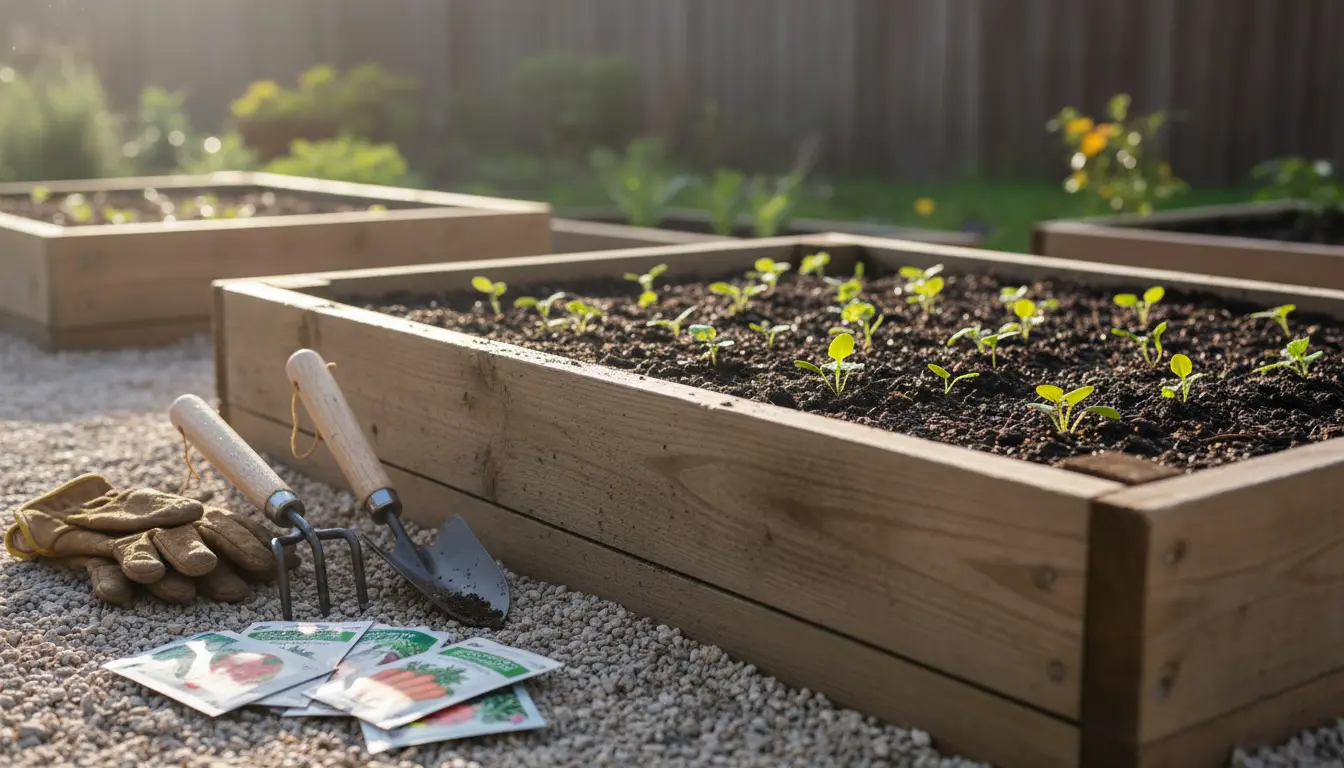
Starting a vegetable garden can seem hard, but a few practical steps will get you growing quickly. This guide focuses on simple planning, soil preparation, and seasonal care so you can harvest fresh vegetables at home.
Why Start a Vegetable Garden
A vegetable garden saves money, improves diet, and gives physical activity outdoors. It also teaches observation and patience while producing tastier vegetables than store-bought options.
How to Start a Vegetable Garden: Plan First
Good results begin with a short planning phase. Spend time choosing location, crops, and bed type before buying seeds or tools.
Choose the Right Location
Pick a spot that gets at least 6 hours of sun daily for most vegetables. Ensure easy access to water and good drainage to avoid flooded roots after rain.
Decide What to Grow
Start with 4–8 easy vegetables to keep tasks manageable. Popular beginner choices include tomatoes, lettuce, radishes, beans, and zucchini.
Consider:
- Plants you and your family will eat.
- Short-season crops if you have a brief growing window.
- Compact varieties for small spaces.
Choose Bed Type and Soil
Options: in-ground beds, raised beds, and containers. Raised beds warm faster and offer better control of soil quality.
For soil, aim for a mix of loam, compost, and some sand if drainage is poor. Good soil holds moisture and drains excess water at the same time.
How to Start a Vegetable Garden: Step-by-Step

Follow these steps to get planting without overcomplicating the process.
- Measure and mark the bed area. A 4×8 or 10×10 foot space is ideal for beginners.
- Clear weeds and loosen soil to 8–12 inches for in-ground beds. For raised beds, fill with a mix of topsoil and compost.
- Test soil if possible. A basic pH test helps; most vegetables prefer pH 6.0–7.0.
- Add compost at a rate of 2–3 inches worked into the top 6–8 inches of soil.
- Plan spacing using seed packet or plant tag instructions to avoid overcrowding.
- Sow seeds or transplant seedlings at the right time for your climate. Start cool-season crops early and warm-season crops after the last frost.
- Mulch around plants with straw or shredded leaves to keep moisture and suppress weeds.
Seed Starting vs Transplants
Starting from seed is cheaper and offers more variety. Transplants speed up harvest and reduce early-care work. Use seeds for lettuce and radish; use transplants for tomatoes and peppers if you want quicker results.
Adding one inch of compost to a garden bed can increase soil nutrient levels and water retention significantly, helping young plants establish faster.
Maintenance Tips for Your Vegetable Garden
After planting, routine care keeps the garden productive and reduces problems.
Watering and Feeding
Water deeply and less often to encourage strong roots. Aim for 1–1.5 inches of water per week, more in hot weather.
Use a balanced fertilizer or side-dress with compost mid-season for heavy feeders like tomatoes and squash.
Pest and Disease Control
Monitor plants weekly for pests. Use these practical steps:
- Handpick large pests like caterpillars.
- Use row covers early to protect seedlings from beetles and birds.
- Encourage beneficial insects with flowering herbs and native plants.
- Remove diseased leaves promptly and rotate crops yearly to limit soil-borne problems.
Weeding and Thinning
Keep weeds under control by hand-weeding or shallow cultivation. Thin seedlings to the recommended spacing to avoid competition for light and nutrients.
Simple Harvest and Storage Tips
Harvest regularly to encourage more production. Pick leafy greens when young for best flavor and harvest tomatoes when fully colored but still firm.
Store harvest by cooling immediately. Use root crops within a few weeks; tomatoes and peppers keep best at room temperature for flavor.
Case Study: A 10×10 Raised Bed
Mary, a beginner gardener, converted a 10×10 unused corner into two 4×8 raised beds. She planted tomatoes, lettuce, bush beans, and carrots. By adding compost and using drip irrigation, she harvested fresh salad greens within 6 weeks and steady tomatoes by mid-summer.
Key takeaways from her first season:
- Start small and expand after one season.
- Raised beds reduced weed pressure and improved drainage.
- Weekly checks prevented small pest problems from becoming large ones.
By following clear planning, simple soil improvement, and regular maintenance, you can grow a productive vegetable garden even with limited time. Start with a few reliable crops, learn from each season, and scale up as you gain confidence.