
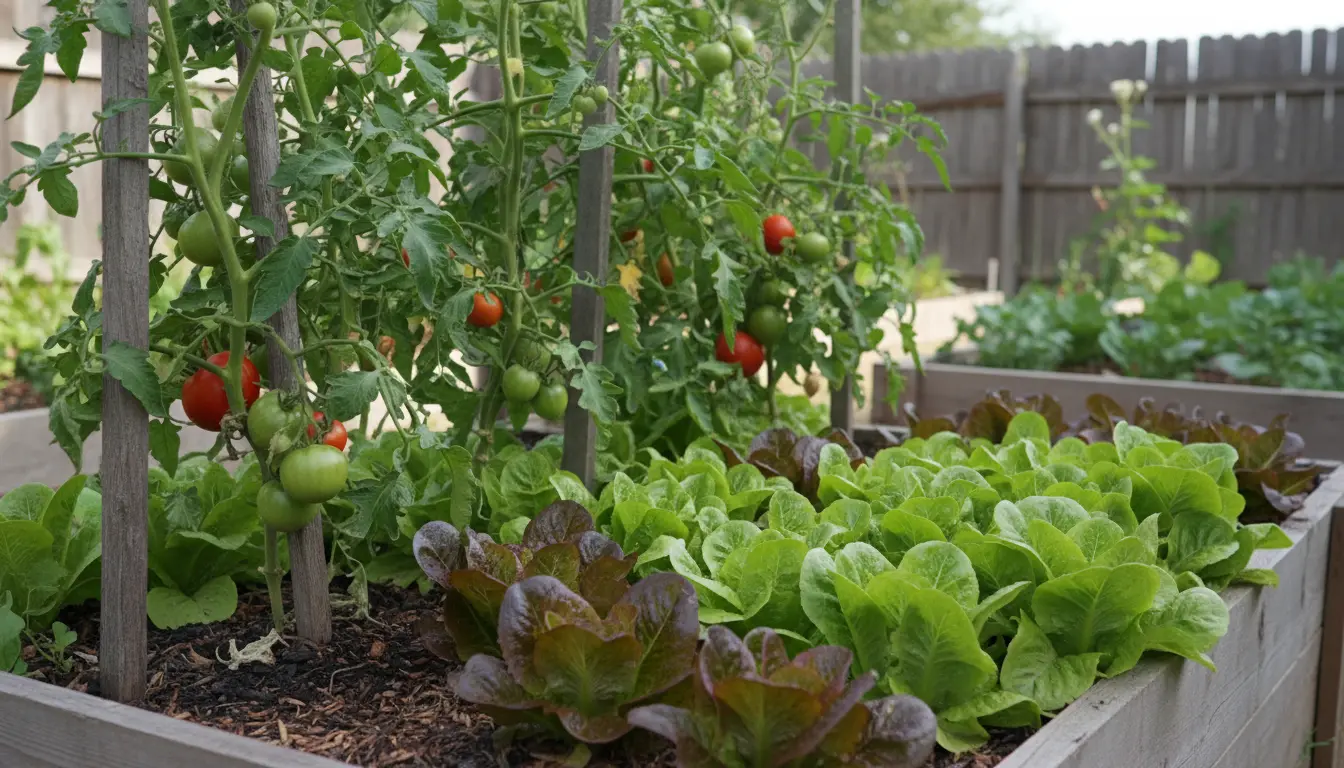
Start a Vegetable Garden with a Clear Plan
Starting a vegetable garden is practical and rewarding. With basic planning and small, steady steps you can grow fresh food even with limited space.
Plan Your Vegetable Garden
Good planning reduces wasted effort. Decide the garden size, light exposure, and the crops you want to grow before digging or buying soil.
Choose Location and Size for Your Vegetable Garden
Pick a spot that gets at least 6 hours of direct sun for most vegetables. If you have limited space, a south-facing balcony, patio, or windowsill can work with containers.
Start small—four to eight square feet can supply herbs and salad greens. Expanding later is easier than shrinking a large failing bed.
Pick Plants for Your Vegetable Garden
Choose vegetables based on your climate, season, and how you plan to use them. Beginners should pick low-maintenance crops like lettuce, radishes, bush beans, and herbs.
Consider maturity time. Fast crops give quick rewards and help you learn while waiting for slower plants like tomatoes.
Prepare Soil and Containers for Your Vegetable Garden
Vegetables need loose, fertile soil with good drainage. If your yard soil is poor, raised beds or containers are a reliable option.
Soil Mix and Fertility
Use a mix of topsoil, compost, and a small amount of coarse sand or perlite for drainage. Aim for a rich, crumbly texture that holds moisture but drains well.
Fertilize with compost or a balanced organic fertilizer at planting and side-dress heavy feeders like squash and tomatoes mid-season.
Raised Beds and Containers
Raised beds warm faster in spring and reduce compaction. Containers are great for patios and balconies and allow precise soil control.
Use pots at least 12 inches deep for most vegetables. Ensure containers have drainage holes and use a lightweight potting mix for good root growth.
Planting and Watering Basics for Your Vegetable Garden
Proper planting depth, spacing, and watering are central to success. Follow seed packet and plant tag instructions as a baseline.
Seed vs Seedlings
Seeds are cheaper and offer more variety. Start seeds indoors for long-season crops or sow directly for quick growers like radishes and peas.
Buying healthy seedlings can speed harvests and is helpful for people who want earlier success with tomatoes, peppers, or brassicas.
Watering Schedule for Your Vegetable Garden
Water deeply and less often to encourage strong roots. Aim for 1–1.5 inches of water per week, adjusting for heat and rainfall.
Use drip irrigation or soaker hoses to deliver water to the root zone and reduce leaf wetness that invites disease.
Maintenance and Pest Control for Your Vegetable Garden
Routine maintenance keeps plants productive. Tasks include weeding, mulching, monitoring pests, and pruning where appropriate.
Simple Organic Methods
- Handpick large pests like caterpillars and slugs in the morning.
- Use row covers to protect young plants from beetles and birds.
- Encourage beneficial insects with flowers like alyssum, calendula, and dill.
- Rotate crops each year to reduce disease and soil nutrient depletion.
Harvesting and Crop Rotation in Your Vegetable Garden
Harvest at peak ripeness for best flavor and to encourage continued production. Regular harvesting of leafy greens and beans increases yield.
Practice simple crop rotation by not planting the same family in the same bed two years running. This reduces pests and balances soil nutrients.
Many common kitchen herbs like basil and mint can be grown alongside vegetables to repel pests and attract pollinators.
Small Real-World Case Study: A Balcony Vegetable Garden
Leah had a small south-facing balcony and wanted fresh salad greens. She started with two 12-inch containers and a 4×2-foot fabric raised bed.
She filled containers with a mix of potting soil and compost, planted lettuce, baby spinach, and a single cherry tomato. Using a drip emitter and weekly compost tea, Leah harvested salad leaves seven weeks later.
Her simple setup cost under $100 and provided weekly salads for two people all summer.
Quick Checklist to Start a Vegetable Garden
- Choose a sunny location and decide on size.
- Pick 3–6 easy vegetables to begin with.
- Prepare quality soil or buy a good potting mix.
- Plant at correct depth and space for airflow.
- Water deeply, mulch, and monitor pests weekly.
- Harvest regularly and rotate crops next season.
Starting a vegetable garden does not require perfect conditions. Begin with a small, manageable plan, learn from each season, and expand as you gain confidence.