
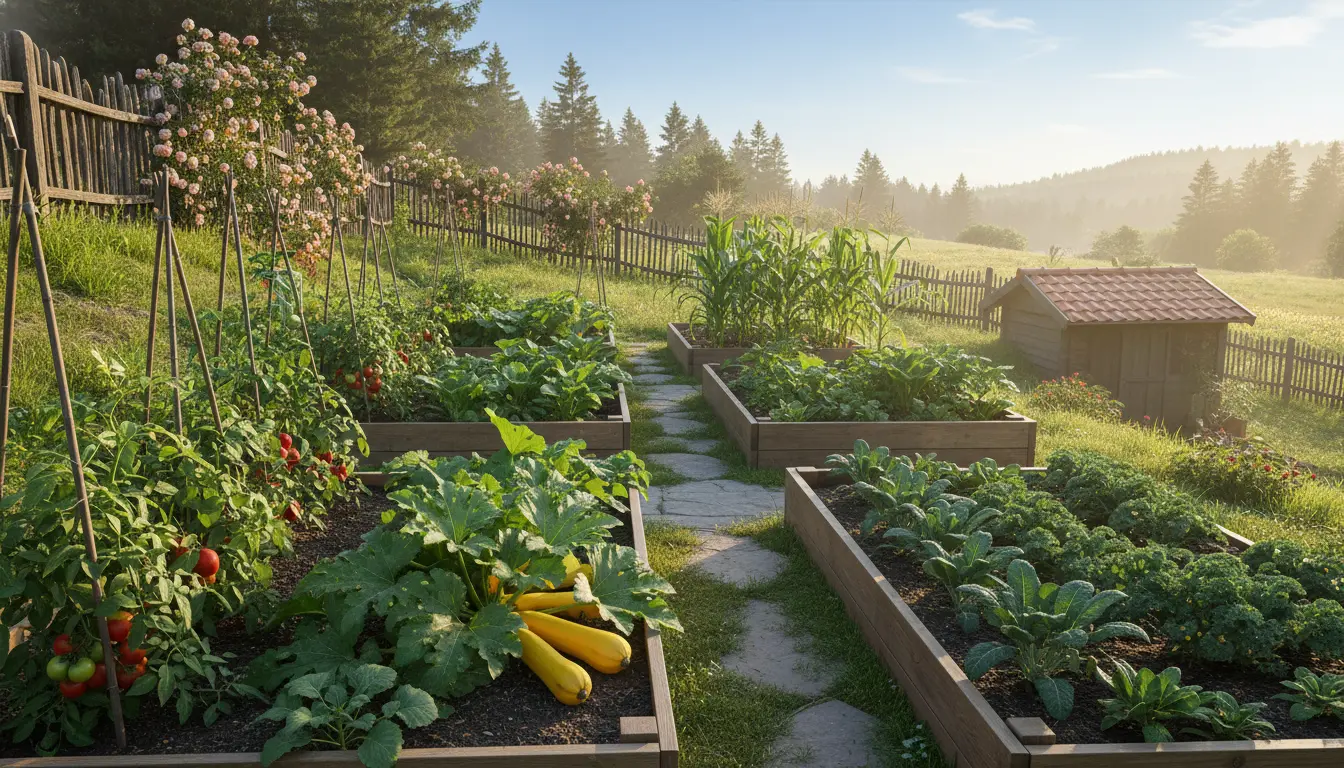
Start a Vegetable Garden: Quick Overview
Starting a vegetable garden is a straightforward project that can fit any yard or balcony. This guide covers the practical steps you need to plan, plant, and maintain a productive vegetable garden.
Choose the Right Site for Your Vegetable Garden
Pick a spot that gets at least six hours of direct sunlight each day. Vegetables need sun to grow well, so avoid heavy shade.
Also check access to water and how level the area is. A flat area near a hose or rain barrel saves time and effort.
Sun and Space Considerations
Observe the chosen site through a day to see sunlight patterns. Note morning versus afternoon sun; many veggies prefer afternoon light.
Decide on bed size based on available space and how much you can realistically tend. Common choices: containers, raised beds, or in-ground rows.
Prepare Soil and Choose the Right Beds
Good soil is the most important factor for a healthy vegetable garden. Test soil texture and pH, and improve it with compost.
Raised beds are ideal for beginners because they warm faster in spring and offer better drainage.
Soil Improvement Checklist
- Mix in 2 to 4 inches of compost annually.
- Add coarse sand or perlite for heavy clay to improve drainage.
- Use a balanced organic fertilizer if a soil test shows nutrient deficiencies.
Plan What to Plant
Choose vegetables that match your climate, season, and cooking preferences. Start with easy crops like lettuce, radishes, tomatoes, and herbs.
Consider growth habit and spacing. Climbing plants need trellises; bush varieties save space.
Suggested Starter Plants
- Leafy greens: lettuce, spinach
- Root vegetables: carrots, radishes
- Warm-season: tomatoes, peppers, cucumbers
- Herbs: basil, parsley, chives
Planting and Watering Basics
Follow seed packet or plant tag depth and spacing instructions to avoid overcrowding. Proper spacing reduces disease risk and improves yield.
Water deeply and less often to encourage strong roots. Aim for consistent moisture rather than daily shallow watering.
Watering Tips
- Early morning watering reduces evaporation and disease risk.
- Use drip irrigation or soaker hoses to deliver water to roots efficiently.
- Mulch with straw or compost to retain soil moisture and suppress weeds.
Pest and Disease Management
Inspect plants weekly for pests and disease signs. Early detection lets you address problems before they spread.
Use integrated pest management: hand-pick pests, apply insecticidal soap when needed, and encourage beneficial insects.
Simple Disease Prevention
- Rotate crops each year to reduce soil-borne diseases.
- Water at the soil level to keep leaves dry and lower fungal risks.
- Remove and compost infected plant material away from the garden.
Companion planting can reduce pests and improve yields. For example, planting marigolds near tomatoes may deter nematodes and attract pollinators.
Maintenance: Pruning, Feeding, and Harvesting
Feed heavy feeders like tomatoes with a side-dressing of compost mid-season. Monitor growth and pinch back crowded shoots to improve air flow.
Harvest regularly to encourage continued production. Many vegetables, like lettuce and beans, produce more when harvested frequently.
Seasonal Tasks
- Spring: prepare beds, direct sow cool-season crops.
- Summer: mulch, water deeply, stake tall plants.
- Fall: remove spent plants, add compost, plant cover crops if desired.
Small Real-World Case Study
Case Study: A small urban gardener in Portland converted a 4×8 ft unused patch into a raised bed. They started with tomatoes, basil, lettuce, and carrots.
Within one season they improved soil with compost, installed drip tubing, and used vertical trellises for cucumbers. Yield increased each month and they reported less pest pressure with companion planting.
Common Mistakes and How to Avoid Them
Avoid overcrowding which leads to disease. Read spacing guidelines and thin seedlings early to give plants room to grow.
Do not overwater or you risk root rot and nutrient leaching. Stick to deep, infrequent watering and monitor soil moisture.
Quick Checklist Before You Begin
- Confirm at least six hours of sun at your site.
- Choose raised beds or containers if soil is poor.
- Pick 3 to 6 easy starter crops that you will eat.
- Set up a simple watering system and mulch heavily.
Next Steps to Start Your Vegetable Garden
Start small and build skill over time. A few well-tended beds will teach you more than a large neglected plot.
Keep a garden journal to note planting dates, varieties, and harvests. This record helps refine timing and choices for future seasons.
By choosing the right site, improving soil, planning smart plantings, and keeping up with basic maintenance, you can successfully start a vegetable garden that supplies fresh produce all season.