
Why start a vegetable garden
Starting a vegetable garden brings fresh produce, lower grocery bills, and a healthier outdoor hobby. Many beginners worry it is hard; with a simple plan you can grow reliable crops even in small yards.
Choose the right spot to start a vegetable garden
Location determines much of your garden’s success. Pick a spot with at least six hours of sunlight a day for most vegetables.
Consider access to water, flat ground for even drainage, and protection from strong winds. If shade or poor soil is an issue, raised beds or containers are effective alternatives.
Sunlight, soil and water basics
- Sunlight: Full sun for tomatoes, peppers and cucumbers; partial shade for lettuce and spinach.
- Soil: Loose, well-draining loam is best. Improve poor soil with compost and organic matter.
- Water: Plan for regular, deep watering rather than frequent shallow sprinkles.
Plan layout and choose crops to start a vegetable garden
Start small and choose easy, high-yield crops. Overambitious layouts overwhelm beginners and waste space.
Good starter vegetables include:
- Leafy greens: Lettuce, kale, Swiss chard
- Root crops: Carrots, radishes, beets
- Nightshades: Cherry tomatoes, peppers
- Vining: Bush beans, zucchini
Group plants by water needs and height to simplify care and maximize sunlight exposure.
Soil preparation and planting when you start a vegetable garden
Healthy soil feeds plants. Test your soil pH with an inexpensive kit to learn if you need lime (to raise pH) or sulfur (to lower pH).
Work 2–4 inches of compost into the top 6–12 inches of soil before planting. Compost improves texture, drainage, and nutrient content.
Raised beds vs in-ground planting
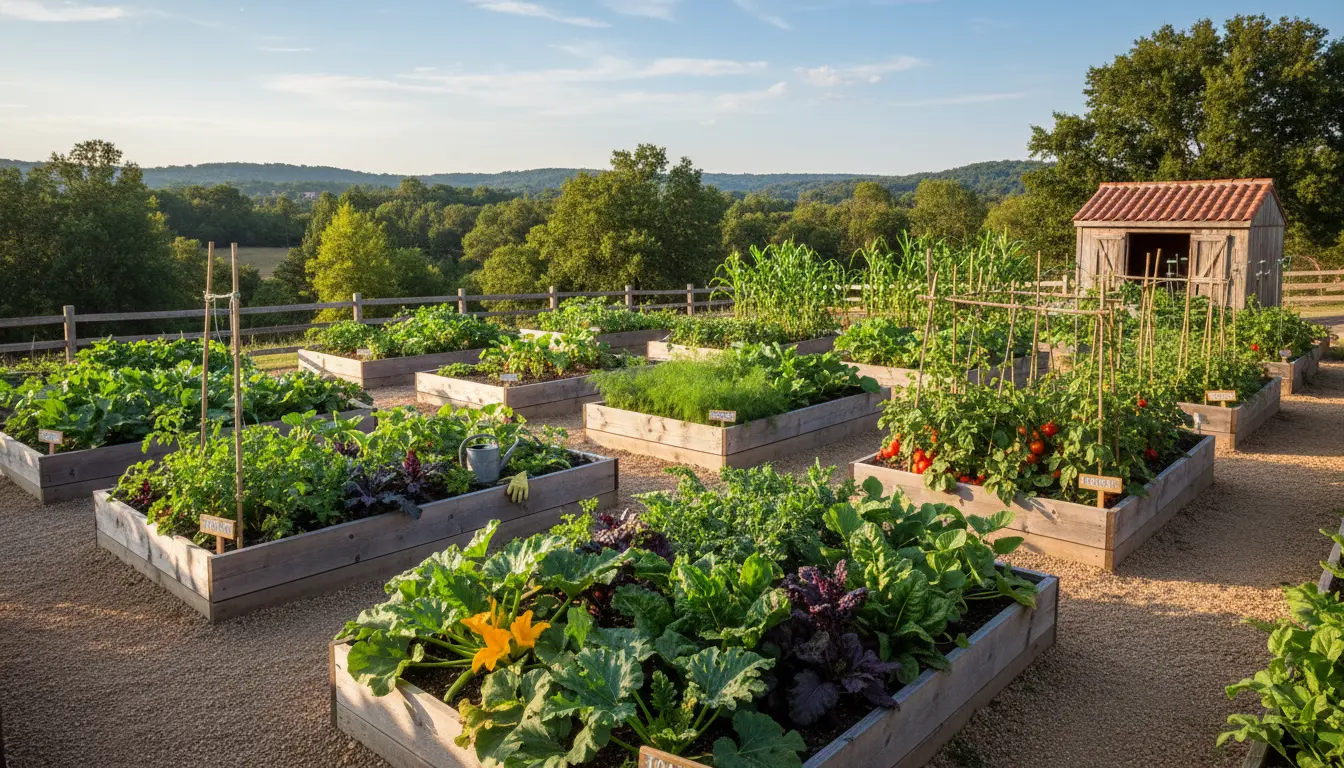
Raised beds warm faster in spring, drain well, and are easier to manage for beginners. In-ground beds can be less expensive and work well when soil is already good.
- Raised beds: Good for poor or compacted soil, accessible, easier weed control.
- In-ground: Good for larger spaces, can support deeper-rooted crops without added soil.
Planting tips to start a vegetable garden
Follow seed packet instructions for spacing and depth. Space too closely and plants compete, too widely and you waste space.
Stagger plantings for a continuous harvest: plant small batches of lettuce or radishes every 2-3 weeks rather than all at once.
Watering, feeding, and maintenance
Water deeply and less frequently to encourage strong roots. Early morning watering reduces disease risk and evaporation.
- Mulch: Apply 2–3 inches of organic mulch to retain moisture and suppress weeds.
- Fertilizer: Use a balanced organic fertilizer or compost tea mid-season for heavy feeders like tomatoes.
- Pruning: Remove dead leaves and lightly prune tomatoes to improve airflow.
Pest control and common problems when you start a vegetable garden
Many pests are manageable with prevention and simple, non-toxic methods. Encourage beneficial insects like ladybugs and lacewings.
- Hand-pick large pests (slugs, caterpillars) in the morning.
- Use row covers to protect seedlings from birds and insects.
- Rotate crops yearly to reduce disease and soil-borne pests.
Small real-world example: Raised bed starter
Case study: A busy homeowner built two 4×8 ft raised beds in early April. They filled beds with local topsoil mixed 30% compost, planted cherry tomatoes, basil, lettuce, and bush beans.
Watering twice a week with 1–2 inches per session and adding mulch reduced weeds. By July they harvested salads twice a week and enjoyed tomatoes by late summer. Minimal pest issues were handled by picking and hand removal.
Many common vegetables mature faster than people expect: radishes can be ready in as little as 21 days, and lettuce often matures in 30–45 days, making them ideal quick wins for new gardeners.
Quick checklist to start a vegetable garden
- Choose a sunny spot with water access.
- Decide between raised beds or in-ground planting.
- Improve soil with compost and test pH if possible.
- Select 3–6 easy crops to start and stagger plantings.
- Mulch, water deeply, and monitor for pests weekly.
Final tips for success
Keep a simple journal to track planting dates, varieties, and problems encountered. Small experiments each season teach faster than following every rule.
Start conservatively, harvest regularly, and adjust next season based on what worked. A productive vegetable garden grows with experience and simple, consistent care.