
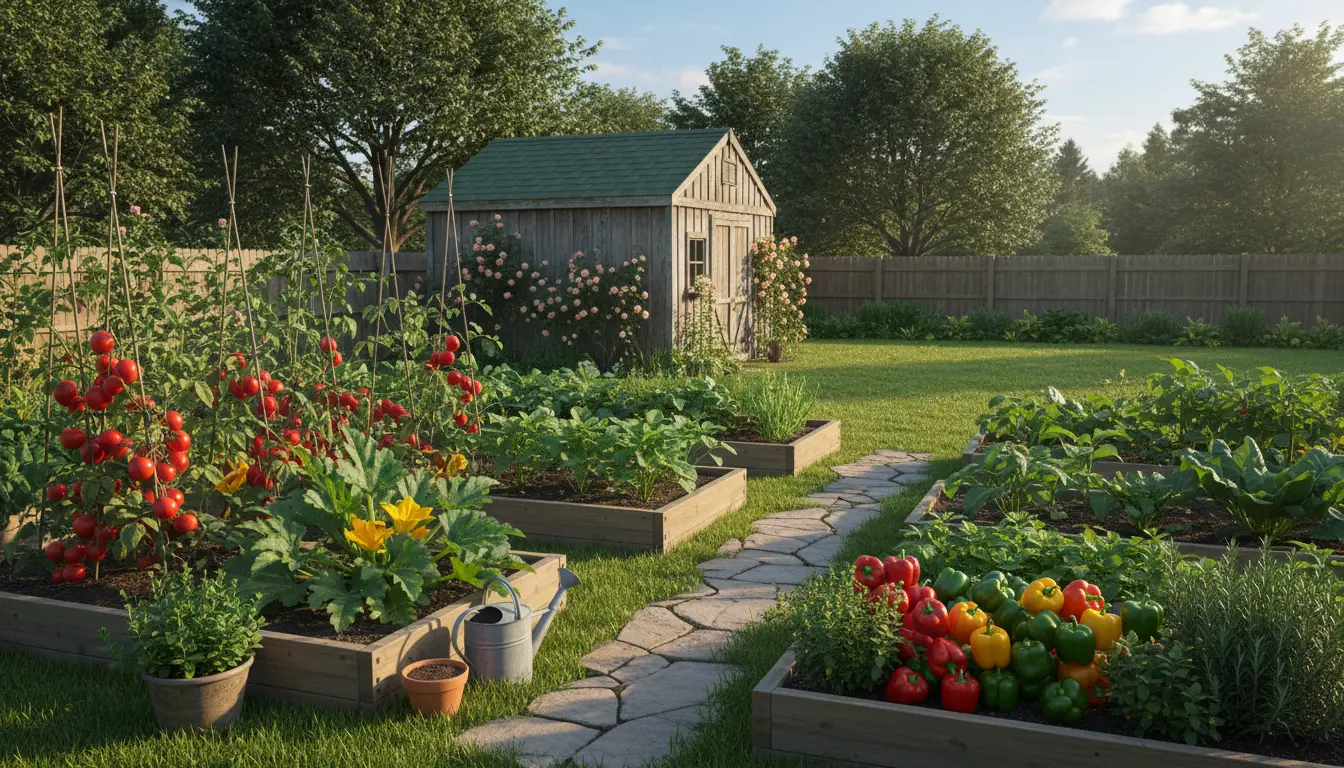
Overview: How to Start a Vegetable Garden
Starting a vegetable garden is a practical way to grow fresh food, save money, and enjoy outdoor activity. This guide breaks down the process into clear steps so beginners can get started with confidence.
How to Start a Vegetable Garden: Plan Your Garden
Good planning reduces wasted time and plants. Decide what you want to grow and how much time you can commit each week.
- List vegetables you eat often and that suit your climate.
- Decide between in-ground, raised beds, or containers.
- Estimate space: most families start with a single 4×8 ft bed.
How to Start a Vegetable Garden: Choose the Right Location
Sunlight and access to water are the two most important factors. Most vegetables need 6–8 hours of sun daily.
Look for a level spot with good drainage and proximity to a hose or rain barrel.
How to Start a Vegetable Garden: Prepare Soil and Beds
Healthy soil gives plants a strong start. Test your soil or assume you need to improve it if it is compacted or sandy.
- Loosen soil to a depth of 8–12 inches for in-ground beds.
- Add organic matter: compost, well-rotted manure, or leaf mold.
- For raised beds, use a mix of topsoil and compost for good structure.
How to Start a Vegetable Garden: Soil Testing and Amendments

Soil testing helps you know pH and nutrient needs. Many local extension services offer affordable tests.
Based on results, add lime to raise pH or sulfur to lower pH, and use balanced fertilizers if needed.
How to Start a Vegetable Garden: Select Plants and Planting Times
Choose vegetables suited to your hardiness zone and the season. Start with easy crops like lettuce, radishes, tomatoes, and beans.
- Short-season crops: radishes, salad greens, spinach.
- Warm-season crops: tomatoes, peppers, cucumbers after frost risk passes.
- Stagger plantings to extend harvest: plant lettuce every 2–3 weeks.
How to Start a Vegetable Garden: Seed vs. Seedlings

Seeds are cheaper and offer more variety, while seedlings (transplants) give you a head start on the season.
Use seedlings for tomatoes and peppers; start lettuce and root crops from seed directly in the bed.
How to Start a Vegetable Garden: Watering and Maintenance
Consistent watering and simple maintenance keep plants productive. Water deeply and less often to encourage strong roots.
- Morning watering reduces disease risk.
- Mulch with straw or shredded leaves to conserve moisture and suppress weeds.
- Inspect plants weekly for pests and diseases and remove affected leaves promptly.
How to Start a Vegetable Garden: Fertilizing and Support
Fertilize according to plant needs: leafy crops prefer nitrogen, fruiting crops need balanced feeding.
Use cages, trellises, or stakes for tomatoes, peas, and vining crops to save space and improve airflow.
How to Start a Vegetable Garden: Harvesting and Rotation
Harvest crops when they are young and tender for best flavor. Regular harvesting often encourages more production.
Practice crop rotation to reduce disease and nutrient depletion. Move plant families to a new bed each year when possible.
Season Extension Tips
Use row covers, cold frames, or simple cloches to protect crops from early frost and extend the season by weeks.
Plant cold-hardy crops like kale and chard for winter harvest in milder climates.
Planting a mix of companion plants like marigolds, basil, and nasturtiums can reduce some pests and attract beneficial insects naturally.
Small Case Study: How to Start a Vegetable Garden on a City Balcony
Maria had a sunny 8-by-4-foot balcony and wanted fresh salads. She chose containers and started with lettuce, cherry tomatoes, and basil.
She used a potting mix with compost, watered daily in summer mornings, and added a trellis for tomatoes. In her first season she harvested salad greens every week and got two tomato harvests.
Key takeaways: choose compact varieties, use quality potting mix, and water consistently for container success.
Quick Checklist: How to Start a Vegetable Garden
- Choose location with 6–8 hours of sun.
- Decide bed type: in-ground, raised, or containers.
- Improve soil with compost and test pH if possible.
- Select easy crops and plant at correct times.
- Water deeply, mulch, and inspect weekly.
- Harvest regularly and rotate crops yearly.
Common Beginner Mistakes and Solutions
- Overwatering — water less deeply but less often to prevent root rot.
- Poor soil — add compost and avoid planting directly into compacted subsoil.
- Planting too close — follow spacing on seed packets to avoid crowding.
Final Tips: Keep It Simple and Learn by Doing
Start small, keep a simple plan, and treat failures as lessons. Garden time is incremental: a little effort each week yields steady improvement.
With basic planning, good soil, and consistent care you can successfully grow fresh vegetables, even in small spaces.