
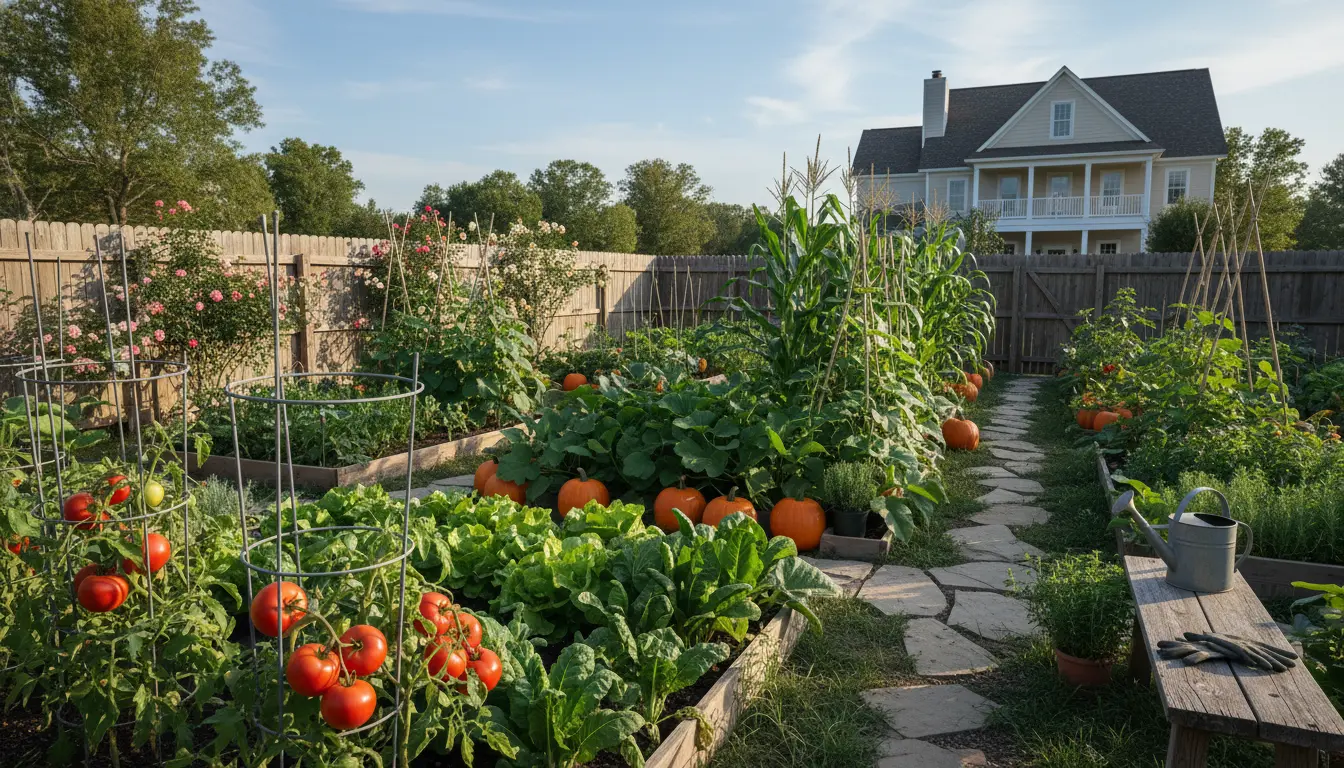
Plan Your Small Vegetable Garden
Starting a small vegetable garden begins with a clear plan. Decide on the garden size, purpose, and the vegetables you want to grow.
Keep the layout compact and manageable. For a first garden, a 4×8 foot raised bed or several 2×2 containers are ideal.
Choose the Right Location and Soil
Pick a location that gets at least 6 hours of direct sunlight daily. Most vegetables need full sun to produce well.
Good soil is critical. For raised beds and containers, use a mix of topsoil, compost, and a light organic amendment for drainage.
Soil Preparation Steps
- Test soil pH: Aim for pH 6.0–7.0 for most vegetables.
- Add compost: Work 2–3 inches of compost into the top 6–8 inches of soil.
- Improve drainage: Mix in perlite or coarse sand for heavy clay soils.
Tomatoes, peppers, and cucumbers are high-yield crops that often provide the most harvest per square foot in small gardens.
Pick Easy Vegetables for Beginners
Start with crops that are forgiving and productive in small spaces. Choose a mix of quick growers and longer-season plants.
- Quick crops: Lettuce, radishes, spinach, and arugula.
- Medium: Bush beans, carrots, beets, and Swiss chard.
- Big producers: Determinate tomatoes, peppers, and bush cucumbers.
Plan Your Planting Schedule and Spacing
Follow local frost dates and plant accordingly. Use succession planting to maximize yield in a small area.
Respect spacing recommendations on seed packets, but interplant compatible crops to save space.
Example Spacing for a 4×8 Bed
- Two rows of bush tomatoes against the back (18–24 inches apart).
- One row of basil or marigolds for companion planting (6–12 inches).
- Front row of lettuce and radishes planted in succession for continuous harvest.
Watering and Fertilizing Small Gardens
Consistent moisture is more important than frequent soaking. Aim for deep, infrequent watering to develop strong roots.
Use a layer of mulch to retain moisture and suppress weeds. Fertilize based on the crop and soil test results.
Practical Watering Tips
- Water early in the morning to reduce evaporation and disease risk.
- Use drip irrigation or soaker hoses for efficient delivery to roots.
- Check soil moisture with your finger; water when the top 1–2 inches feel dry.
Pest Control and Garden Maintenance
Integrated pest management works best: monitor, use physical barriers, and encourage beneficial insects.
Regular tasks include weeding, pruning, staking, and removing diseased plants. Small gardens are easier to maintain if checked weekly.
Low-Chemical Pest Strategies
- Row covers protect seedlings from insects and can extend the season.
- Handpick pests like caterpillars and beetles early in the morning.
- Attract predators with flowering plants: dill, fennel, and alyssum.
Harvesting and Storage
Harvest vegetables at peak ripeness for the best flavor and to encourage continued production. Regular harvesting often stimulates more growth.
Store produce properly: cool, dry storage for root crops; refrigeration for greens and most fruits.
Small Garden Case Study
Jane, a beginner gardener, turned a 4×8 raised bed into a productive space in her first season. She planted determinate tomatoes, basil, three rows of lettuce in succession, and bush beans along the edge.
Results: Jane harvested about 20 pounds of tomatoes, multiple bunches of lettuce every week, and two pickings of beans over the season. She spent 30 minutes twice a week on maintenance and adjusted watering once during a dry spell.
Quick Troubleshooting
- Yellow leaves: Check watering and soil nutrients; amend as needed.
- Poor fruit set: Ensure enough sunlight and even watering; add a balanced fertilizer.
- Slow growth: Test soil pH and add organic matter to improve structure.
Final Checklist to Start a Small Vegetable Garden
- Choose a sunny spot and decide bed size (4×8 recommended).
- Test soil and mix in compost; set pH if needed.
- Select easy crops and plan a planting schedule.
- Set up efficient watering and apply mulch.
- Monitor pests, harvest regularly, and keep a garden log.
With a simple plan, basic soil improvements, and consistent care, a small vegetable garden can deliver fresh produce, learning, and satisfaction even for beginners. Start small, observe, and adjust each season for better results.