
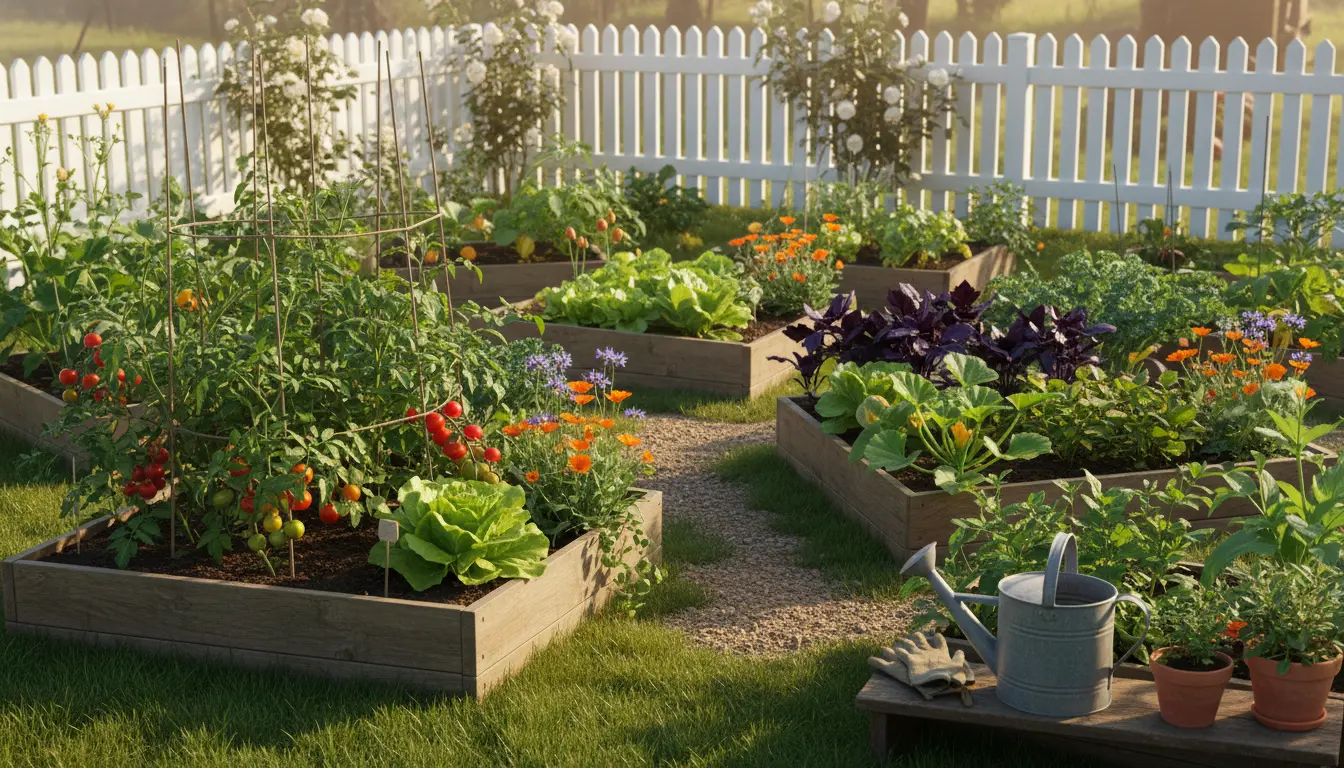
Starting a small vegetable garden is a practical way to grow fresh food and learn gardening basics. This guide gives clear steps for planning, planting, and maintaining a productive small vegetable garden.
Planning your small vegetable garden
Good planning saves time and increases harvests. Begin by evaluating sunlight, space, and your goals for the small vegetable garden.
Choose the right location for your small vegetable garden
Vegetables need at least 5 to 6 hours of direct sunlight. Select a spot with consistent sun and easy access to water.
Decide what to grow in a small vegetable garden
Choose plants based on climate, season, and space. For limited space, pick compact and high-yield crops like lettuce, radishes, bush beans, cherry tomatoes, herbs, and salad greens.
Soil, containers, and raised beds for small vegetable garden
Soil quality is the most important factor for success. In a small vegetable garden you can use improved in-ground soil, containers, or raised beds depending on conditions.
Soil mix and amendments
Use a well-draining mix rich in organic matter. A good container mix is two parts compost or topsoil to one part coarse sand and one part quality potting mix. Test pH and adjust if necessary for the crops you choose.
Raised beds versus containers
Raised beds warm faster and hold more soil for roots. Containers are ideal for balconies and patios and let you control soil more precisely. Both work well for a small vegetable garden if sized correctly.
Planting, spacing, and timing in a small vegetable garden
Proper planting and timing maximize yield in limited space. Follow seed packet instructions and consider succession planting for continuous harvests.
Sowing seeds and transplanting
Sow shallow-seeded crops like lettuce and radish every two to three weeks for continuous supply. Transplant seedlings of tomatoes and peppers once the danger of frost has passed.
Spacing tips for a small vegetable garden
Use companion planting and vertical supports to make the most of space. Examples include trellising peas and cucumbers and planting basil near tomatoes to save ground space.
Watering, feeding, and maintenance for a small vegetable garden
Consistent watering and simple feeding keep plants healthy. In small gardens, small problems escalate quickly, so monitor plants regularly.
Watering best practices
Water deeply and less frequently to encourage strong roots. Early morning watering reduces evaporation and leaf disease risk.
Feeding and soil care
Feed with balanced organic fertilizer at planting and again midseason for heavy feeders like tomatoes. Add a 1 to 2 inch layer of compost or mulch to conserve moisture and feed microbes.
Pest control and seasonal care in a small vegetable garden
Small gardens are easier to protect with targeted practices. Use cultural controls first and spot-treat pests when possible.
- Inspect plants weekly for pests and diseases.
- Use row covers to protect seedlings from insect damage.
- Encourage beneficial insects by planting flowers like marigolds and alyssum.
- Rotate crops each season to reduce soil-borne problems.
Small vegetable garden tools and supplies
You do not need expensive gear to start. Basic tools and supplies make planting and upkeep easier in a small vegetable garden.
- Hand trowel, pruning shears, and a watering can or hose with a gentle nozzle.
- Quality potting mix or compost, seeds or seedlings, and a trellis or stakes for vining plants.
- Mulch and organic fertilizer for soil health.
Real world example: A small balcony vegetable garden case study
Maria had only a 6 by 3 foot balcony and wanted fresh salad greens. She used three large containers and a small vertical trellis to grow lettuce, cherry tomatoes, and pole beans.
Following simple steps she improved drainage with potting mix, watered every other day, and rotated lettuce with spinach midseason. In six weeks she harvested continuous salads and later increased yield by adding a hanging herb planter.
Quick checklist to start your small vegetable garden
- Pick a sunny location and measure available space.
- Decide on crops suited to your season and space.
- Choose containers or build raised beds and prepare soil mix.
- Sow seeds or transplant seedlings at the right time.
- Water deeply, feed appropriately, and monitor for pests.
With proper planning and simple routines, a small vegetable garden can produce a steady supply of fresh food. Start small, take notes, and refine your approach each season to get better results.