
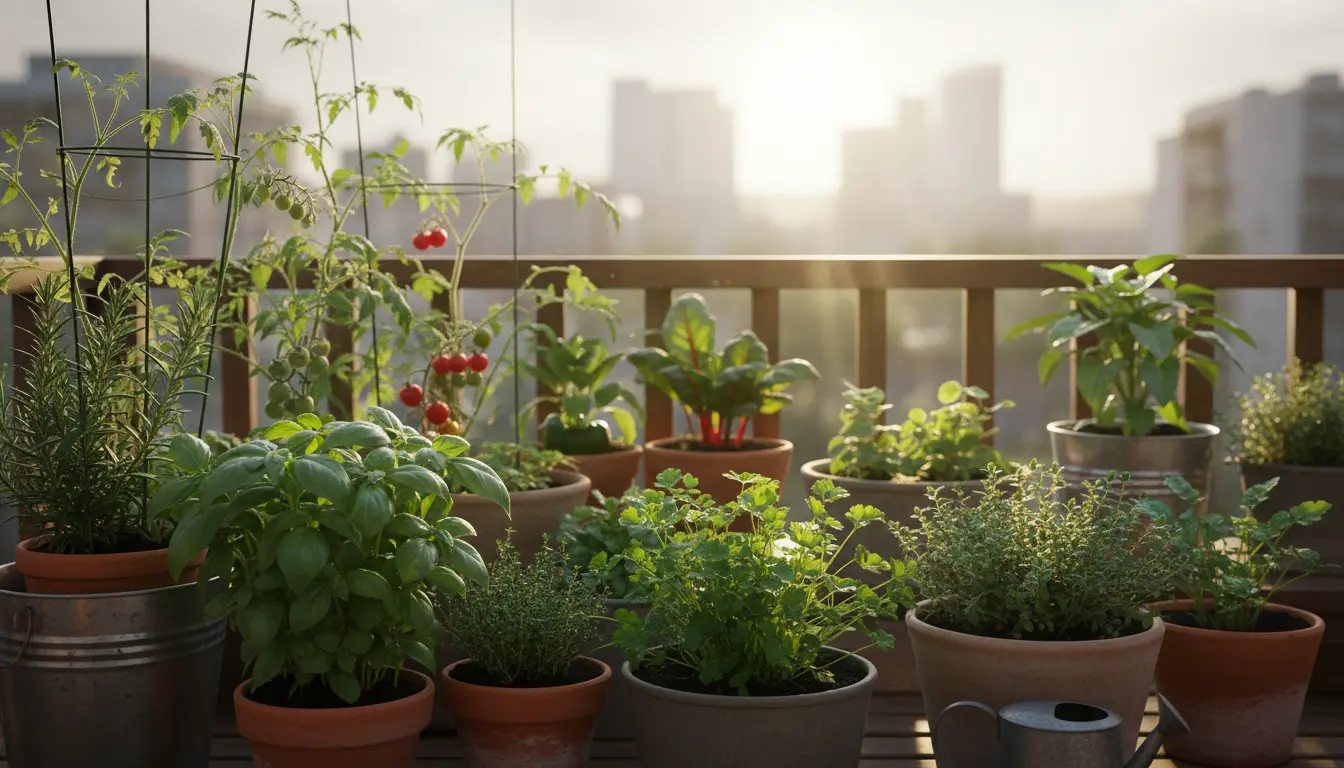
Plan Your Small Space Vegetable Garden
Begin by measuring the space you have and noting sunlight patterns. Even small balconies, patios, or windowsills can grow productive vegetables with planning.
Decide whether you will use containers, hanging baskets, or vertical systems. Consider weight limits for balconies and access to water for easy maintenance.
Sunlight Needs for a Small Space Vegetable Garden
Most vegetables need 6 to 8 hours of direct sunlight daily. Leafy greens tolerate partial shade and can be a good choice for less sunny spots.
Track sun for a few days and place sun-loving crops where they will receive the most light.
Choose Containers and Soil
Select containers with proper drainage and enough volume for root growth. Use sturdy plastic, terracotta, fabric grow bags, or wooden boxes depending on style and weight limits.
Container Sizes and Recommendations
- Leafy greens: 6–8 inch depth containers.
- Herbs: 6–8 inch pots or a shared 10–12 inch container.
- Tomatoes and peppers: 12–18 inch deep containers.
- Root crops (carrots, beets): 12 inches deep.
Use a high-quality potting mix, not garden soil. Mix in compost for nutrients and ensure the mix holds moisture while draining well.
Pick the Right Vegetables for a Small Space Vegetable Garden
Choose compact or container-friendly varieties labeled as patio, dwarf, or bush. These varieties yield well without sprawling into neighbors’ areas.
Good beginner choices include salad greens, radishes, bush beans, cherry tomatoes, peppers, and herbs like basil and parsley.
Planting Tips
- Succession plant: sow small amounts every 2–3 weeks to keep a steady harvest.
- Interplant tall and low crops to maximize space: e.g., tomatoes with basil or lettuce at the base.
- Follow spacing on seed packets but reduce slightly for containers where roots are confined.
Watering and Fertilizing Your Small Space Vegetable Garden
Containers dry faster than ground beds. Water regularly in the morning and check soil moisture by touch. Aim for consistent moisture but avoid waterlogging.
Use a balanced, water-soluble fertilizer every 2–4 weeks or apply slow-release fertilizer at planting. Leafy crops benefit from higher nitrogen, while flowering and fruiting plants need higher potassium.
Practical Watering Techniques
- Self-watering containers or wicking systems reduce daily watering needs.
- Mulch container surface with straw or shredded bark to slow evaporation.
- Group pots with similar water needs together to simplify care.
Pest Control and Maintenance in a Small Space Vegetable Garden
Small spaces make pest problems easier to monitor and manage, but they can still occur. Inspect leaves weekly for aphids, slugs, or mildew.
Use physical barriers like netting and hand-pick pests where possible. Introduce beneficial insects or use insecticidal soap for soft-bodied pests.
Routine Care Checklist
- Daily glance for wilting, pests, or drainage problems.
- Weekly feeding if using liquid fertilizer.
- Prune and pinch back to encourage bushier growth for certain crops like tomatoes and herbs.
Harvesting and Seasonal Tips
Harvest leafy greens by cutting outer leaves to encourage regrowth. Harvest tomatoes and peppers when fully colored for best flavor.
Rotate crops seasonally: cool-season greens in spring and fall, heat-loving tomatoes and peppers in summer. Use shade cloth in intense heat to protect sensitive crops.
Small Real-World Example
Case Study: A two-year example from a one-bedroom apartment balcony produced consistent salads and snacks. The gardener used three 12-inch containers for cherry tomatoes and peppers, two long 10-inch troughs for lettuce and herbs, and a vertical pocket planter for strawberries.
With morning sun and a simple drip-watering bottle system, the balcony yielded enough greens for weekly salads and continuous cherry tomatoes through summer. Regular compost tea feeding kept plants vigorous without expensive fertilizers.
One container tomato plant can yield 10 to 20 pounds of fruit in a season when given proper care, making container gardening surprisingly productive.
Quick Starter Checklist for a Small Space Vegetable Garden
- Measure sunlight and available area.
- Choose containers with drainage and correct depth.
- Buy quality potting mix and compost.
- Select compact vegetable varieties and stagger planting.
- Set up regular watering and a simple feeding plan.
Starting a small space vegetable garden is low-cost and high-reward. With the right containers, crops, and a simple routine, even the smallest spaces can produce healthy, fresh food year-round.