
Houseplant Care for Beginners: Getting Started
Houseplant care for beginners starts with choosing the right plant and understanding basic needs. Focus on light, water, soil, and feeding rather than fancy techniques.
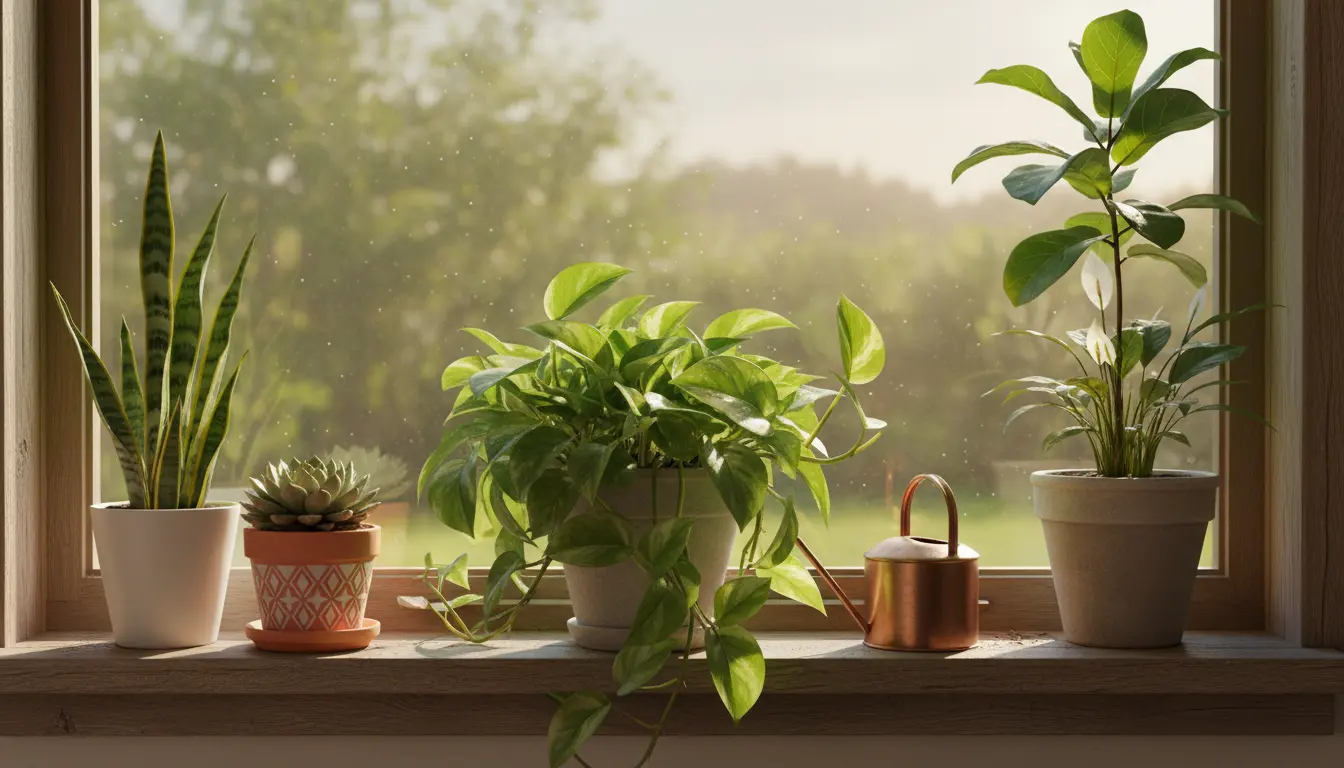
Pick plants with forgiving habits so you learn without high risk. Good starter species include pothos, snake plant, spider plant, and ZZ plant.
Choose the Right Plant for Your Space
Match a plant to the available light and your schedule. Low-light rooms suit snake plants and pothos. Bright, indirect light fits ficus and peace lily.
Consider size, pet safety, and how often you want to water. Smaller pots dry faster; large pots stay moist longer.
Watering Tips for Houseplant Care for Beginners
Watering is the most common care issue new plant owners face. Overwatering causes root rot; underwatering stresses the plant.
Use this simple routine:
- Check soil moisture with your finger: 1 inch deep for most plants.
- Water when the top 1 inch feels dry for most tropical houseplants.
- Water thoroughly until it drains from the pot’s bottom, then empty the saucer.
Signs of Overwatering and Underwatering
Yellowing, soft leaves often mean too much water. Crispy, brown leaf edges usually mean too little water.
Adjust frequency based on pot size, season, and room humidity. Winter often needs less water.
Light, Placement, and Soil
Light is the next most important factor in houseplant care for beginners. Plants need the right amount and quality of light to photosynthesize and stay healthy.
Observe light through the day. South-facing windows are brightest, east and west give moderate light, and north-facing usually provides low light.
Soil and Drainage
Use a well-draining potting mix labeled for indoor plants. Avoid garden soil; it compacts and holds too much water.
Ensure pots have drainage holes. If a decorative container lacks holes, keep the plant in a nursery pot with holes and place it inside the decorative pot.
Feeding and Routine Care
Feeding helps replace nutrients lost over time. For houseplant care for beginners, a balanced liquid fertilizer used monthly during the growing season is enough.
Basic routine tasks to keep on a schedule:
- Dust leaves every few weeks to improve light absorption.
- Rotate plants monthly for even growth.
- Prune yellow or dead leaves to encourage new growth.
When to Repot
Repot when roots circle the pot or grow out of drainage holes. Most plants need repotting every 12 to 24 months.
Choose a pot 1 to 2 inches larger in diameter. Repotting in spring gives the plant a full growing season to adjust.
Many common houseplants improve indoor air quality by absorbing volatile organic compounds and releasing oxygen during the day.
Troubleshooting Common Problems
Houseplant care for beginners includes spotting and solving common issues early. Pests, leaf spots, and leggy growth are frequent problems.
Quick fixes:
- Pests: Wipe leaves and use insecticidal soap for scale, mealybugs, or aphids.
- Leggy growth: Move plant to brighter light or prune stems to encourage bushiness.
- Brown leaf tips: Increase humidity or check for mineral buildup from hard water.
Humidity and Temperature
Most houseplants prefer temperatures between 65 and 75°F (18 to 24°C). Avoid cold drafts and heat vents.
Increase humidity by grouping plants, using a tray with pebbles and water, or using a humidifier.
Simple Care Plan Checklist
Create a straightforward schedule you can follow. Consistency beats perfection for beginners.
- Weekly: Check soil moisture and water only as needed.
- Monthly: Feed with a balanced liquid fertilizer during spring and summer.
- Quarterly: Inspect for pests and wipe dust from leaves.
- Annually: Repot if root bound and refresh topsoil.
Real-World Example: A Small Apartment Case Study
Maria, a beginner, started with a pothos and a snake plant on her east-facing windowsill. She checked soil once a week and watered only when the top inch felt dry.
After three months she moved the pothos to a brighter spot to reduce leggy growth. Simple monthly feeding and leaf cleaning kept both plants healthy and growing.
Final Tips for Houseplant Care for Beginners
Start small, learn one plant at a time, and keep notes. A short journal helps you remember feeding and watering patterns for each plant.
Use resources like plant tags, reputable plant care websites, and community groups when a problem appears. With consistent attention, most beginners quickly succeed.
Follow these steps and you will build confidence. Houseplant care for beginners becomes easier with each healthy new leaf.