
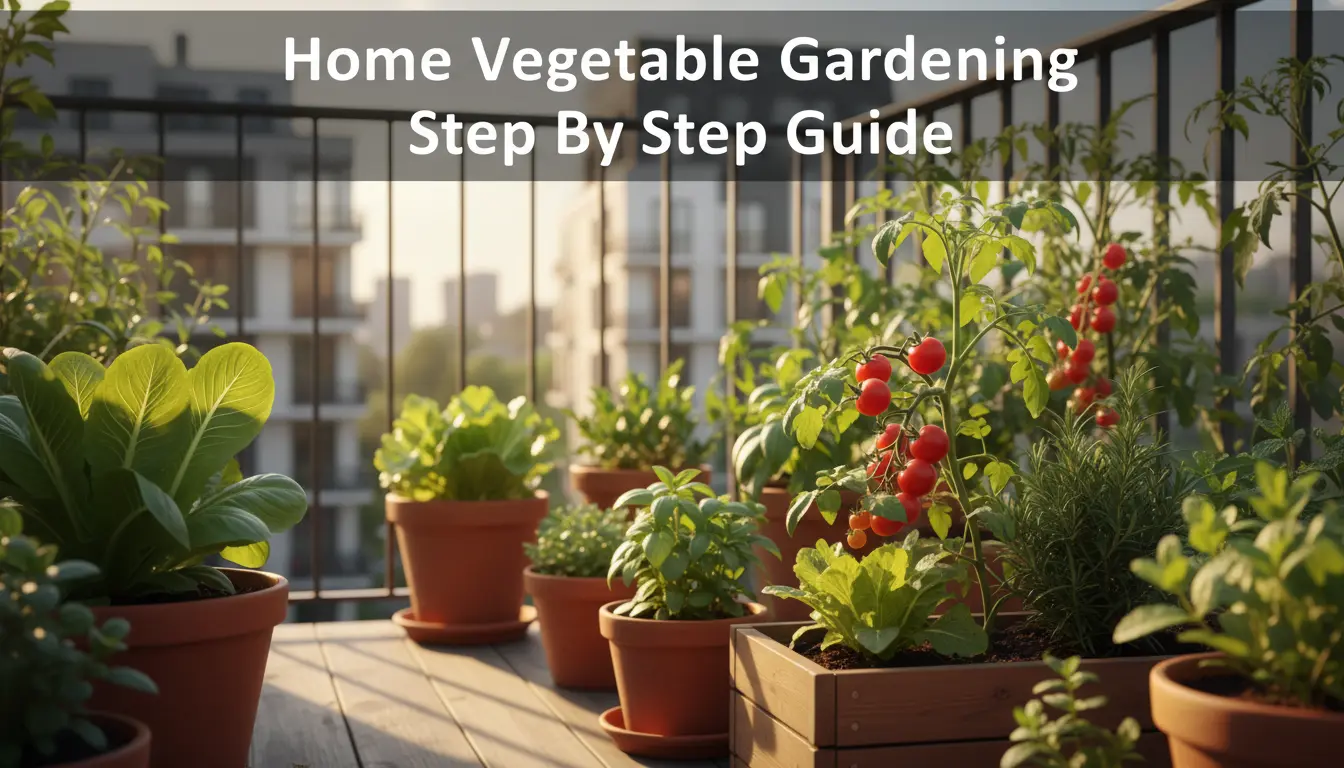
Getting Started with Home Vegetable Gardening
Home vegetable gardening is an approachable way to grow fresh produce and learn plant care. You do not need a large yard; many vegetables thrive in small beds or containers.
This guide gives practical steps you can follow to plan, plant, and maintain a productive home vegetable garden.
Plan Your Home Vegetable Gardening Layout
Start by listing vegetables you and your family eat regularly. Prioritize easy, fast-growing varieties for your first season.
Consider space, sunlight, and how much time you can commit each week.
Choose the Right Location for Home Vegetable Gardening
Select a spot with at least 6 hours of direct sunlight for most vegetables. South-facing locations usually work best in temperate climates.
Good drainage and easy water access are vital. Avoid low spots where water pooled after rain.
Decide Between Beds and Containers
Raised beds suit root vegetables and larger plants like squash. Containers are ideal for balconies, patios, and small spaces.
- Raised beds: better soil depth and drainage.
- Containers: flexible placement and simpler pest control.
- Hybrid approach: use both to maximize variety.
Prepare Soil and Choose Seeds or Seedlings
Soil health is the backbone of home vegetable gardening. Test soil pH and texture when possible.
Amend heavy clay with compost and sand. Add aged compost or well-rotted manure to improve fertility and structure.
Soil Preparation Steps
- Clear weeds and debris from the area.
- Loosen soil to 8–12 inches for beds; use deep containers for roots.
- Work in 2–3 inches of compost and a balanced organic fertilizer if available.
Planting: Timing and Techniques
Follow seed packet dates or local planting calendars for first and last frost. Timing affects success more than enthusiasm.
Start cool-season crops like lettuce and peas early, and warm-season crops like tomatoes and peppers after frost risk passes.
Spacing and Companion Planting
Respect spacing on seed packets to avoid overcrowding, which can increase disease risk. Use companion planting where practical, such as basil near tomatoes to improve flavor and deter pests.
Watering and Mulching for Healthy Plants
Water deeply and less often rather than light frequent watering. Deep watering encourages strong root systems.
Mulch with straw, wood chips, or leaf litter to retain moisture, regulate soil temperature, and suppress weeds.
Basic Pest and Disease Management
Regularly inspect plants for early signs of pests or disease. Many issues are easier to manage when caught early.
- Hand-pick large pests like beetles and caterpillars.
- Use row covers to protect young plants from insects.
- Apply neem oil or insecticidal soap for soft-bodied pests if needed.
Rotate crops each season to reduce soil-borne diseases and pest buildup.
Harvesting and Crop Rotation
Harvest vegetables at peak ripeness for best flavor and to encourage more production. Use the harvest calendar for each crop as a reference.
Plan a simple rotation: avoid planting the same family (e.g., nightshades) in the same spot for two consecutive seasons.
Simple Tools and Supplies for Home Vegetable Gardening
You do not need expensive gear. A few reliable tools go a long way in home vegetable gardening.
- Trowel and hand fork for planting and weeding.
- Watering can or hose with adjustable nozzle.
- Pruners, gloves, and a soil tester (optional).
Case Study: Small Balcony Success
Maria, a city renter, started home vegetable gardening on a 6-foot balcony. She used three 12-inch containers and a small raised bed box.
She planted cherry tomatoes, leaf lettuce, and herbs. By using potting mix rich in compost and watering twice weekly, she harvested fresh salad greens within five weeks and daily herbs all season.
This shows that limited space can still yield regular produce with proper soil, sunlight, and care.
Troubleshooting Common Beginner Problems
Yellowing leaves often mean overwatering or nutrient deficiency. Check soil moisture and adjust watering schedule.
Poor flowering in tomatoes can result from irregular watering or high temperatures. Consistent care usually resolves the issue.
Quick Weekly Checklist for Home Vegetable Gardening
- Inspect plants for pests, disease, and watering needs.
- Remove weeds and add mulch where needed.
- Harvest ripe produce and prune leggy growth.
- Add a light side-dressing of compost mid-season if plants look hungry.
Final Tips to Succeed with Home Vegetable Gardening
Start small and expand once you have a rhythm. Success in home vegetable gardening comes from consistent care and learning through experience.
Keep notes on planting dates, varieties, and outcomes. These notes become a personalized guide that improves results each season.