
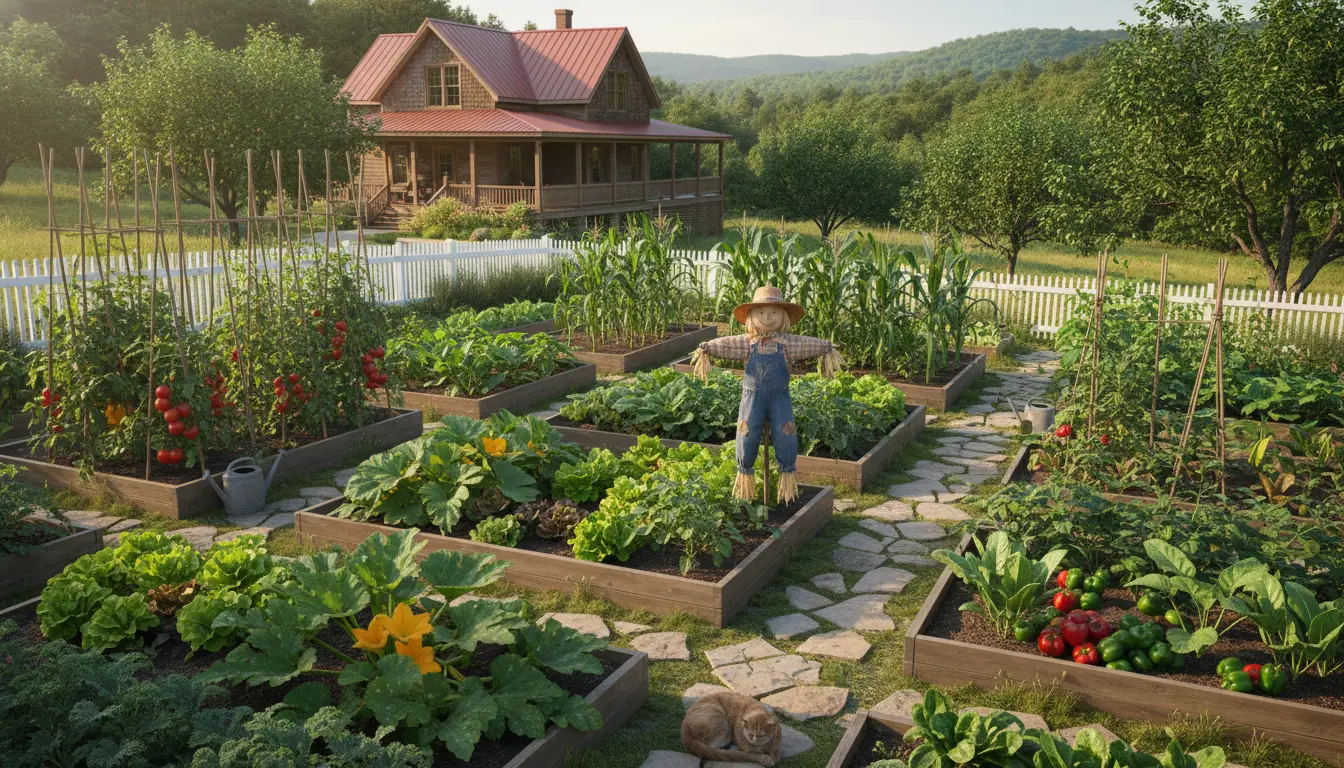
Starting a home vegetable garden can be simple and rewarding. This guide walks you through planning, soil prep, planting, and care with practical steps you can use this season.
Planning Your Home Vegetable Garden
Good planning saves time and increases success. Begin by choosing goals: fresh salad greens, perennial herbs, or lots of tomatoes.
Choose a Location for Your Home Vegetable Garden
Pick a spot with at least 6 hours of sun for most vegetables. Check for nearby water access and good drainage.
Consider convenience: place beds near the kitchen or path to reduce the effort of harvesting and watering.
Pick Plants for Your Home Vegetable Garden
Select vegetables that match your climate and schedule. Beginners do well with lettuce, radishes, bush beans, and cherry tomatoes.
- Fast results: lettuce, radish, spinach
- Reliable yield: tomato, pepper, zucchini
- Low maintenance: kale, chard, herbs
Soil and Bed Preparation for Home Vegetable Garden
Healthy soil is the foundation of a productive garden. Test soil, improve texture, and add organic matter before planting.
Test and Improve Soil for Your Home Vegetable Garden
Use a simple soil test kit to check pH and basic nutrients. Most vegetables prefer a pH between 6.0 and 7.0.
Incorporate compost or well-rotted manure to improve fertility and structure. Spread 2 to 4 inches of compost on top and work it in gently.
Raised Beds vs In-Ground for Your Home Vegetable Garden
Raised beds warm earlier in spring and provide better drainage. They are ideal for small yards or poor native soil.
In-ground beds require less initial material and work well where soil is already good. Choose the method that fits your space and budget.
Planting and Caring for a Home Vegetable Garden
Plant at the right time and give crops consistent care. Follow seed packet instructions for depth and spacing.
Watering, Mulching, and Fertilizing in a Home Vegetable Garden
Water deeply and less often to encourage strong roots. Aim for about 1 inch of water per week, varying by weather and soil type.
Use mulch to retain moisture and suppress weeds. Organic mulches like straw or shredded leaves also add nutrients as they break down.
Fertilize based on plant needs. A balanced organic fertilizer at planting and sidedressing with compost mid-season works for most gardens.
Pest Control and Crop Rotation for a Home Vegetable Garden
Start with prevention: healthy soil, clean tools, and proper spacing reduce pest issues. Inspect plants weekly and remove damaged leaves promptly.
- Use row covers for young plants to keep insects off.
- Introduce companion plants like marigolds to deter pests.
- Rotate crops yearly to reduce disease and nutrient depletion.
Harvesting and Scaling Your Home Vegetable Garden
Harvest at peak ripeness for best flavor and continued production. Many vegetables produce more when picked regularly.
To scale your garden, expand beds gradually and save seeds from reliable performers. Start small to learn before adding more crops.
Season Extension for Your Home Vegetable Garden
Use simple tools like row covers, cold frames, or mulch to extend the growing season in spring and fall. This increases yields without extra space.
Simple Care Checklist for Your Home Vegetable Garden
- Weekly: Check moisture, inspect for pests, and remove weeds.
- Monthly: Add compost or light fertilizer if needed.
- Seasonal: Rotate crops and refresh mulch before winter.
Tools and Supplies for a Home Vegetable Garden
Keep a few good tools on hand: a hand trowel, garden fork, pruning shears, and a hose with a gentle nozzle. Quality tools reduce effort and improve results.
Quick Case Study: Urban Balcony Home Vegetable Garden
Maria, an apartment resident, converted a sunny balcony into a small home vegetable garden. She used three 2×2 raised planters and container pots for herbs.
In her first season she grew cherry tomatoes, basil, and salad greens. By using compost, regular watering, and a small trellis for tomatoes, she harvested enough for weekly salads and saved money on herbs.
Her key lessons: choose compact varieties, water consistently, and start with a simple layout. The small setup required about 30 minutes a week to maintain.
Final Tips for a Successful Home Vegetable Garden
Start with easy crops and learn by doing. Keep notes on planting dates, varieties, and yields to improve next season.
Expect some failures; they are part of learning. With basic soil care, regular watering, and simple pest management, a home vegetable garden can be both productive and enjoyable.