
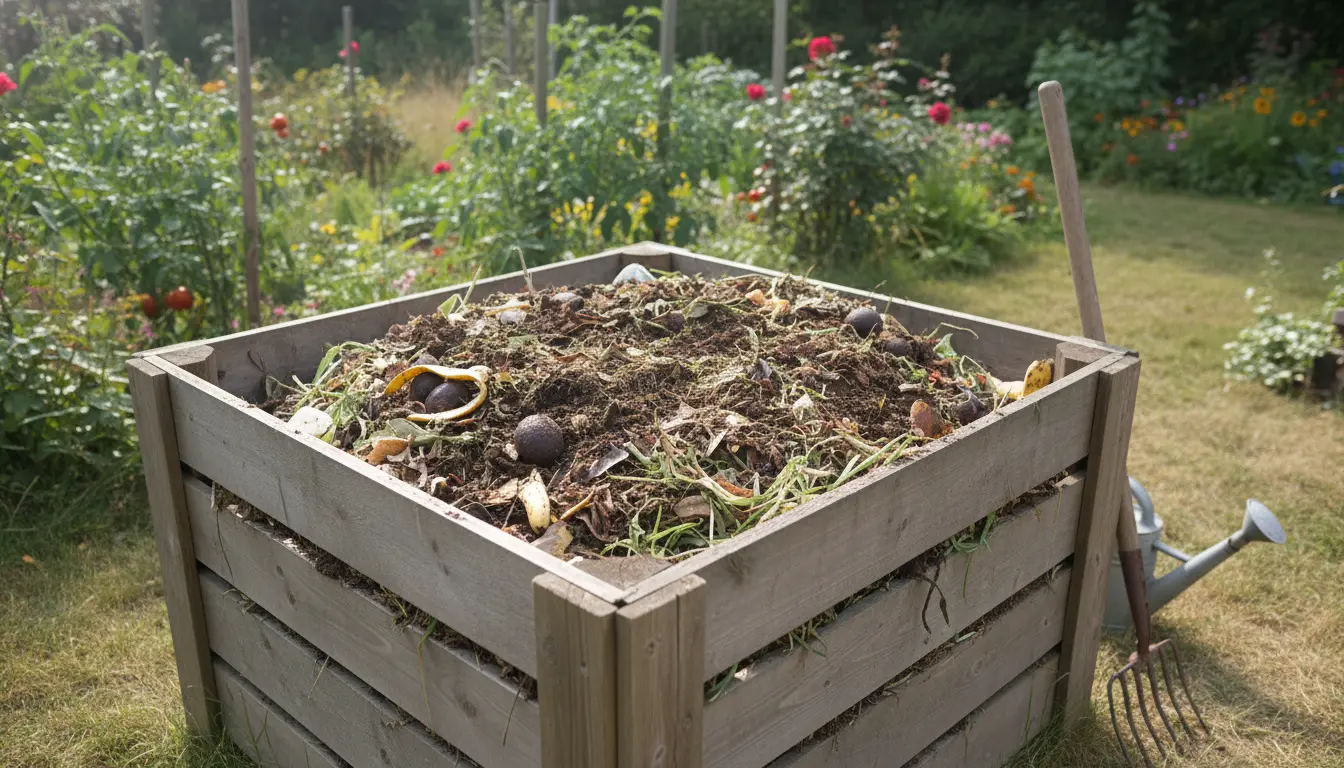
Why home composting matters
Home composting turns food scraps and yard waste into useful soil material. It reduces household waste, cuts landfill methane, and improves garden soil health.
Composting is a low-cost, practical way to close the loop on organic materials. With basic knowledge, most households can manage a productive compost system.
How to start home composting
Starting home composting is simple and can fit small yards or apartments. Follow these core steps to set up a reliable compost system.
Step 1: Choose a compost method
Select the method that fits your space and needs. Common choices are a backyard bin, tumbler, or indoor vermicompost (worm bin).
- Backyard bin: Good for yards and larger volumes.
- Tumbler: Easier turning, faster composting for moderate amounts.
- Vermicomposting: Ideal for apartments and small kitchens using red wiggler worms.
Step 2: Gather materials for home composting
Balance carbon-rich “browns” and nitrogen-rich “greens” for healthy decomposition. Aim for a rough 3:1 ratio of browns to greens by volume.
- Greens (nitrogen): Vegetable scraps, coffee grounds, fresh grass clippings.
- Browns (carbon): Dry leaves, shredded paper, cardboard, straw.
- Do not add: Meat, dairy, fats, diseased plants, or pet waste in most home systems.
Step 3: Build the pile or load the bin
Start with a base layer of coarse material for airflow. Alternate layers of greens and browns, keeping pieces small to speed breakdown.
Maintain moisture like a wrung-out sponge. If the pile is too dry, add water. If too wet, add more browns and turn.
Step 4: Manage aeration and temperature
Oxygen speeds decomposition. Turn a backyard pile every 1–2 weeks or use a tumbler that makes turning easier.
Active compost heats to 120–160°F (50–70°C) in the center. Heat indicates rapid decomposition and helps kill weed seeds.
Troubleshooting home composting problems
Common problems are easy to fix once you know the signs. Use small adjustments instead of overhauls.
Bad smells
Rotten or ammonia smells indicate too much nitrogen or poor airflow. Add dry browns and turn the pile to introduce air.
Pile too dry or not composting
If decomposition stalls and the pile is dry, add water and more green materials. Smaller pieces compost faster.
Flies or pests
Cover fresh food scraps with a layer of browns or finished compost. Use a closed bin or worm bin indoors to reduce pests.
Practical tips for faster home composting
- Chop or shred materials before adding to the pile.
- Keep the pile size at least 1 cubic yard (or a full tumbler) for heat retention.
- Monitor moisture and airflow weekly rather than daily.
- Use finished compost as a soil amendment, mulch, or potting mix component.
Properly managed compost can reduce household waste by up to 30 percent. Compost also returns nutrients to the soil and improves water retention in garden beds.
Case study: Small urban composting success
Jana, an apartment gardener, started a 10-liter worm bin in her kitchen. She collected vegetable scraps for 6 months and fed the worms daily.
After three months she harvested rich worm castings and reduced her organic trash by about 70 percent. Her balcony pots produced healthier, more productive herbs with the finished compost.
This example shows vermicomposting can work in tight spaces and produce visible gardening benefits.
Examples and quick checklists for home composting
Use these checklists to keep the system on track.
- Weekly: Turn or rotate the bin, check moisture, add browns if smelly.
- Monthly: Inspect for pests, remove finished compost from the bottom or side of the bin.
- Seasonal: Collect leaves in autumn for browns; slow decomposition in winter is normal.
Final tips for successful home composting
Start small and scale up when you are comfortable. Consistent, simple maintenance beats occasional heavy work.
Keep a small countertop container for scraps to reduce trips and make it easier to maintain proper balance in your system.
With the right setup and a little attention, home composting becomes an easy habit that benefits your garden and the environment. Begin with one bin or a worm tray and build confidence from small wins.