
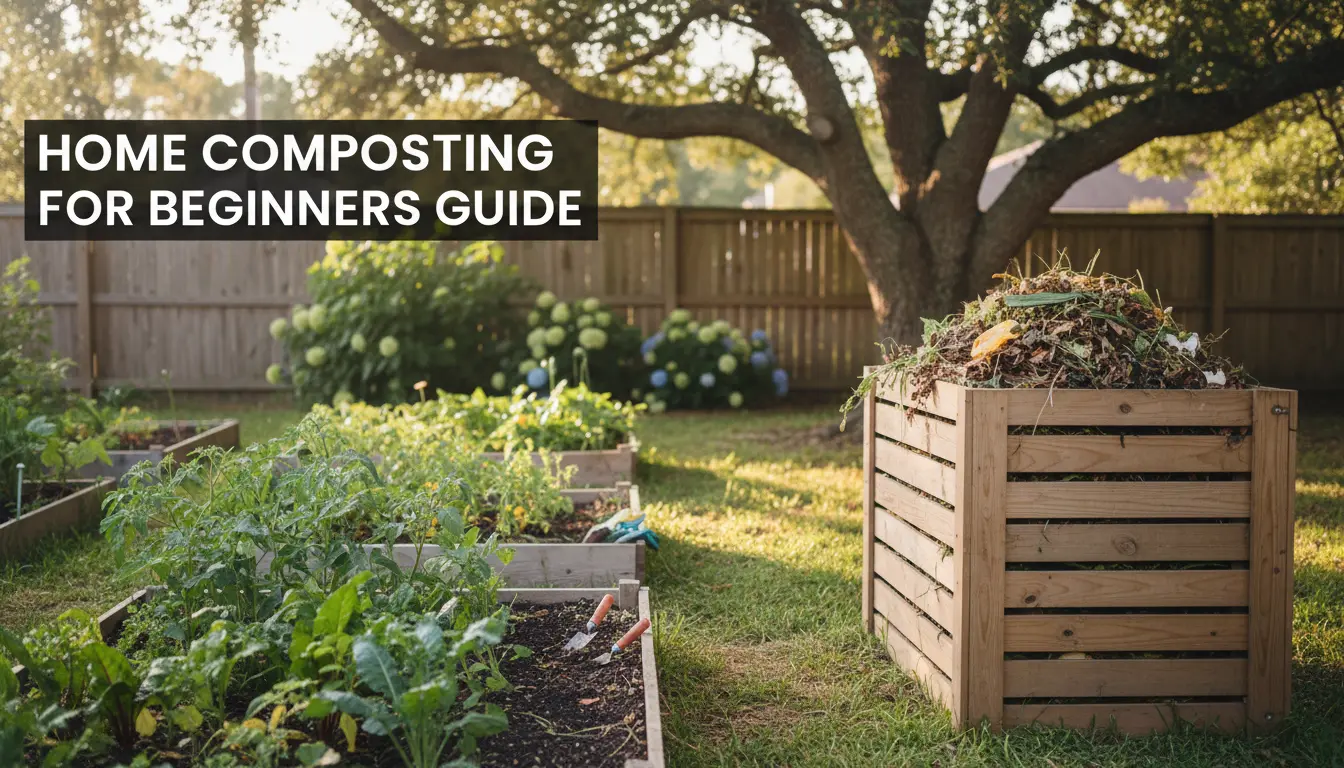
Why Home Composting Matters
Home composting turns kitchen scraps and yard waste into nutrient-rich soil. It reduces household waste and improves garden health without expensive products.
Composting is a low-cost, practical step for anyone wanting healthier plants and less trash. This guide shows simple, reliable methods you can use right away.
What Is Home Composting?
Home composting is the controlled decomposition of organic materials at a small scale. Microbes break down food scraps, paper, and yard trimmings into humus that feeds plants.
There are many approaches, but the essentials are the same: balance materials, provide air, and maintain moisture.
What You Can Compost
Knowing what to add prevents odors and pests. Here are common items you can and cannot compost at home.
Acceptable Materials (Greens and Browns)
- Greens: fruit and vegetable scraps, coffee grounds, fresh grass clippings.
- Browns: dry leaves, shredded paper, cardboard, small twigs.
- Other: eggshells, tea bags (remove staples), and small amounts of cooked food if mixed well.
Materials to Avoid
- Meat, bones, fish, and high-fat foods (attract pests).
- Diseased plants or invasive weeds that can survive.
- Pet waste from carnivores and treated wood.
How to Start a Home Compost Bin
Start simple: you don’t need a fancy bin. A DIY bin or a store-bought tumbler works fine for most households.
Follow these practical steps to set up a basic pile or bin.
Step-by-Step Setup
- Choose a spot with partial shade and good drainage.
- Build a base layer of coarse materials like twigs for airflow.
- Add alternating layers: 2–3 inches of greens, then 3–4 inches of browns.
- Keep compost moist like a wrung-out sponge; water if dry and cover if too wet.
- Turn or mix the pile every 1–2 weeks to add oxygen.
Key Ratios and Troubleshooting
Balancing carbon and nitrogen is the core of successful home composting. Aim for about a 25:1 to 30:1 carbon-to-nitrogen ratio in mass, approximated by alternating browns and greens.
If your pile smells, it is likely too wet or has too many greens. Add dry browns and turn it. If decomposition is slow, add more greens and ensure the pile is warm enough.
Quick Troubleshooting Checklist
- Smelly: add dry browns, turn pile, check drainage.
- Too dry: add water and some green material.
- Attracting pests: remove meats and fatty foods, secure bin lid.
- Slow breakdown: chop materials smaller and increase turning.
Compost Use and Timing
Finished compost looks dark and crumbly with an earthy smell. Depending on method and materials, this can take 2 months to a year.
Use finished compost as a top dressing, mix into potting soil, or work into garden beds to improve structure and fertility.
Small Real-World Example
Case study: A small apartment household used a 20-liter compost bin and a balcony vermicompost setup. They added coffee grounds, veggie scraps, and shredded paper.
After four months they produced about 10 liters of usable compost. They used it to refresh potting mixes and reported healthier houseplants and less kitchen waste.
Practical Tips for Busy Households
- Keep a small countertop caddy or freezer-safe bag for scraps to reduce fly problems.
- Chop or blend tough materials to speed decomposition.
- Use kitchen paper towels and napkins as brown material when shredded.
- Try a worm bin if you have limited outdoor space and want faster compost for potted plants.
Compost can increase soil water retention by up to 20 percent, helping plants survive dry periods while reducing watering needs.
Common Mistakes to Avoid
Beginners often add too much of one material or forget to aerate the pile. Regular, small maintenance sessions are better than infrequent, large interventions.
Also avoid piling compost directly on roots of young plants; mix finished compost into soil or use as a top dressing instead.
Final Checklist to Start Home Composting
- Choose a bin or location with drainage and shade.
- Collect kitchen scraps and store in a sealed container until adding.
- Maintain a balance of browns and greens and keep the pile moist.
- Turn the pile regularly and monitor for pests or odors.
Home composting is accessible, cost-effective, and beneficial for gardens and the environment. Start small, learn from the pile, and adjust as you go. Within months you can create a valuable soil amendment from materials you already produce.