
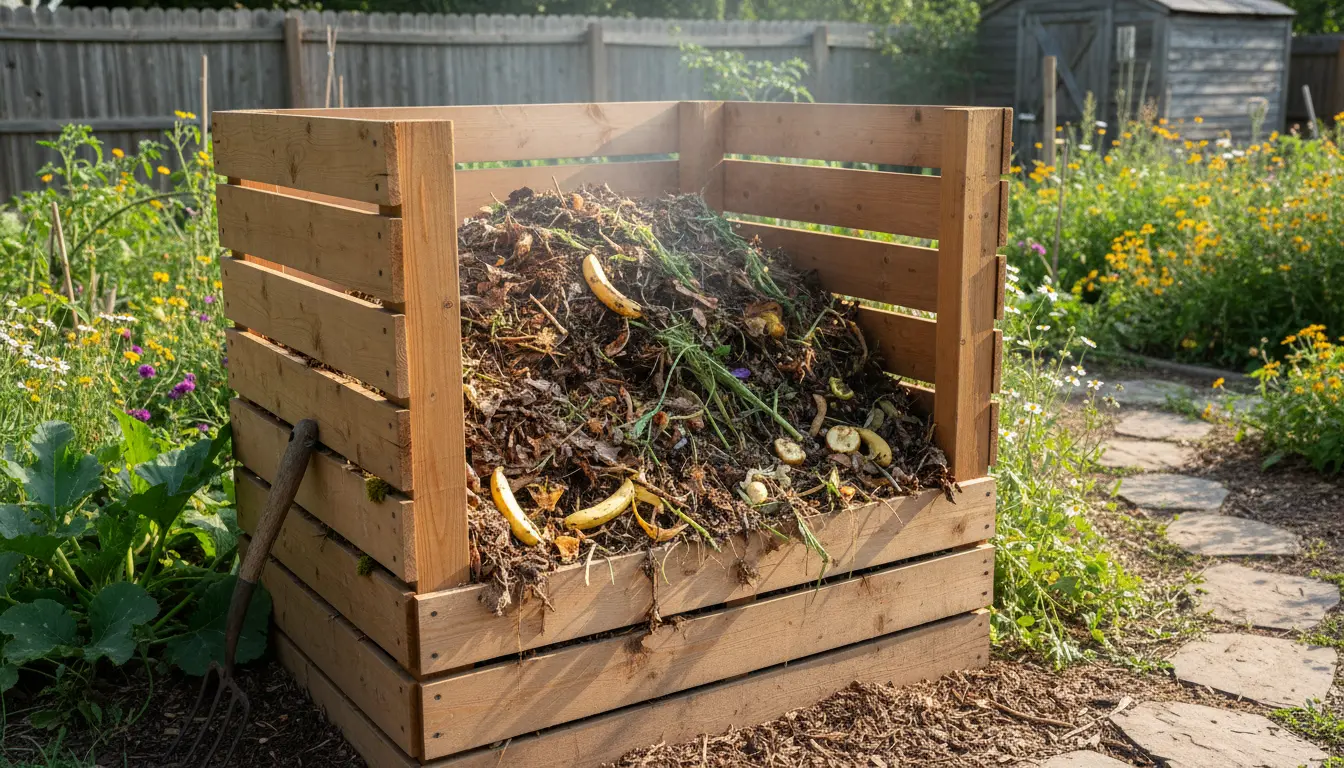
Why Home Composting Matters
Home composting reduces kitchen and yard waste while creating nutrient-rich soil for gardens. It lowers landfill contributions and helps retain moisture in soil.
For many households, composting is a low-cost, low-effort way to improve garden health and reduce waste collection fees.
How to Start Home Composting
Choose a location with partial shade and good drainage, near a water source if possible. You can use a bin, tumbler, or a simple pile depending on space and preference.
Follow these basic steps to begin:
- Gather materials: greens and browns (see next section).
- Layer materials in a bin or pile, keeping it moist like a wrung-out sponge.
- Turn or mix every 1–2 weeks to add air and speed decomposition.
Choosing a Compost Bin for Home Composting
Select a bin type that matches your needs. Enclosed bins keep pests out and look tidy, while open piles work well for large yards and frequent turning.
Options include tumblers, plastic or wooden bins, and wire cages. Size should match the amount of waste your household produces.
Home Composting Materials: Greens and Browns
Successful composting balances nitrogen-rich “greens” and carbon-rich “browns.” Aim for roughly 2–3 parts browns to 1 part greens by volume.
- Greens (nitrogen): vegetable scraps, coffee grounds, fresh grass clippings, green leaves.
- Browns (carbon): dry leaves, shredded paper, cardboard, straw, wood chips.
Avoid meat, dairy, diseased plants, and pet waste in typical home systems to prevent odors and pests.
Building and Maintaining Your Compost Pile
Start with a layer of coarse material to aid drainage, then add alternating layers of greens and browns. Keep the pile moist but not waterlogged.
Turning the pile introduces oxygen and distributes heat. If you cannot turn often, use smaller particle sizes and more frequent moisture checks.
Monitoring Temperature and Moisture
Active compost heats to 120–160°F (50–70°C). This indicates microbial activity and helps kill weed seeds. When temperature drops, turn the pile to reintroduce oxygen.
Check moisture weekly. Add water if dry, or add more browns if too wet. The ideal texture is like a damp sponge.
Troubleshooting Home Composting
Common issues are fixable with simple adjustments. Address problems early to keep the system efficient.
- Bad smell — often caused by too much wet greens or poor aeration. Add browns and turn the pile.
- Too many flies or pests — cover fresh food scraps with browns and consider a closed bin.
- Slow decomposition — reduce particle size, maintain moisture, and turn more frequently.
Composting can cut household waste by up to 30 percent. Finished compost improves soil structure, increases water retention, and supplies slow-release nutrients.
How to Tell When Compost Is Ready
Finished compost is dark, crumbly, and has an earthy smell. Most systems produce usable compost in 2–6 months, depending on technique and materials.
Sift out large chunks and return them to the pile to continue decomposing if needed.
Using Finished Compost From Home Composting
Apply finished compost as a top dressing, mix into planting beds, or use as a potting amendment. It improves nutrient availability and soil health over time.
Start with a 1–3 inch layer for beds and mix 10–20% compost into potting mixes for containers.
Small Case Study: A Simple Backyard Conversion
María, a homeowner in Austin, started a 3-bin system on a 1,200 sq ft lot. She saved about $120 a year on soil and mulch and cut weekly trash by half.
After six months, her vegetable beds showed stronger growth and needed less supplemental fertilizer. Her approach: balanced layers, weekly turns, and shredded leaves added each fall.
Quick Home Composting Tips
- Keep particle sizes small: chop or shred when possible.
- Store kitchen scraps in a small covered container to reduce odors before adding them to the bin.
- Use a garden fork or compost aerator to turn easily.
- Save dry leaves in fall to use as browns throughout the year.
Final Checklist for Successful Home Composting
- Pick the right bin type for your space and pest concerns.
- Balance greens and browns; monitor moisture and temperature.
- Turn regularly to keep oxygen levels high.
- Use finished compost to boost soil health and plant growth.
Home composting is practical and scalable. Start small, learn by doing, and adapt your approach to local climate and household output. Within a season you can produce quality compost and reduce waste.