
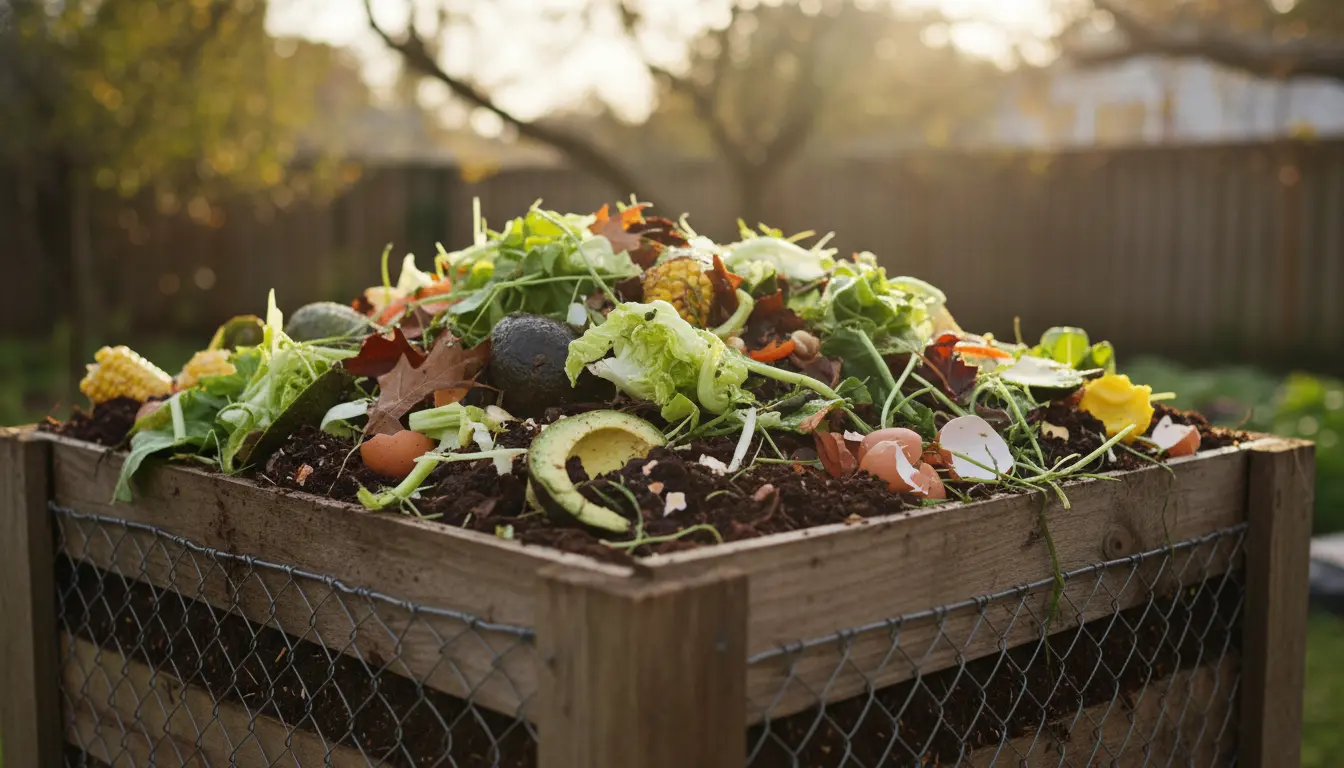
Composting at home is a simple, low-cost way to reduce waste and create rich soil for plants. This guide covers practical steps for starting and maintaining a home composting system with common materials and troubleshooting tips.
Why Home Composting Matters
Home composting reduces landfill waste and cuts greenhouse gas emissions from trash. It also produces nutrient-rich compost that improves soil structure and plant health.
For many households, a simple bin or pile provides enough compost for vegetable beds and potted plants.
Choosing a Composting Method for Home Composting
Select a method that fits your space, time, and energy. Common options include a compost bin, tumbler, or open pile.
- Compost bin: Good for small yards and neat appearance.
- Compost tumbler: Faster turning, contained, less labor.
- Open pile: Low cost, suitable for larger spaces.
Location and Bin Size
Place the bin in a partly shaded, accessible spot near a water source. Choose a size that accepts your weekly kitchen waste—100–300 liters is typical for a family of two to four.
Ensure the bin allows airflow and drainage to avoid waterlogging and odor.
What to Compost: Materials for Home Composting
Compost works best with a balance of carbon-rich (brown) and nitrogen-rich (green) materials. Aim for a roughly 3:1 ratio by volume of browns to greens.
- Greens (nitrogen): fruit and vegetable scraps, coffee grounds, tea bags, fresh grass clippings.
- Browns (carbon): dried leaves, straw, shredded cardboard, paper, wood chips.
- Avoid: meat, dairy, oils, diseased plants, pet waste, and treated wood.
Practical Mixing Tips
Chop larger items to speed decomposition and layer greens and browns when adding to the bin. If you have only greens one week, add more shredded paper or dry leaves to balance moisture and aeration.
Daily and Weekly Maintenance
Regular maintenance keeps the compost active and odor-free. Tasks are simple and quick when done consistently.
- Turn or mix the pile weekly or every two weeks to add oxygen.
- Monitor moisture: the pile should feel like a wrung-out sponge.
- Add water sparingly during dry periods or more browns if the pile is too wet.
When to Turn the Compost
Turn the compost when the internal heat drops (you can feel warmth in the center) or when decomposition slows. Tumblers usually need turning every few days; bins can be turned weekly.
Troubleshooting Common Issues in Home Composting
Problems are usually easy to fix with small adjustments to airflow, moisture, or material mix.
- Bad smell: add more browns and increase turning to introduce air.
- Pile too dry: add water and more greens, then mix thoroughly.
- Pests or rodents: secure food scraps inside a closed bin, avoid meat and dairy, and use a wire base if needed.
- Slow breakdown: chop materials smaller and maintain a good green-to-brown ratio.
Harvesting and Using Finished Compost
Compost is ready when it is dark, crumbly, and smells earthy. This usually takes 2–6 months depending on conditions.
Use finished compost as a soil amendment, top dressing, or potting mix ingredient. A thin layer mixed into garden beds improves water retention and fertility.
How to Test Compost Readiness
Take a handful and rub it; if it feels uniform and contains few recognizable food pieces, it is likely ready. Seed tests with cress or radish can confirm there are no phytotoxins.
Adding small amounts of finished compost to seed trays can increase germination rates and early growth. Compost adds microbes and improves nutrient availability for young plants.
Small Real-World Example: A Simple Case Study
Case study: A two-person household started a 200-liter compost bin in spring. They added kitchen scraps (about 3 liters per week) and a weekly bag of dry leaves and shredded paper.
They turned the bin every 10 days and checked moisture weekly. After four months they harvested about 40 liters of usable compost, which they mixed into two raised beds. Tomato plants that season showed stronger growth and a 20% higher yield compared with the previous year.
Quick Checklist to Start Home Composting
- Choose bin type and location.
- Gather browns and greens before starting.
- Maintain 3:1 browns to greens by volume.
- Turn the pile regularly and monitor moisture.
- Harvest when compost is dark and crumbly.
Final Tips for Successful Home Composting
Keep the system simple at first and scale up when you understand how much material you generate. Consistency—turning and balancing materials—makes composting almost effortless over time.
If you have limited outdoor space, consider a small indoor bokashi system or a compact tumbler that fits on a balcony.
With basic attention and the right mix of materials, home composting converts everyday waste into a valuable resource for your garden while reducing environmental impact.