
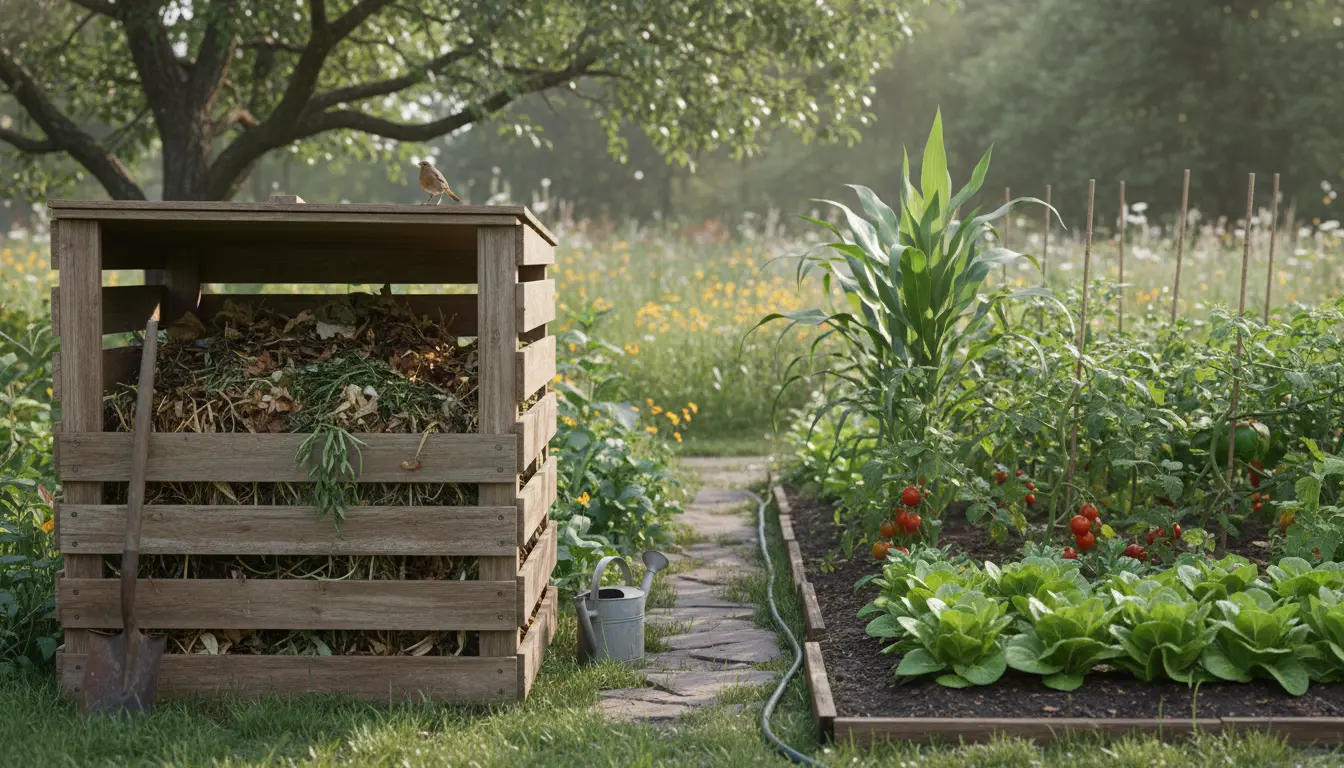
Composting at home turns kitchen scraps and yard waste into valuable soil material. This guide gives clear steps, troubleshooting tips, and a real-world example so you can begin composting with confidence.
Why Start Home Composting
Home composting reduces household waste and creates nutrient-rich material for plants. It lowers landfill contributions and can improve your garden soil structure.
Composting also saves money on fertilizers and helps retain moisture in soil, reducing the need for frequent watering.
How to Start Home Composting
Starting composting involves choosing a method, collecting materials, and managing the mix. You do not need a large yard or special tools to begin.
Choose a Composting Method
Select a setup that fits your space and needs. Common options include a simple pile, a bin, a tumbler, or a vermicompost (worm bin) system.
- Backyard bin: Good for gardens and larger volumes.
- Compost tumbler: Easier turning and faster results.
- Vermicomposting: Ideal indoors and for smaller kitchens.
- Open pile: Cheap and effective if you have space.
Set Up a Compost Bin
Place your bin in a partly shaded spot with good drainage. A level, accessible location beside or behind the house is convenient for regular additions.
Ensure airflow: drill holes in a bin or choose a model with ventilation to help aerobic decomposition.
What to Compost
Balance green (nitrogen) and brown (carbon) materials. A typical target is roughly 2–3 parts brown to 1 part green by volume.
- Greens (use regularly): fruit and vegetable scraps, coffee grounds, fresh grass clippings, tea bags.
- Browns (bulk and structure): dry leaves, shredded paper, cardboard, straw, small wood chips.
- Avoid: meat, dairy, oily foods, diseased plants, pet waste, and large bones.
Maintaining Your Compost
Maintenance is simple: monitor moisture, turn occasionally, and adjust material ratios. Proper attention speeds decomposition and prevents odor.
Moisture and Air
Compost should feel like a damp sponge. If it is too dry, add water and greens. If it is too wet and smelly, add more browns and turn the pile to introduce air.
Turning and Temperature
Turning the pile every 1–3 weeks mixes materials and adds oxygen, which helps microbes work efficiently. In large bins, heat spikes (120–160°F or 50–70°C) indicate active decomposition.
Troubleshooting Common Problems
Most issues come from unbalanced materials, poor airflow, or incorrect moisture.
- Bad smell: Add more brown materials and turn the pile.
- Slow breakdown: Chop materials smaller, add nitrogen-rich greens, and ensure moisture.
- Pests: Avoid adding meat or fatty foods. Use a closed bin or add a layer of dry browns on top.
Harvesting Finished Compost
Compost is ready when it is dark, crumbly, and earthy-smelling with few recognizable scraps. This usually takes 2–6 months depending on method and conditions.
Use finished compost as a top-dressing, mix into potting soil, or work into garden beds for improved structure and nutrients.
Small Real-World Case Study
Case: A three-person household began using a 60-gallon tumbler in spring. They collected kitchen scraps and garden waste, maintaining a 2:1 brown-to-green ratio and turning weekly.
After four months the family harvested crumbly compost and reduced their weekly trash by half. They applied compost to vegetable beds, noting healthier-looking plants and less need for supplemental fertilizer.
Composting one ton of organic waste can prevent the release of about 0.5 to 1 ton of CO2-equivalent greenhouse gases compared with landfilling.
Practical Tips and Examples
Start small and be consistent. Even a countertop bin for food scraps combined with a backyard bin can make a big difference.
Example routine:
- Daily: Add chopped kitchen scraps to the indoor container.
- Weekly: Transfer to the outdoor bin and add a handful of dry leaves or shredded paper.
- Monthly: Turn the pile and check moisture; add water or browns as needed.
Final Checklist to Start Home Composting
- Choose a bin style that fits your space and volume.
- Collect greens and browns and aim for balance.
- Monitor moisture and turn regularly for faster results.
- Keep out prohibited items like meat and pet waste.
- Use finished compost in gardens and containers.
Home composting is accessible and effective for most households. With a simple setup and regular care, you can reduce waste and improve soil health in months.