
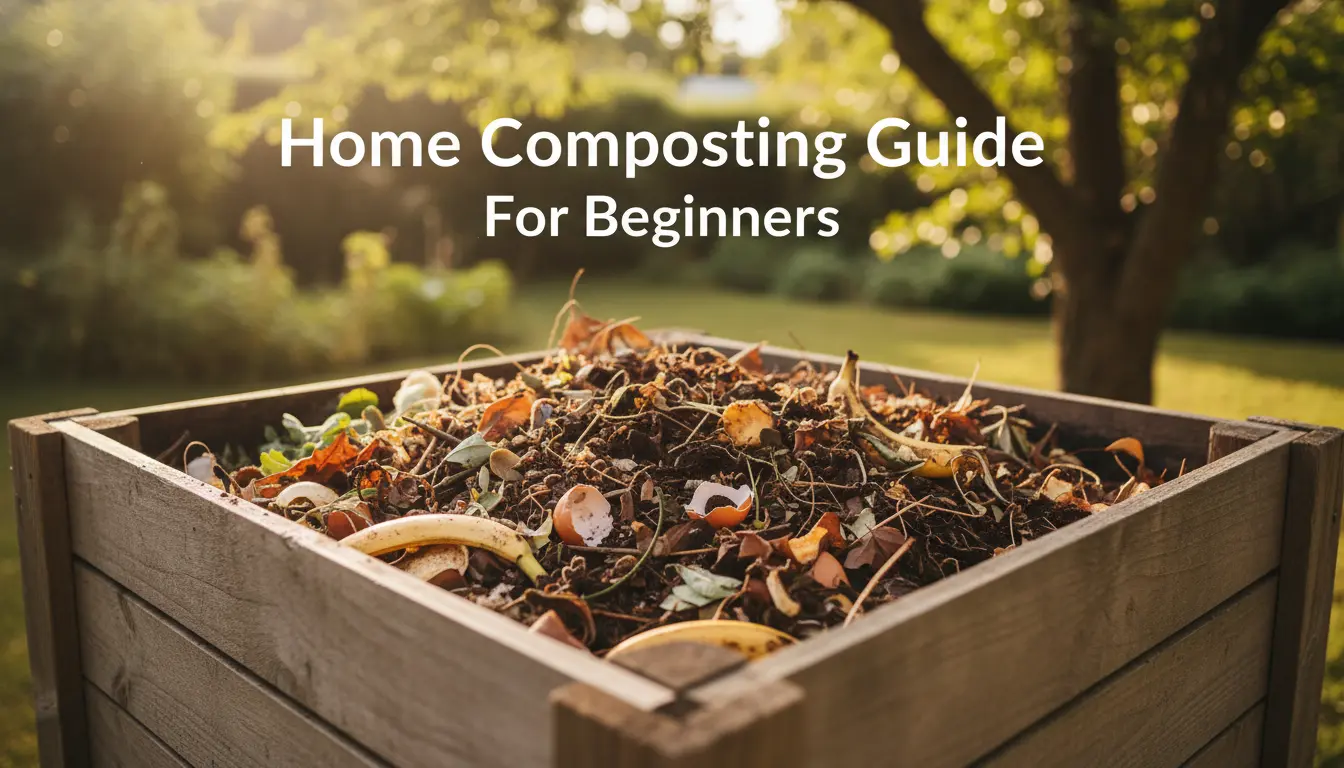
Why home composting matters
Home composting reduces household waste and returns nutrients to soil. It also cuts landfill methane and saves money on fertilizer.
This guide shows practical, step-by-step methods you can use on a balcony, in a yard, or in a small garden. Follow simple routines to produce rich compost in months, not years.
How to start home composting
Starting home composting is straightforward: choose a system, gather materials, and manage the mix. You do not need special equipment to begin.
Choosing a bin for home composting
Pick a container that fits your space and the volume of waste you produce. Options include tumblers, stationary bins, DIY wooden bins, or a simple pile.
Consider airflow, drainage, and access for turning. Tumblers are easy for small yards, while open piles suit larger gardens.
Where to place your compost
Choose a level spot with partial sun and good drainage. Close proximity to your kitchen makes it easier to add scraps regularly.
A balcony can use a small bokashi system or worm bin. If pests are a concern, use a secure bin with a tight lid.
What to add to your home composting pile
Balance nitrogen-rich green materials with carbon-rich brown materials. The right mix speeds decomposition and reduces smells.
- Greens (nitrogen): fruit and vegetable scraps, coffee grounds, fresh grass clippings.
- Browns (carbon): dry leaves, shredded paper, cardboard, straw.
Aim for roughly 2–3 parts brown to 1 part green by volume. Chop large items to help them break down faster.
Managing moisture and aeration
Compost should be as damp as a wrung-out sponge. Add water if it is dry, and add browns if it is too wet.
Turn the pile every 1–2 weeks to add oxygen. Frequent turning speeds up composting and helps avoid bad odors.
Troubleshooting home composting problems
Most issues are easy to fix with small adjustments. Recognize signs early and act quickly to keep the process on track.
Smells and pests
Bad smells usually mean too much green or poor aeration. Add dry browns and turn the pile to restore balance.
To discourage pests, avoid adding meat, dairy, oily foods, or large amounts of fruit. Bury food scraps under browns or use a sealed bin.
Pile not heating or slow breakdown
Cold composting happens when the pile is too small, too dry, or lacks nitrogen. Increase pile size to at least 1 cubic meter, add water, and add fresh greens.
Chopping materials and increasing turning frequency will also speed decomposition.
Too wet or soggy
If the pile is waterlogged, add dry browns and turn to improve airflow. Elevate the bin or improve drainage if pooling persists.
Food scraps and yard waste make up about 30% of household trash on average. Composting them can reduce your household waste significantly while improving garden soil.
Home Composting Guide: Quick checklist
- Choose a bin or method that fits your space.
- Collect both greens and browns; aim for 2–3:1 ratio of browns to greens.
- Keep moisture at wrung-out sponge level.
- Turn the pile every 1–2 weeks for faster results.
- Avoid meat, dairy, and oily foods unless using a secure system.
Case study: Small-scale success in an apartment
Maria, an apartment resident, started home composting with a worm bin on her balcony. She added kitchen scraps and shredded paper and fed the worms regularly.
Within four months she harvested dark, crumbly worm castings that she mixed into potting soil. Her potted herbs grew noticeably stronger, and she cut grocery herb purchases by 30% in a year.
Advanced tips for consistent results
Use a thermometer to keep the pile between 40–60°C for faster hot composting. For small setups, focus on frequent turning and smaller, chopped inputs.
Save finished compost in a breathable bag or bin. Use it as mulch, soil conditioner, or to topdress houseplants.
Final notes on home composting
Home composting is a low-cost, practical way to cut waste and build healthy soil. Start small, observe the pile, and adjust the balance of materials as you learn.
With basic care—proper mix, moisture, and aeration—you can turn kitchen and yard waste into valuable compost in a few months.