
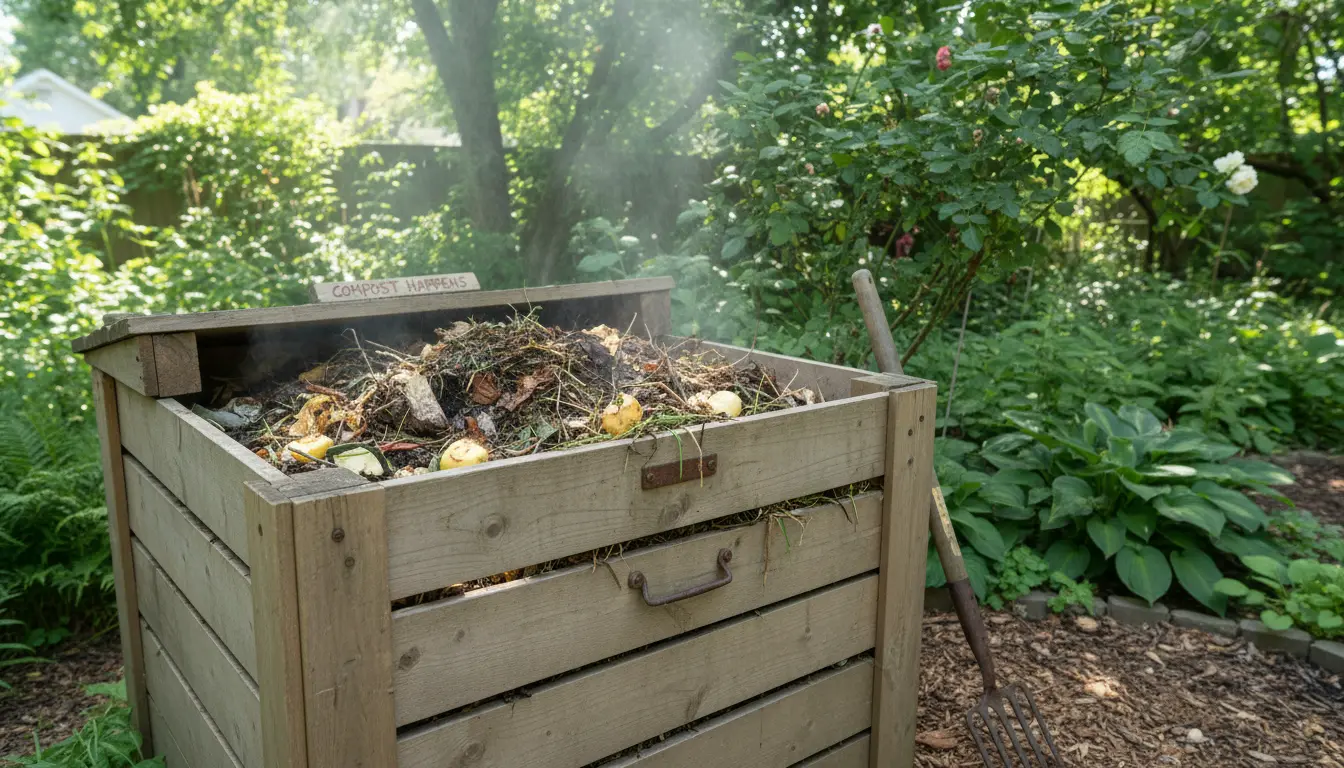
Why choose home composting
Home composting turns kitchen and yard waste into useful soil amendment. It reduces landfill trash and supplies nutrient-rich compost to improve soil health.
Composting at home is practical for homeowners, renters with small containers, and anyone who wants to lower waste and support plants.
Types of home composting systems
Home composting bins
Static bins are simple, inexpensive, and work well for backyard composting. You add materials, wait, and occasionally turn the pile to speed decomposition.
Tumbler composters
Tumblers are sealed barrels on a frame that make turning easy. They help mix materials and can produce compost faster in small outdoor spaces.
Vermicomposting (worm composting)
Vermicomposting uses red worms to break down food scraps in a bin. It works well indoors or on balconies and produces worm castings — a potent fertilizer.
How to start home composting
Follow these basic steps to set up an effective home composting system. Each step is simple and uses common materials.
Step 1: Choose a system
- Backyard: Choose a static bin or tumbler.
- Small spaces: Use a compact tumbler or vermicompost bin.
- Apartment balconies: Use a sealed worm bin to avoid odors.
Step 2: Collect and balance materials
Compost needs a balance of greens (nitrogen) and browns (carbon). Layering and balance help the pile heat and decompose correctly.
- Greens: fruit and vegetable scraps, coffee grounds, fresh grass clippings.
- Browns: dry leaves, shredded paper, cardboard, small wood chips.
- Aim for roughly a 2:1 or 3:1 brown-to-green volume ratio for steady decomposition.
Step 3: Maintain moisture and aeration
Compost should feel like a wrung-out sponge: moist but not dripping. Add water during dry periods and add browns if it becomes too wet.
Turn or mix the pile every 1–3 weeks to add oxygen and reduce odors. Tumblers make this easy; static bins need a pitchfork or compost aerator.
Common problems and how to fix them
Bad smells
Smelly piles are usually too wet or have too many greens. Fix by adding browns, mixing the pile, and ensuring proper drainage.
Slow decomposition
Slow breakdown can result from low temperatures, poor aeration, or wrong material balance. Chop materials into smaller pieces, turn the pile, and maintain moisture and balance.
Pests
Limit pests by avoiding meat, dairy, and oily foods. Use a closed bin or tumbler for food scraps and bury new scraps under brown material.
Compost uses and application
Finished compost is dark, crumbly, and earthy-smelling. Use it to improve soil structure, increase water retention, and add nutrients.
- Mix into garden beds at planting time.
- Top-dress lawns or container plants.
- Make compost tea for a liquid feed.
Composting can reduce household waste volume by up to 30 to 50 percent and cut methane emissions from landfills. Even small-scale composting has measurable climate benefits.
Small real-world example: Apartment balcony compost success
Case study: Sara lives in a two-bedroom apartment and started a worm bin on her balcony. She collected food scraps in a small kitchen pail and added them to the bin twice a week.
Within four months she harvested worm castings she mixed into her five balcony planters. Her herbs and tomatoes grew more vigorously, and she reduced trash pickup by about half.
Tips, tools, and quick checklist for home composting
- Tools: pitchfork, compost thermometer (optional), bin or tumbler, kitchen scrap container.
- Materials to avoid: meat, dairy, bones, diseased plants, pet waste from carnivores.
- Speed tips: chop materials, keep pile warm and moist, maintain a good brown-to-green ratio.
When is compost ready?
Compost is ready when it is dark, crumbly, and smells earthy. Typical timelines: vermicompost in 2–4 months, well-managed tumblers in 2–6 months, static piles in 6–12 months.
Final practical checklist before you start
- Pick a bin or system that fits your space and needs.
- Gather a simple mix of greens and browns.
- Monitor moisture and turn regularly for best results.
Home composting is low-cost and adaptable. Start small, learn the basic balance, and scale up as you gain confidence. The payoff is less waste, healthier plants, and a useful soil amendment from what would otherwise be trash.