
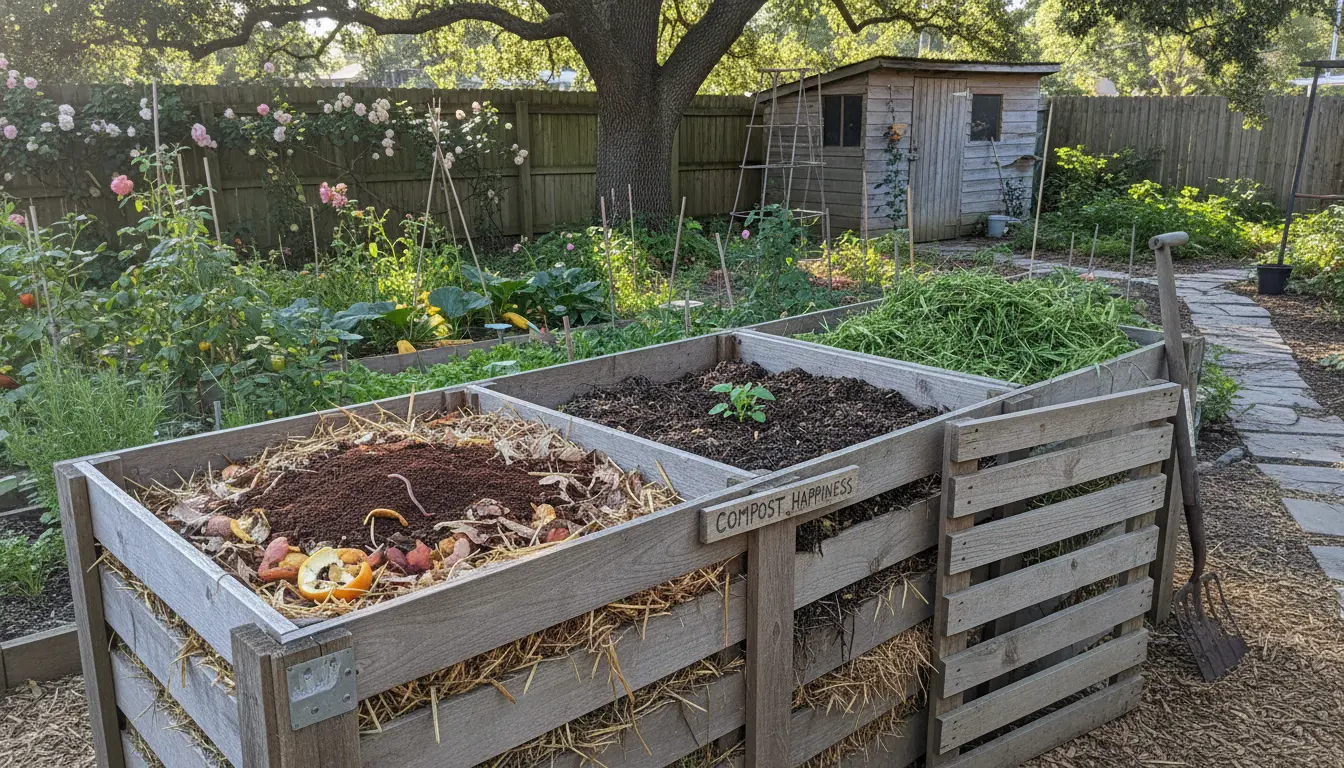
Why Home Composting Matters
Home composting turns kitchen and yard waste into valuable soil. It reduces landfill trash and improves garden health with nutrient-rich compost.
This guide explains step-by-step how to start home composting, what materials to use, common problems, and a short real-world example to follow.
Choose a Simple Home Composting Setup
Pick a compost method that fits your space and time. For small yards or balconies, use a tumbling bin or an enclosed compost bin. For larger yards, a simple pile or three-bin system works well.
Consider these points when choosing a bin:
- Size and location — partial shade and good drainage are ideal.
- Access — easy turning and harvesting access matters.
- Pest control — sealed bins help in urban areas.
Tools and Materials for Home Composting
You do not need many tools to begin home composting. Basic items include a pitchfork or turning tool and a garden thermometer if you want to monitor temperature.
Start with a mix of carbon and nitrogen materials, often called browns and greens.
- Greens (nitrogen): fruit and vegetable scraps, coffee grounds, fresh grass clippings.
- Browns (carbon): dry leaves, shredded paper, straw, small wood chips.
Step-by-Step Home Composting Process
Follow these simple steps to keep the compost active and healthy. Short, regular attention prevents common problems.
- Layer base material: Place coarse browns like twigs or straw at the bottom to improve airflow.
- Add alternating layers: Add a thin layer of greens, then a thicker layer of browns. Repeat until the bin is full.
- Keep it moist: Compost should feel like a wrung-out sponge. Add water in dry periods and cover to prevent over-wetting in heavy rain.
- Turn regularly: Every 1–2 weeks for hot composting, or once a month for slower systems. Turning mixes oxygen and speeds breakdown.
- Harvest finished compost: When material is dark, crumbly, and earthy-smelling, it is ready to use.
How Much to Compost Each Week
A typical household can add a few liters of kitchen scraps daily and a bucket of yard waste weekly. Balance is key: too much green without brown slows the process and causes odors.
Use a simple ratio: aim for roughly 2–3 parts browns to 1 part greens by volume.
Good composting reduces household waste by up to 30 percent and can cut methane emissions from landfills.
What Not to Put in a Home Compost
Some items slow or harm the composting process. Avoid putting these in your home compost.
- Meat, dairy, and oily foods — attract pests and create odors.
- Diseased plants or weeds that set seed — risk spreading problems.
- Coal ash, pet waste, and synthetic chemicals — may contaminate compost.
Troubleshooting Common Problems
Problems usually come from imbalance or moisture issues. Here are quick fixes for common complaints.
- Bad smell: Add more browns and turn the pile to increase aeration.
- Pile not heating: Add more greens, increase size, and turn to boost microbial activity.
- Pests: Use a sealed bin or bury kitchen scraps in the center and cover with browns.
Using Finished Compost in Your Garden
Apply finished compost as a soil amendment, mulch, or in potting mixes. It improves soil structure, water retention, and nutrient content.
Common uses include mixing compost into vegetable beds, top-dressing lawn areas, or blending with potting soil at a 1:3 ratio for containers.
Small Case Study: A Simple Neighborhood Success
In a small urban neighborhood, one household started home composting in a 100-liter tumbling bin. They collected kitchen scraps and dry leaves from the street in autumn.
Within four months, the bin produced rich compost used for potted herbs and a shared community garden bed. The family reduced their weekly trash by nearly half and saved on soil amendments.
Key actions they took were regular turning, maintaining moisture, and balancing browns and greens carefully.
Tips for Long-Term Success with Home Composting
Consistency matters more than perfection. A few practical habits will keep your compost productive:
- Keep a small countertop bin for kitchen scraps and empty it daily.
- Collect dry leaves or shredded paper in a separate container for browns.
- Monitor moisture and smell weekly and adjust as needed.
Final Checklist Before You Start Home Composting
- Select a bin and spot with good drainage.
- Gather basic browns and greens and a turning tool.
- Follow the layering and moisture guidelines for steady results.
Home composting is a low-cost, high-impact way to cut waste and improve your soil. Start small, follow the steps, and adjust as you learn what works best in your home and climate.