
Home composting turns kitchen scraps and yard waste into a useful soil amendment. This guide gives clear, practical steps so beginners can start composting at home with small bins or piles.
Why Home Composting Matters
Home composting reduces household waste and returns nutrients to the soil. It also lowers methane emissions from landfills and saves money on fertilizer and trash pickup.
For gardeners and apartment dwellers alike, composting can be adapted to limited space. The key is a simple routine and a balanced mix of materials.
Home Composting Basics
Compost needs three things: organic material, moisture, and airflow. The organic material is a mix of “greens” and “browns.” Greens supply nitrogen and browns supply carbon.
- Greens: vegetable scraps, coffee grounds, fresh grass clippings.
- Browns: dry leaves, shredded paper, cardboard, straw.
- Water: keep the pile like a wrung-out sponge.
- Air: turn the pile or use a bin with vents.
Choosing a Bin for Home Composting
Select a container that fits your space and needs. Options include open piles, tumblers, or enclosed bins for patios and balconies.
For small spaces, a compact tumbler or worm bin (vermicomposting) works well. For yards, a simple three-bin or single large bin is fine.
Setting Up Your First Compost Pile
Start with a base layer of coarse browns like twigs to aid drainage. Add alternating layers of greens and browns, keeping the pile moist but not soggy.
A common ratio is roughly 2 to 3 parts browns to 1 part greens by volume. Adjust as you observe the pile’s smell and moisture.
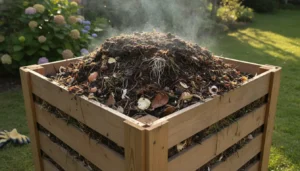
About 30 percent of typical household waste is compostable. Composting at home can reduce trash volume and cut organics sent to landfill.
Managing Your Compost
Turn or mix the pile every 1 to 3 weeks to add oxygen and speed decomposition. If you use a tumbler, rotate it a few times each week.
Watch for common signs: a rotten smell means too wet or too many greens. A dry, slow pile means add water or more greens.
Troubleshooting Tips
- Smelly pile: add more browns, turn, and reduce moisture.
- Slow decomposition: chop materials smaller and increase turning.
- Pests: avoid meat, dairy, and oily foods; use a closed bin if needed.
Using Finished Compost
Finished compost looks dark, crumbly, and earthy-smelling. It usually takes 3 to 12 months depending on conditions and the method used.
Use finished compost as a top dressing, mix into potting soil, or blend into garden beds to improve structure and water retention.
- Vegetable beds: mix 1 to 2 inches of compost into the top 6 inches of soil.
- Potted plants: blend 10 to 20 percent compost into potting mix.
- Lawns: spread a thin layer in spring or fall to boost soil health.
Home Composting for Small Spaces
Even apartment dwellers can compost using a small worm bin or bokashi system. Both methods work indoors with minimal odor if managed correctly.
Worm bins use red wigglers to break down food scraps. Bokashi ferments food waste and requires a secondary composting step in soil or a yard bin.
Materials to Avoid in Home Composting
- Meat, fish, and dairy (attract pests)
- Oily or greasy foods
- Diseased plants or weeds that set seed
- Pet waste from carnivores
Case Study: Small Urban Household Success
A family of four in an urban row house started a 60-liter tumbler in spring. They used kitchen scraps and yard trimmings and turned the tumbler twice weekly.
Within six months they had usable compost for their balcony planters. Their household trash volume dropped by one bag per week.
Key actions that helped: balancing greens and browns, chopping larger scraps, and regular turning. The family also kept a small indoor bin for scraps to avoid odor.
Quick Start Checklist for Home Composting
- Choose a bin that fits your space and budget.
- Collect greens and browns separately to maintain balance.
- Chop or shred large pieces to speed breakdown.
- Monitor moisture and turn regularly for airflow.
- Harvest finished compost and use in garden or pots.
Home composting is a low-cost skill with big environmental benefits. Start small, observe your system, and adjust the balance of materials as you learn.
With a simple bin and a bit of routine, anyone can turn kitchen and yard waste into rich compost and improve local soil health.