
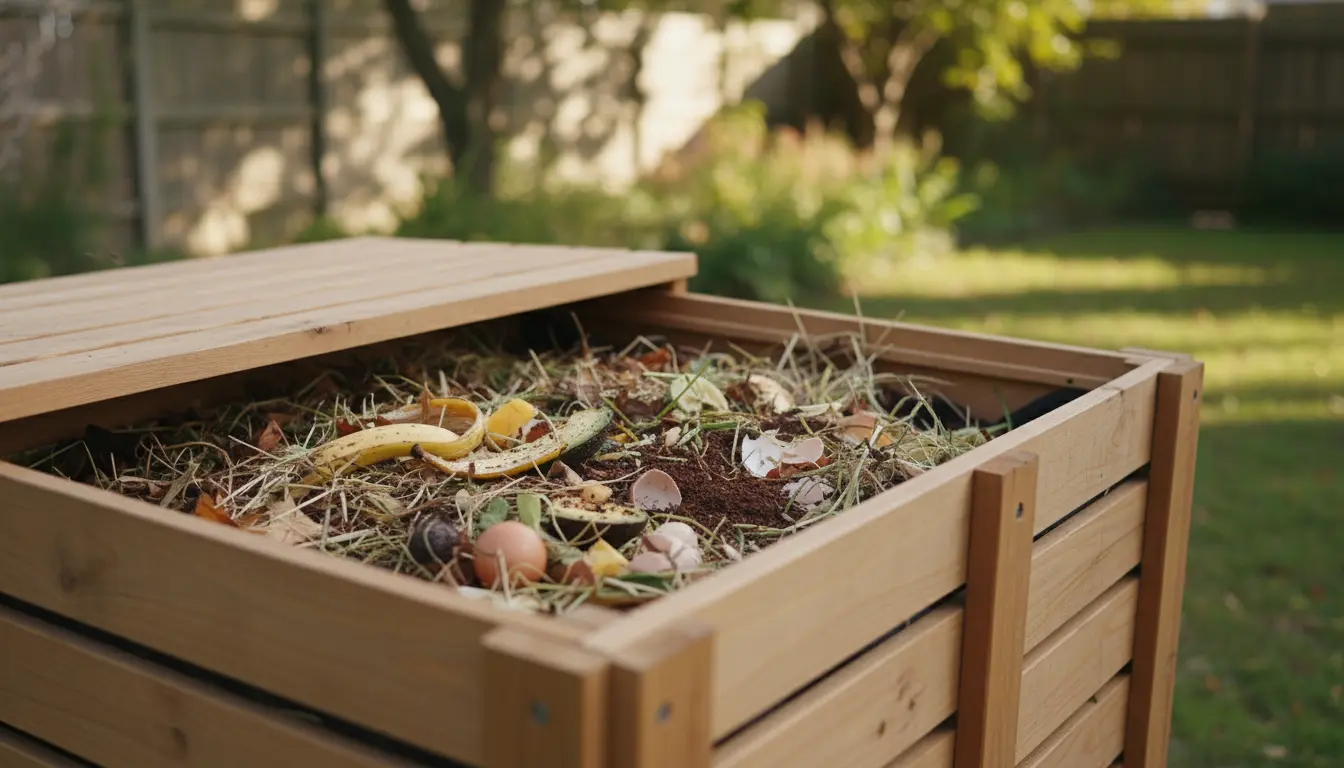
Home Composting Basics
Home composting turns food scraps and yard waste into a useful soil amendment. It reduces landfill waste and supports healthier plants with minimal cost.
This guide explains simple, practical steps to start and maintain a home compost pile, with common problems and real-world examples you can follow.
How Home Composting Works
Composting is a biological process where microorganisms break down organic matter. The key factors are carbon, nitrogen, moisture, oxygen, and particle size.
A balance of carbon-rich ‘browns’ and nitrogen-rich ‘greens’ speeds decomposition and reduces odors.
What to Compost for Home Composting
Knowing what to add keeps the pile healthy. Use a mix of greens and browns to maintain the carbon to nitrogen ratio.
- Greens (nitrogen): fruit and vegetable scraps, coffee grounds, grass clippings.
- Browns (carbon): dry leaves, shredded paper, cardboard, straw.
- Avoid: meat, dairy, oils, diseased plants, and pet waste to prevent pests and odors.
Setting Up Your Home Composting System
Choose a system that fits your space and schedule. Even small apartments can compost successfully with the right method.
Consider location, container type, and capacity before you begin.
Types of Home Composting Systems
Different systems suit different needs. Pick one based on space and the amount of organic waste you produce.
- Static bin: Simple and low-cost. Good for yards and weekly turning.
- Tumbler: Easier to turn and faster to process, ideal for small yards.
- Worm composting (vermicomposting): Excellent for apartments; uses worms to convert scraps into rich castings.
Location and Materials
Place a compost bin on bare soil if possible to allow organisms and drainage. If on concrete, add a few inches of coarse material for airflow.
Use a mix of small pieces to accelerate breakdown. Chop or shred larger items before adding them to the bin.
Maintenance and Troubleshooting for Home Composting
Routine care keeps compost active. Turn the pile, monitor moisture, and balance greens and browns.
Frequent small adjustments prevent common issues like bad smells or slow decomposition.
Practical Maintenance Steps
- Turn: Aerate with a pitchfork or tumble weekly for faster composting.
- Moisture: Aim for a damp sponge feel. Add water if too dry, or more browns if too wet.
- Balance: Add more browns if smells appear; add greens if decomposition stalls.
Troubleshooting Common Problems
- Smelly pile: Too much nitrogen or poor airflow — add dry browns and turn the pile.
- Pests: Avoid adding meat and seal food scraps in the bin; use closed bins in urban areas.
- Slow breakdown: Increase surface area by shredding materials and maintain moisture and aeration.
Compost can reduce household waste by up to 30 percent. A healthy compost pile generates internal heat and can reach temperatures over 130°F (55°C) when managed for hot composting.
Small Real-World Case Study: Apartment Worm Bin
Maria, a city dweller, started vermicomposting in a two-drawer worm bin on her balcony. She added kitchen scraps and shredded paper as bedding.
Within six months she produced about 20 liters of worm castings and reduced her weekly trash by half. She used the castings for potted herbs and saw noticeably healthier growth.
Using Finished Compost at Home
Finished compost is dark, crumbly, and earthy-smelling. It can be used in gardens, raised beds, and potted plants to improve soil structure and fertility.
Blend compost with existing soil or use as a top dressing for lawns and container plants.
How to Tell When Home Composting Is Complete
Compost is ready when materials are unrecognizable and the mixture is uniform. Sieving can remove larger pieces for further decomposition.
Smaller systems like tumblers may finish in a few weeks to months; larger static piles can take longer.
Getting Started Today
Begin with a simple bin and a 50:50 mix of greens and browns. Keep the pile moist, turn it periodically, and watch progress weekly.
Start small, learn from the cycle, and scale up when you feel comfortable. Composting at home is a low-effort, high-impact way to reduce waste and improve soil health.