
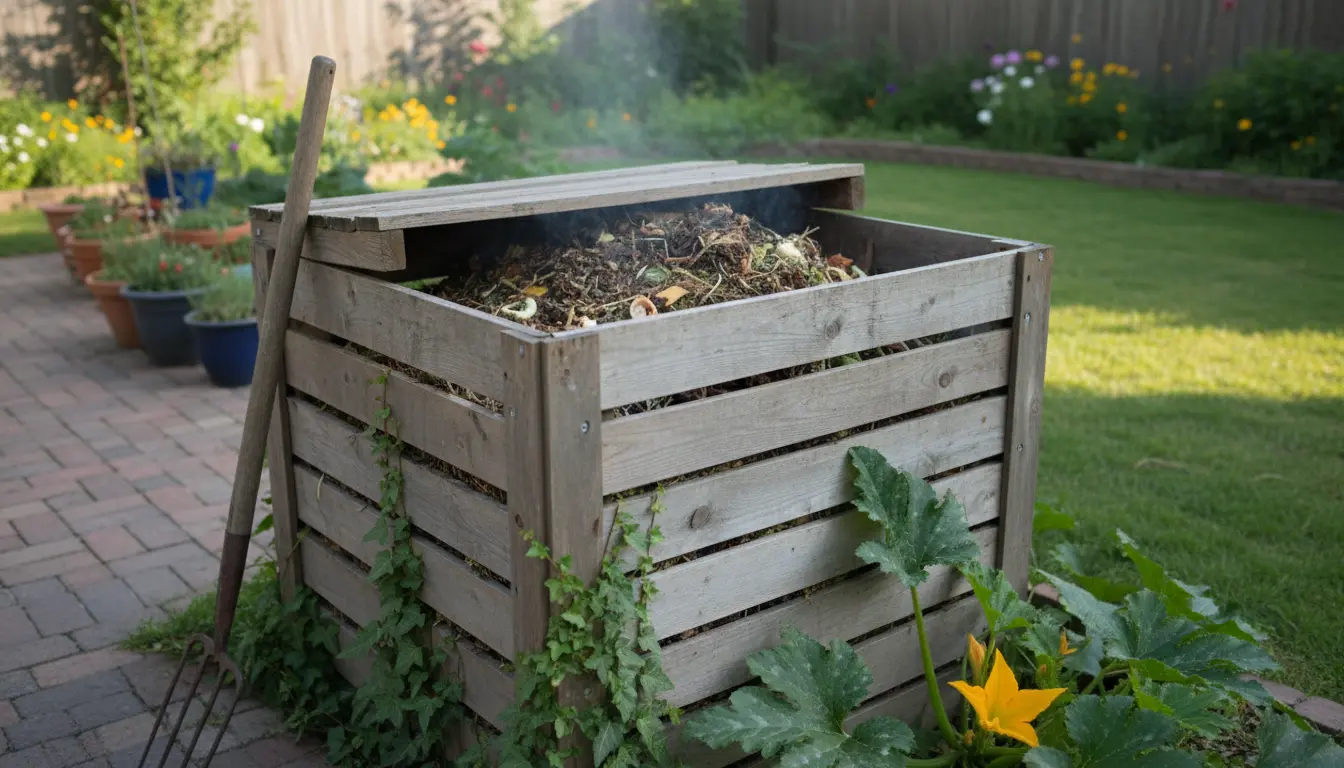
Composting at home turns kitchen scraps and yard waste into rich soil. This practical guide shows step-by-step how to start a simple compost bin and keep it working with minimal effort.
Home Composting for Beginners: What Is Composting?
Composting is the natural breakdown of organic material into humus. The process uses microbes, oxygen, moisture, and the right mix of materials to convert waste into a soil amendment.
Home Composting for Beginners: Benefits
Home composting reduces landfill waste and improves soil structure for gardens. It also saves money on fertilizer and supports healthy plant growth.
Common benefits for homeowners
- Less food waste sent to landfill
- Free nutrient-rich compost for lawns and gardens
- Improved soil drainage and water retention
Home Composting for Beginners: Materials and Ratio
Successful compost needs a balance of carbon-rich and nitrogen-rich materials. Carbon materials are dry and brown; nitrogen materials are moist and green.
Basic materials to collect
- Greens (nitrogen): vegetable scraps, coffee grounds, fresh grass clippings
- Browns (carbon): dry leaves, shredded paper, straw, cardboard
- Optional: small amounts of garden soil or finished compost to introduce microbes
Simple ratio for home composting
A practical rule is 3 parts browns to 1 part greens by volume. This ratio helps control moisture and odor while keeping the pile active.
Home Composting for Beginners: Choosing a Bin
Select a bin that fits your space and the amount of waste you generate. Options include open piles, tumblers, stationary bins, or homemade wooden boxes.
Bin considerations
- Size: 3x3x3 feet is a good starting volume for backyard bins
- Location: partial shade with good drainage
- Airflow: ensure ventilation or turn the pile to add oxygen
Home Composting for Beginners: Building Your Bin
Layering materials is a straightforward way to start. Alternate coarse browns and greens to avoid compaction and keep airflow.
- Start with a 4–6 inch layer of coarse browns to provide drainage.
- Add a 2–4 inch layer of greens, then a thin cover of browns.
- Repeat layers until the bin is full, finishing with browns.
Home Composting for Beginners: Maintenance
Maintain the pile by monitoring moisture, turning it occasionally, and adjusting the mix. Aim for a damp sponge feel — not soaking wet or bone dry.
Daily and weekly tasks
- Keep a kitchen caddy for scraps and empty it weekly into the bin
- Turn or mix the pile every 1–2 weeks to add oxygen
- Add water during dry spells and more browns if it smells
Home Composting for Beginners: Troubleshooting
Problems are common at first but usually easy to fix. Use simple checks to diagnose the issue and take corrective steps.
Common issues and fixes
- Bad odor: Add more browns and turn the pile to reintroduce oxygen
- Soggy pile: Improve drainage, add dry browns, and mix to increase airflow
- Slow decomposition: Chop materials small, keep the pile warm, and add greens
Microbial activity is highest when compost temperatures reach 120 to 160 degrees Fahrenheit. Hot composting can kill most weed seeds and pathogens.
Home Composting for Beginners: When Is Compost Ready?
Finished compost is dark, crumbly, and smells earthy. Depending on method and conditions, it takes from 2 months (hot composting) to a year (cold composting).
How to use finished compost
- Top-dress garden beds with a 1–2 inch layer
- Mix with potting soil at 10–30% for container plants
- Use as a lawn amendment by spreading thinly and raking in
Small Case Study: Balcony Composting Example
Sarah, an apartment gardener, started a 10-gallon tumbler on her balcony. She added kitchen scraps and shredded paper in a 1:2 ratio and turned it twice a week.
Within five months she had usable compost for her container tomatoes. Simple monitoring of moisture and occasional additions of dry leaves kept odor minimal.
Key takeaways from Sarah’s example: choose the right container, keep a good brown to green ratio, and mix regularly.
Home Composting for Beginners: Quick Start Checklist
- Choose a bin suitable for your space
- Collect greens and browns before you start
- Layer materials and maintain moisture
- Turn the pile regularly and watch for odors
- Harvest compost when it is dark and crumbly
Starting home composting is low cost and high reward. With basic materials and a little attention, anyone can turn kitchen and garden waste into a valuable soil resource.